


In the world of machining, the versatility of a machine tool often determines its value and applicability in various manufacturing processes. One question that frequently arises among machinists and manufacturers is whether a vertical CNC lathe can be used for chamfering operations. As a supplier of Vertical CNC Lathes, I am well - positioned to provide an in - depth analysis of this topic.
Understanding Vertical CNC Lathes
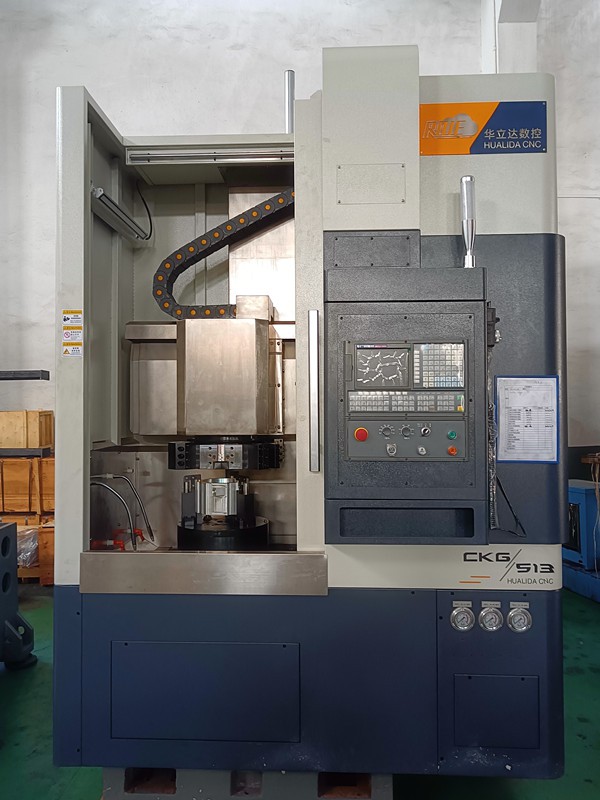
A vertical CNC lathe is a highly sophisticated machine tool that has revolutionized the manufacturing industry. Unlike traditional lathes, a vertical CNC lathe holds the workpiece vertically, which offers several advantages. This vertical orientation allows for better chip evacuation, reduced floor space requirements, and improved stability during machining operations. The computer numerical control (CNC) aspect of the machine enables precise control over the cutting tools, making it possible to achieve high levels of accuracy and repeatability.
Vertical CNC lathes come in different types, each designed to meet specific machining needs. For instance, the Hard Rail Vertical Lathe is known for its high rigidity and load - bearing capacity. It is suitable for heavy - duty machining tasks where stability is crucial. On the other hand, the Heavy Cutting Vertical Lathe is optimized for high - volume material removal, making it ideal for large - scale production. The Heavy Vertical Lathe is designed to handle extremely large and heavy workpieces, providing the power and precision required for such demanding applications.
Chamfering Operations: An Overview
Chamfering is a machining process that involves creating a beveled edge on the corner or edge of a workpiece. This operation serves several important purposes. Firstly, it removes sharp edges, which can be a safety hazard during handling and assembly. Secondly, chamfering can improve the aesthetics of the workpiece. Additionally, it can facilitate the insertion of parts during assembly and prevent stress concentrations at the edges.
There are different methods of chamfering, including manual chamfering using hand tools such as files or deburring tools, and mechanical chamfering using machine tools. Mechanical chamfering is preferred in industrial settings due to its higher efficiency, accuracy, and consistency.
Can a Vertical CNC Lathe be Used for Chamfering Operations?
The answer is a resounding yes. A vertical CNC lathe can indeed be used for chamfering operations, and it offers several advantages over other methods.
Precision and Accuracy
One of the key benefits of using a vertical CNC lathe for chamfering is the high level of precision and accuracy it can achieve. The CNC control system allows for precise programming of the cutting path, enabling the creation of chamfers with exact dimensions and angles. This is particularly important in applications where tight tolerances are required, such as in the aerospace and automotive industries.
Efficiency
Vertical CNC lathes are designed for high - speed machining. They can perform chamfering operations much faster than manual methods, reducing production time and increasing overall efficiency. The ability to automate the chamfering process also means that multiple workpieces can be processed with consistent quality, minimizing the need for manual intervention.
Versatility
Vertical CNC lathes can handle a wide range of workpiece materials and sizes. Whether you are working with metals, plastics, or composites, a vertical CNC lathe can be programmed to create chamfers on different types of workpieces. This versatility makes it a valuable asset in a manufacturing facility where multiple types of products are produced.
Complex Chamfering
In addition to simple straight - edge chamfers, a vertical CNC lathe can also create complex chamfer profiles. By using advanced programming techniques, it is possible to create chamfers with curved or irregular shapes, which may be required in some specialized applications.
How to Perform Chamfering on a Vertical CNC Lathe
Performing chamfering on a vertical CNC lathe involves several steps.
Tool Selection
The first step is to select the appropriate cutting tool. For chamfering, a chamfering tool or a multi - purpose cutting tool can be used. The choice of tool depends on the material of the workpiece, the size and angle of the chamfer, and the required surface finish.
Programming
Once the tool is selected, the next step is to program the CNC lathe. The programming involves specifying the cutting path, the feed rate, the spindle speed, and the depth of cut. Modern CNC control systems are user - friendly and allow for easy programming of chamfering operations.
Setup
After programming, the workpiece is mounted on the lathe's chuck or fixture. The cutting tool is then installed in the tool holder, and the machine is set up for the chamfering operation. This includes adjusting the tool height, aligning the tool with the workpiece, and setting the appropriate coolant flow.
Machining
Once the setup is complete, the CNC lathe can be started, and the chamfering operation will be carried out according to the programmed instructions. During machining, it is important to monitor the process to ensure that everything is running smoothly and that the desired chamfer quality is achieved.
Considerations When Using a Vertical CNC Lathe for Chamfering
While a vertical CNC lathe is a powerful tool for chamfering, there are some considerations that need to be taken into account.
Tool Wear
Cutting tools can wear out over time, especially when performing chamfering operations on hard materials. It is important to monitor tool wear and replace the tools when necessary to maintain the quality of the chamfers.
Workpiece Material
Different workpiece materials have different machining characteristics. For example, some materials may be more prone to chip formation, which can affect the surface finish of the chamfer. It is important to select the appropriate cutting parameters and tool geometry based on the material of the workpiece.
Safety
As with any machining operation, safety is of utmost importance. Operators should be trained on how to use the vertical CNC lathe safely, including proper handling of the cutting tools, workpiece, and coolant. Safety guards and emergency stop buttons should be in place and functioning properly.

Conclusion
In conclusion, a vertical CNC lathe is a highly versatile machine tool that can be effectively used for chamfering operations. It offers precision, efficiency, and the ability to handle complex chamfer profiles. Whether you are a small - scale manufacturer or a large - scale production facility, a vertical CNC lathe can significantly enhance your chamfering capabilities.
If you are interested in exploring the potential of using a vertical CNC lathe for your chamfering and other machining needs, we encourage you to contact us for a detailed discussion. Our team of experts is ready to assist you in selecting the right machine for your specific requirements and providing you with the necessary support and training.
References
- Machinery's Handbook, 31st Edition. This comprehensive reference book provides detailed information on machining processes, including chamfering and the operation of CNC lathes.
- Modern Machine Shop Magazine. It offers up - to - date industry news, case studies, and technical articles on various machining topics, including the use of vertical CNC lathes.


