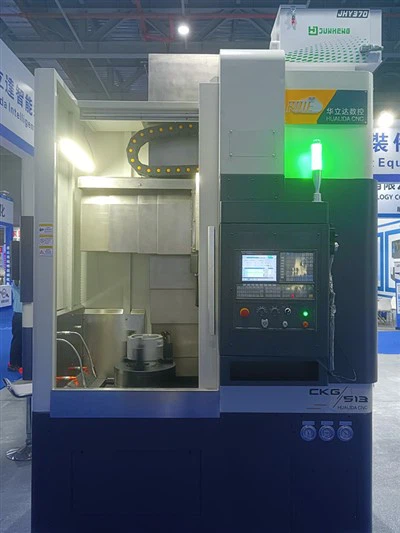
A boring machine is a machine tool used for processing inner holes. Its working principle is to use a rotating boring tool as the main body, and cut out the hollow part inside the material by continuously penetrating into the material, so as to obtain the required inner hole shape. In a boring machine, the spindle plays a very important role, and the reasonable design of the spindle structure will directly affect the accuracy and stability of the boring machine.
Classification of boring machine spindles
According to the spindle drive mode, boring machine spindles can be divided into three types:
1. Mechanical spindle
The mechanical spindle is the most common type of spindle, usually composed of a motor, a coupling, a spindle box, a bearing, a climbing iron, a spindle nose, etc. This type mainly uses balance iron, cooling water and other devices to ensure the balance and rigidity of the spindle. The characteristics of the mechanical spindle are simple structure and easy maintenance, but the load capacity and speed are relatively low.
2. The electric spindle is a type of spindle composed of a motor and a spindle. Unlike the mechanical spindle driven by a belt or a coupling, the electric spindle is directly driven by a motor. Since there is no belt drive, the electric spindle speed is increased and the response is fast, which is suitable for high-speed processing or multi-workpiece processing.
3. Hydraulic spindle
When processing high-precision and large parts, hydraulic spindles are usually used due to their high load-bearing capacity.
The driving method of the hydraulic spindle is to use hydraulic power to drive the spindle to rotate through the hydraulic cylinder.
Spindle box
The spindle box is an important part of the spindle, which mainly protects the spindle, carries the bearings and is responsible for the spindle drive. The spindle box structure generally includes a cover plate, a chassis, a body, a spindle bar and bearings. Among various spindle structures, the design and manufacture of the spindle box is an important factor in determining the processing specifications. Because it will be the suspension and support component of the spindle.
3. Bearing
The bearing is an essential component of the spindle, which can support the spindle and load, reduce friction and improve motion accuracy. There are mainly the following traditional bearings:
Type A bearing
Type A bearings are mostly used on low-speed, medium and small machines. Its advantages are simple structure and low price. But it is not suitable for high-speed and large-scale equipment.
B-type bearings are mostly used on high-speed and small machine tools. Compared with A-type bearings, B-type bearings can better meet the requirements of high speed, small load, small friction and high precision due to their high precision and good characteristics.
C-type bearings are mostly used on high-speed and large machine tools. Compared with B-type bearings, C-type bearings are lightweight, high-speed and high-precision, making them popular in applications with high speed, large load and strong local sealing.
4. Spindle lever
The spindle lever is an important part that connects the spindle box and the bearing and bears the spindle torque. The design of the spindle lever must meet the constraints of strength, rigidity, precision, etc., so the material requirements are usually high.
5. Spindle nose
The spindle nose is an important part of the spindle. In addition to clamping workpieces and tools, it is also an important part for connecting and transmitting media between the spindle and other parts of the machine tool. Its structure and positioning accuracy have a direct impact on the accuracy and surface quality of workpiece processing. Therefore, the structure and processing accuracy of the spindle nose also need to be paid attention to.