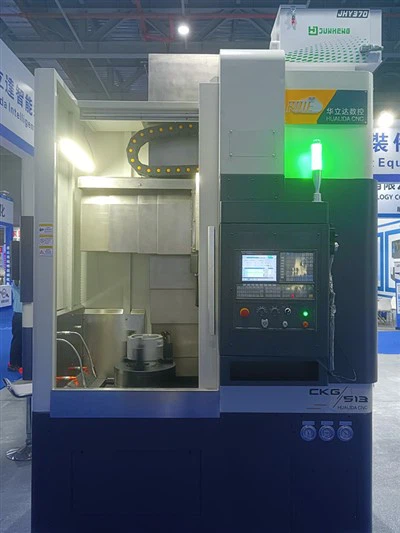
Composite machining is one of the most popular machining processes in the field of mechanical machining. It is an advanced manufacturing technology. Composite machining is to realize several different machining processes on a single machine tool. The most widely used and most difficult type of composite machining is turning-milling composite machining. The turning-milling composite machining center is equivalent to the combination of a CNC lathe and a machining center.
The turning-milling composite machine tool is the fastest growing and most widely used CNC equipment among composite machining machine tools. The composite of machine tools is one of the important directions of machine tool development. Composite machine tools include turning-milling composite, turning-milling-grinding composite, milling-grinding composite, cutting-3D printing composite, cutting-ultrasonic vibration composite, laser-stamping composite, etc. The purpose of the composite is to make a machine tool multifunctional, so that it can complete multiple tasks in one clamping, and improve machining efficiency and machining accuracy.
Compared with conventional CNC machining processes, the outstanding advantages of composite machining are mainly reflected in the following aspects.
(1) Shorten the product manufacturing process chain and improve production efficiency. Turning-milling composite machining can complete all or most of the processing steps in one clamping, thereby greatly shortening the product manufacturing process chain. This not only reduces the production auxiliary time caused by the change of fixture, but also reduces the manufacturing cycle and waiting time of tooling fixtures, which can significantly improve production efficiency.
(2) Reduce the number of fixtures and improve processing accuracy. The reduction in the number of fixtures avoids the accumulation of errors caused by the conversion of positioning references. At the same time, most turning and milling composite processing equipment has the function of online detection, which can realize the in-situ detection and precision control of key data in the manufacturing process, thereby improving the processing accuracy of the product.
(3) Reduce the floor space and reduce production costs. Although the price of a single turning and milling composite processing equipment is relatively high, due to the shortening of the manufacturing process chain and the reduction of equipment required for the product, as well as the reduction of the number of fixtures, workshop floor space and equipment maintenance costs, it can effectively reduce the overall fixed asset investment, production operation and management costs.