Linear motors
Linear motors can be seen from the continuous innovation of high-speed machining centers that making full use of the latest achievements in today's technology, especially the latest achievements in drive technology and control technology, is the key to continuously improving the high-speed performance, dynamic characteristics and machining accuracy of machining centers.
Machine tools driven by linear motors can significantly improve productivity. For example, when machining electrodes for EDM, the machining time is reduced by 50% compared to traditional high-speed milling machines.
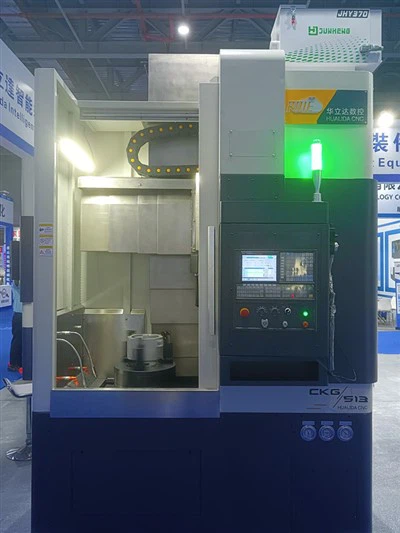
Linear motors can significantly improve the dynamic performance of high-speed vertical lathes. Since most molds are three-dimensional surfaces, the tool axis must be continuously braked and accelerated when the tool is machining the surface. Only through higher axis acceleration can a given contour be tracked with a constant feed per tooth on a shorter trajectory path at a very high trajectory speed. If the radius of curvature of the surface contour is smaller and the feed speed is higher, the required axis acceleration is higher. Therefore, the axis acceleration of the machine tool greatly affects the machining accuracy of the mold and the durability of the tool.
Torque motor
On high-speed vertical lathes, torque motors have been widely used to realize the swing of the rotary table and the swing and rotation of the fork-shaped spindle head. The torque motor is a synchronous motor whose rotor is directly fixed to the component to be driven, so there is no mechanical transmission element. It is a direct drive device like a linear motor. The angular acceleration that the torque motor can achieve is 6 times higher than that of the traditional worm gear drive, and the acceleration can reach 3g when the fork-shaped spindle head is swinging. Since the torque motor can achieve extremely high static and dynamic load rigidity, the positioning accuracy and repeatability of the rotary axis and the swing axis are improved.
It should be mentioned that the combination of directly driven linear axes and directly driven rotary axes gives all the moving axes of the machine tool higher dynamic performance and adjustment characteristics, thus providing the best conditions for high-speed, high-precision and high-surface quality processing of mold free-form surfaces.