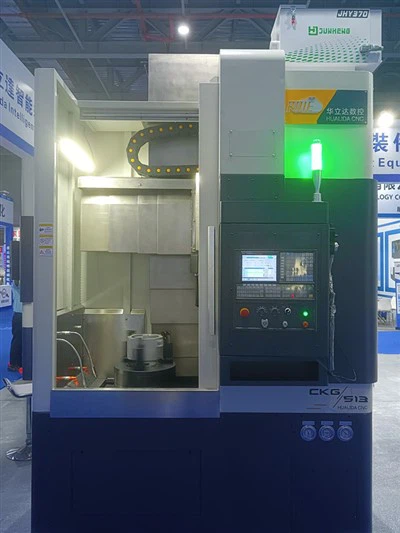
In the field of machining, the capabilities of different machine tools are constantly being explored and expanded. One question that often arises among manufacturers and machining enthusiasts is whether a large cutting vertical lathe can be used for hard turning. As a supplier of large cutting vertical lathes, I am well - positioned to provide insights into this topic.
Understanding Large Cutting Vertical Lathes
A large cutting vertical lathe, also known as a heavy - duty vertical turning machine, is a powerful piece of equipment designed for machining large and heavy workpieces. These lathes are characterized by their vertical orientation, which allows for better handling of large - diameter parts. The vertical setup provides stability and support for heavy loads, reducing the risk of deflection during the machining process.
Large cutting vertical lathes are equipped with high - torque spindles and robust cutting mechanisms. They can handle large depths of cut and high feed rates, making them suitable for roughing and heavy - material removal operations. The Heavy Cutting Vertical Lathe in particular is designed to withstand the rigors of heavy - duty machining, with features such as reinforced structures and high - precision bearings.
What is Hard Turning?
Hard turning is a machining process used to machine hardened materials, typically with a hardness of 45 HRC or higher. This process eliminates the need for traditional grinding operations in some cases, offering several advantages such as reduced setup time, increased productivity, and the ability to machine complex geometries. Hard turning is often used in the production of automotive components, aerospace parts, and tooling.
During hard turning, a single - point cutting tool is used to remove material from the hardened workpiece. The cutting tool must be made of a hard and wear - resistant material, such as cubic boron nitride (CBN) or ceramic. The cutting parameters, including cutting speed, feed rate, and depth of cut, need to be carefully selected to ensure optimal surface finish and tool life.
Can a Large Cutting Vertical Lathe be Used for Hard Turning?
The answer is yes, a large cutting vertical lathe can be used for hard turning, but several factors need to be considered.
Machine Rigidity
One of the key requirements for hard turning is machine rigidity. Hard turning generates high cutting forces due to the hardness of the workpiece. A large cutting vertical lathe with a rigid structure can better withstand these forces, reducing the risk of vibration and chatter. The Heavy Cutting and Vertical Lathe is designed with enhanced rigidity, featuring heavy - duty castings and precision - machined components that provide a stable platform for hard turning operations.
Spindle Power and Torque
Hard turning requires sufficient spindle power and torque to drive the cutting tool through the hardened material. Large cutting vertical lathes are typically equipped with high - power spindles that can deliver the necessary torque for hard turning. The spindle speed can also be adjusted to match the optimal cutting speed for the specific workpiece material and cutting tool.
Tooling
The choice of tooling is crucial for successful hard turning. As mentioned earlier, CBN or ceramic cutting tools are commonly used for hard turning. These tools have high hardness and wear resistance, which are essential for machining hardened materials. The tool geometry, such as the rake angle and clearance angle, also needs to be carefully selected to optimize cutting performance.
Cutting Parameters
Proper selection of cutting parameters is vital for hard turning on a large cutting vertical lathe. The cutting speed should be high enough to ensure efficient material removal but not so high that it causes excessive tool wear. The feed rate and depth of cut should also be adjusted according to the workpiece material, tooling, and machine capabilities.
Advantages of Using a Large Cutting Vertical Lathe for Hard Turning
Increased Productivity
Large cutting vertical lathes can handle large workpieces and perform multiple operations in a single setup. This reduces the need for frequent workpiece handling and setup changes, resulting in increased productivity. For example, a large - diameter hardened shaft can be machined on a single large cutting vertical lathe, eliminating the need to transfer the workpiece between different machines.
Improved Surface Finish
With proper cutting parameters and tooling, a large cutting vertical lathe can achieve a good surface finish during hard turning. The vertical orientation of the lathe allows for better chip evacuation, which can prevent chip recutting and improve surface quality.
Versatility
A large cutting vertical lathe can be used for both roughing and finishing operations in hard turning. It can handle a wide range of workpiece sizes and geometries, making it a versatile machine for various applications.


Challenges and Considerations
Tool Wear
Hard turning is a demanding process that can cause significant tool wear. The high hardness of the workpiece material and the high cutting forces can lead to rapid tool degradation. Regular tool inspection and replacement are necessary to maintain consistent machining quality.
Heat Generation
Hard turning generates a large amount of heat, which can affect the workpiece material properties and tool life. Effective cooling and lubrication systems are required to dissipate the heat and reduce the risk of thermal damage to the workpiece and tool.
Machining Accuracy
Achieving high machining accuracy in hard turning on a large cutting vertical lathe can be challenging. Factors such as machine thermal expansion, tool deflection, and workpiece material variations can affect the dimensional accuracy and surface finish. Advanced control systems and metrology tools may be needed to ensure the required accuracy.
Conclusion
In conclusion, a large cutting vertical lathe can be effectively used for hard turning, provided that the machine has the necessary rigidity, spindle power, and appropriate tooling. By carefully selecting cutting parameters and addressing the challenges associated with hard turning, manufacturers can take advantage of the benefits offered by this combination of machine and process.
If you are interested in exploring the use of a large cutting vertical lathe for your hard - turning applications, we invite you to contact us for further discussion. Our team of experts can provide you with detailed information about our Vertical Lathe Machine models and help you select the most suitable solution for your specific needs. We look forward to working with you to achieve your machining goals.
References
- Trent, E. M., & Wright, P. K. (2000). Metal Cutting. Butterworth - Heinemann.
- Kalpakjian, S., & Schmid, S. R. (2010). Manufacturing Engineering and Technology. Pearson Prentice Hall.