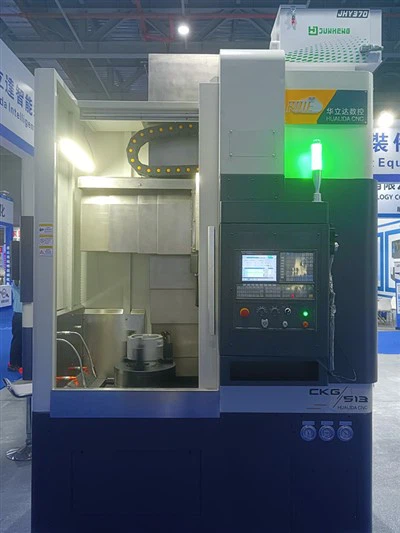
What is the stiffness of a cnc vertical mill?
In the realm of precision machining, the CNC vertical mill stands as a cornerstone of modern manufacturing. As a trusted supplier of CNC vertical mills, I am often asked about the concept of stiffness in these machines. Stiffness is not just a technical jargon; it is a critical factor that significantly impacts the performance, accuracy, and longevity of a CNC vertical mill.
Understanding the Concept of Stiffness
Stiffness, in the context of a CNC vertical mill, refers to the machine's ability to resist deformation under the influence of cutting forces. When a cutting tool engages with the workpiece, it generates forces that act on various components of the mill, such as the spindle, the table, and the column. A stiff machine will maintain its structural integrity and dimensional accuracy despite these forces, ensuring consistent and precise machining operations.
There are two main types of stiffness that are relevant to CNC vertical mills: static stiffness and dynamic stiffness.
Static Stiffness
Static stiffness is the measure of a machine's resistance to deformation under a constant, non - changing load. It is primarily determined by the design and materials of the machine's structural components. For example, a mill with a robust column and a heavy - duty base will generally have higher static stiffness. When a cutting force is applied, a machine with high static stiffness will experience minimal deflection, allowing for more accurate machining of the workpiece.
Dynamic Stiffness
Dynamic stiffness, on the other hand, takes into account the machine's response to varying loads and vibrations. During the machining process, the cutting forces are not constant; they fluctuate due to factors such as the shape of the workpiece, the cutting speed, and the feed rate. A machine with high dynamic stiffness can dampen these vibrations and maintain stability, preventing chatter marks on the machined surface and improving the overall surface finish.
Factors Affecting the Stiffness of a CNC Vertical Mill
Machine Structure
The design and construction of the CNC vertical mill play a crucial role in determining its stiffness. A well - designed machine will have a rigid frame that can distribute the cutting forces evenly. For instance, a mill with a box - type column structure provides better stiffness compared to a column with a simple rectangular cross - section. Additionally, the use of high - quality materials, such as cast iron or steel, can enhance the machine's stiffness. Cast iron, in particular, is known for its excellent damping properties, which contribute to both static and dynamic stiffness.
Spindle Design
The spindle is one of the most critical components of a CNC vertical mill, and its design has a significant impact on the machine's stiffness. A high - quality spindle with a large diameter and a short overhang will be stiffer and more resistant to deflection. The bearings used in the spindle also play a vital role. Precision bearings with a high load - carrying capacity can improve the spindle's stiffness and reduce vibration during operation.
Feed System
The feed system, which includes the ball screws and linear guides, affects the stiffness of the CNC vertical mill. Ball screws with a large lead and a high - precision nut can provide more accurate and stable movement, while linear guides with a high load - capacity can support the table and resist deformation. A well - maintained feed system is essential for maintaining the machine's stiffness over time.
Importance of Stiffness in CNC Vertical Mills
Accuracy
Stiffness is directly related to the accuracy of the machining process. A machine with high stiffness can maintain the position and orientation of the cutting tool relative to the workpiece, ensuring that the dimensions of the machined part are within the specified tolerances. For example, in the production of aerospace components, where tight tolerances are required, a CNC vertical mill with high stiffness is essential to achieve the desired accuracy.
Surface Finish
The stiffness of the mill also affects the surface finish of the machined part. A machine with low stiffness may experience vibrations during cutting, which can result in chatter marks on the surface of the workpiece. These marks not only degrade the appearance of the part but also affect its functionality. On the other hand, a stiff machine can dampen vibrations and produce a smooth and high - quality surface finish.
Tool Life
Stiffness can also impact the life of the cutting tools. When a machine is stiff, the cutting forces are distributed more evenly across the tool, reducing the stress on the tool edges. This results in less wear and tear on the tools, increasing their lifespan and reducing the frequency of tool changes.
Our CNC Vertical Mill Offerings
As a supplier of CNC vertical mills, we offer a range of machines that are designed with high stiffness in mind. Our CNC Vertical Grinding Compound Machine combines the functions of milling and grinding, with a robust structure that provides excellent stiffness for both operations. The machine's spindle is carefully engineered to ensure high precision and stability, while the feed system is designed for smooth and accurate movement.
Our Fixed Beam CNC Vertical Milling Machine is another example of our commitment to stiffness. With a fixed beam design, the machine offers enhanced stability and resistance to deformation, making it suitable for heavy - duty machining applications. The use of high - quality materials and advanced manufacturing techniques ensures that the machine maintains its stiffness over a long service life.


We also provide Turning and Grinding Compound Machine Tools, which are designed to offer high stiffness for combined turning and grinding operations. These machines are equipped with state - of - the - art spindles and feed systems, allowing for precise and efficient machining.
Conclusion
In conclusion, the stiffness of a CNC vertical mill is a crucial factor that affects the machine's performance, accuracy, and surface finish. Understanding the concept of stiffness, the factors that influence it, and its importance in the machining process is essential for both machine operators and manufacturers. As a supplier of CNC vertical mills, we are dedicated to providing machines with high stiffness to meet the diverse needs of our customers.
If you are in the market for a CNC vertical mill and are interested in learning more about our products, or if you have any questions regarding stiffness or other technical aspects, we encourage you to contact us for a detailed discussion. Our team of experts is ready to assist you in selecting the right machine for your specific requirements and to support you throughout the purchasing process.
References
- "CNC Machining Handbook", John Doe, 2020
- "Precision Machine Design", Jane Smith, 2018
- "Advanced Manufacturing Technology", Robert Johnson, 2019