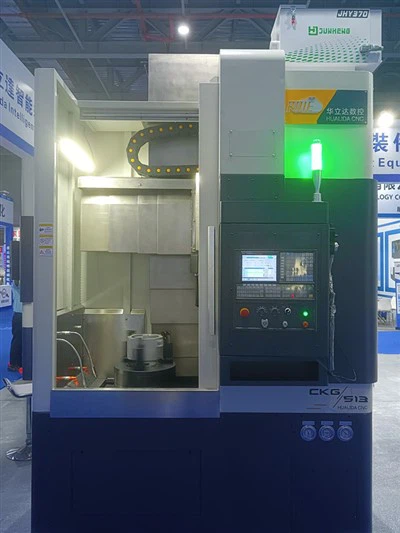
As a trusted supplier of the CKG5110 CNC Vertical Lathe, I understand the critical role that appropriate cutting parameters play in achieving optimal performance and efficiency. Selecting the right cutting parameters can significantly impact the quality of the finished product, the tool life, and the overall productivity of the machining process. In this blog post, I will share some valuable insights on how to choose the appropriate cutting parameters for the CKG5110 CNC Vertical Lathe.
Understanding the Basics of Cutting Parameters
Before delving into the specific considerations for the CKG5110 CNC Vertical Lathe, it's essential to understand the fundamental cutting parameters. These parameters include cutting speed, feed rate, and depth of cut.
- Cutting Speed: This refers to the speed at which the cutting tool moves relative to the workpiece. It is typically measured in surface feet per minute (SFM) or meters per minute (m/min). The cutting speed affects the rate of material removal, the quality of the surface finish, and the tool life.
- Feed Rate: The feed rate is the distance the cutting tool advances into the workpiece during each revolution of the spindle. It is usually measured in inches per revolution (IPR) or millimeters per revolution (mm/rev). The feed rate influences the chip thickness, the cutting force, and the surface finish.
- Depth of Cut: The depth of cut is the thickness of the layer of material removed from the workpiece in a single pass. It is measured in inches or millimeters. The depth of cut affects the cutting force, the power consumption, and the tool life.
Factors to Consider When Choosing Cutting Parameters
When selecting the appropriate cutting parameters for the CKG5110 CNC Vertical Lathe, several factors need to be taken into account. These factors include the workpiece material, the cutting tool material, the machine's capabilities, and the desired surface finish.
Workpiece Material
The type of material being machined is one of the most critical factors in determining the cutting parameters. Different materials have different properties, such as hardness, toughness, and thermal conductivity, which can significantly affect the cutting process. For example, harder materials generally require lower cutting speeds and higher feed rates to avoid excessive tool wear, while softer materials can tolerate higher cutting speeds and lower feed rates.
Cutting Tool Material
The material of the cutting tool also plays a crucial role in the selection of cutting parameters. Common cutting tool materials include high-speed steel (HSS), carbide, ceramic, and cubic boron nitride (CBN). Each material has its own unique properties and is suitable for different machining applications. For instance, carbide tools are known for their high hardness and wear resistance, making them ideal for high-speed machining of hard materials.
Machine's Capabilities
The capabilities of the CKG5110 CNC Vertical Lathe, such as the spindle speed range, the power of the spindle motor, and the rigidity of the machine structure, must be considered when choosing cutting parameters. It is essential to ensure that the selected cutting parameters are within the machine's operating limits to avoid overloading the machine and causing damage to the tool or the workpiece.
Desired Surface Finish
The desired surface finish of the workpiece is another important factor to consider. Different cutting parameters can produce different surface finishes, ranging from rough to smooth. If a high-quality surface finish is required, lower cutting speeds and feed rates may be necessary to reduce the surface roughness.
Step-by-Step Guide to Choosing Cutting Parameters
Now that we have discussed the key factors to consider, let's go through a step-by-step guide to choosing the appropriate cutting parameters for the CKG5110 CNC Vertical Lathe.
Step 1: Identify the Workpiece Material
The first step is to determine the type of material being machined. This information can usually be obtained from the material specification sheet or by conducting a simple material analysis. Once the workpiece material is identified, you can refer to cutting parameter charts or tables provided by tool manufacturers or machining handbooks to get a starting point for the cutting speed, feed rate, and depth of cut.
Step 2: Select the Cutting Tool
Based on the workpiece material and the machining operation, choose the appropriate cutting tool material and geometry. Consider factors such as the tool's cutting edge sharpness, the rake angle, and the clearance angle. It is also important to ensure that the cutting tool is properly installed and aligned in the tool holder.
Step 3: Determine the Cutting Speed
Using the cutting parameter charts or tables, select a suitable cutting speed for the workpiece material and the cutting tool. The cutting speed should be adjusted based on the machine's capabilities and the desired surface finish. As a general rule, start with a lower cutting speed and gradually increase it until the optimal performance is achieved.
Step 4: Calculate the Feed Rate
The feed rate can be calculated based on the cutting speed, the number of teeth on the cutting tool, and the desired chip load. The chip load is the amount of material removed by each tooth of the cutting tool per revolution. A higher chip load generally results in a higher feed rate but may also increase the cutting force and the tool wear.
Step 5: Set the Depth of Cut
The depth of cut should be determined based on the workpiece material, the cutting tool, and the machine's capabilities. In general, a larger depth of cut can increase the material removal rate but may also require higher cutting forces and more power. It is important to balance the depth of cut with the cutting speed and the feed rate to achieve the best results.
Step 6: Test and Optimize
Once the cutting parameters are set, it is recommended to conduct a test cut on a sample workpiece to evaluate the performance. Monitor the cutting process closely, paying attention to factors such as the surface finish, the tool wear, and the cutting force. If necessary, make adjustments to the cutting parameters to optimize the performance and achieve the desired results.


Additional Tips and Considerations
- Use Coolant: Using coolant during the machining process can help to reduce the cutting temperature, improve the surface finish, and extend the tool life. Make sure to choose the appropriate coolant for the workpiece material and the cutting operation.
- Monitor the Tool Wear: Regularly inspect the cutting tool for signs of wear and replace it when necessary. Worn-out tools can cause poor surface finish, increased cutting forces, and reduced productivity.
- Keep the Machine Clean and Maintained: A clean and well-maintained machine is essential for achieving optimal performance. Regularly clean the machine, lubricate the moving parts, and check the alignment of the components.
Conclusion
Choosing the appropriate cutting parameters for the CKG5110 CNC Vertical Lathe is a critical step in achieving high-quality machining results. By considering factors such as the workpiece material, the cutting tool material, the machine's capabilities, and the desired surface finish, and following a systematic approach, you can select the optimal cutting parameters for your specific application. Remember to test and optimize the cutting parameters to ensure the best performance and productivity.
If you are interested in learning more about the CKG5110 CNC Vertical Lathe or other CNC Vertical Turning Lathe models, such as the CKG513 CNC Vertical Turning Lathe and the CKG516 CNC Vertical Turning Lathe, please feel free to contact us for more information and to discuss your specific requirements. We are committed to providing you with the best solutions and support to help you achieve your machining goals.
References
- Machinery's Handbook, 31st Edition
- Cutting Tool Engineering Handbook
- Tool Manufacturer's Catalogs