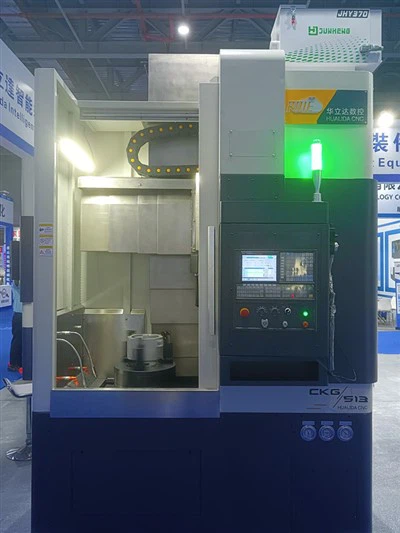
Hey there! As a supplier of Vertical CNC Lathe, I've got a lot of hands - on experience with these machines. And one common question I often get is, "What are the differences between a vertical CNC lathe and a conventional vertical lathe?" Well, let's dive right in and break it down.
1. Control System
The most obvious difference between a vertical CNC lathe and a conventional vertical lathe lies in their control systems. A conventional vertical lathe is operated manually. The operator has to adjust the cutting speed, feed rate, and depth of cut by hand using levers and knobs. It's like driving a car with a manual transmission - you're in full control of every little movement.
On the other hand, a vertical CNC lathe is controlled by a computer numerical control (CNC) system. You input a set of instructions, usually in the form of a G - code program, into the CNC controller. The machine then follows these commands precisely to perform the machining operations. It's more like an autopilot in a plane. This means that once the program is set up correctly, the machine can run continuously with minimal human intervention.
For example, if you need to machine a complex part with multiple features, a conventional lathe operator would have to make multiple adjustments during the process, which is not only time - consuming but also prone to human error. With a Vertical CNC Lathe, the program can be written to handle all the different operations in sequence, ensuring high precision and repeatability.
2. Precision and Accuracy
When it comes to precision and accuracy, the vertical CNC lathe has a significant edge over the conventional vertical lathe. The CNC system can control the movement of the cutting tool with extremely high precision, often down to a few micrometers. This is because the computer can calculate and execute the movements with a high degree of accuracy, eliminating the variability that can occur with manual operation.
In a conventional vertical lathe, the precision depends largely on the skill and experience of the operator. Even the most experienced operators may have slight variations in their movements, which can affect the final dimensions of the machined part. For industries that require high - precision components, such as aerospace and medical device manufacturing, a Vertical CNC Lathe is often the preferred choice.
3. Complexity of Machining
The complexity of the parts that can be machined is another area where the two types of lathes differ. Conventional vertical lathes are better suited for simple and straightforward machining tasks. They are great for producing parts with basic shapes, such as cylinders and cones, where the cutting operations are relatively easy to control manually.
However, when it comes to machining complex geometries, such as parts with intricate curves, multiple holes at different angles, or non - circular profiles, a vertical CNC lathe is the way to go. The CNC system can easily handle these complex operations by following the pre - programmed instructions. For instance, if you need to machine a turbine blade with a complex airfoil shape, a conventional lathe would struggle to achieve the required precision, while a Vertical CNC Lathe can handle it with ease.
4. Production Efficiency
Production efficiency is a crucial factor in any manufacturing process. A conventional vertical lathe requires a skilled operator to constantly monitor and adjust the machine during the machining process. This not only limits the production speed but also means that the operator can only handle one machine at a time.
In contrast, a vertical CNC lathe can run unattended for long periods once the program is set up. This allows for higher production volumes in a shorter period. Additionally, the CNC system can optimize the cutting parameters automatically, reducing the machining time. For example, it can adjust the cutting speed and feed rate based on the material being machined and the tool being used. This results in faster cycle times and increased overall productivity. If you're a manufacturer looking to increase your output, a Vertical CNC Lathe is definitely a better option.
5. Cost
Cost is always a consideration when choosing a machining solution. Conventional vertical lathes are generally less expensive to purchase initially. They have a simpler design and do not require the complex CNC control systems, which makes them more affordable for small - scale manufacturers or those on a tight budget.
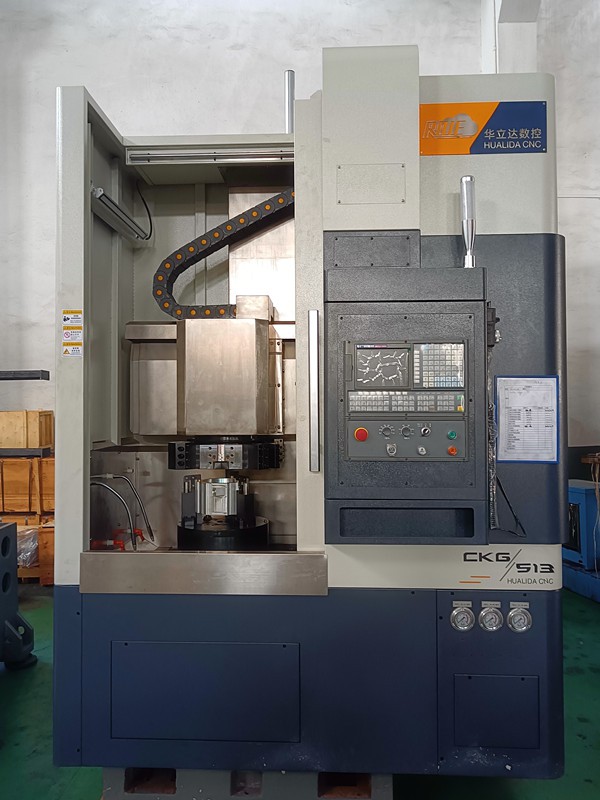
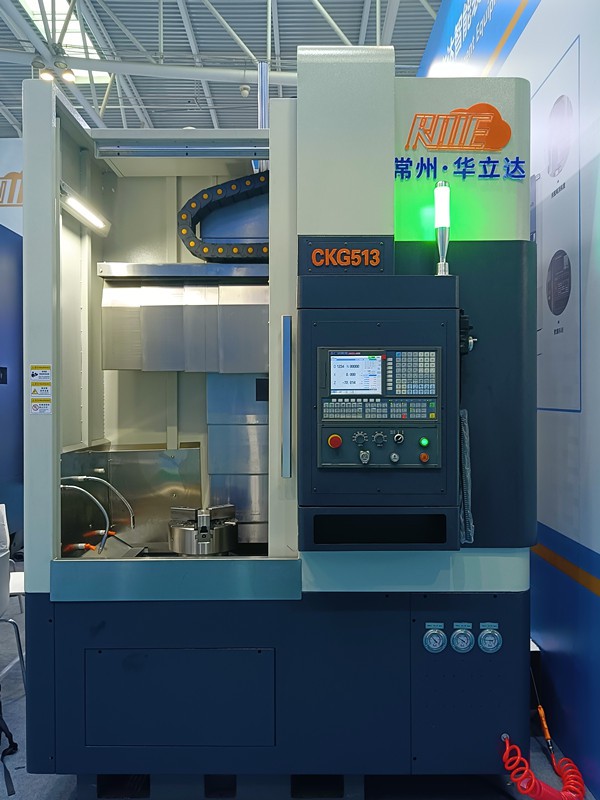
However, when you factor in the long - term costs, the picture changes. A conventional lathe requires a skilled operator, and labor costs can add up over time. Also, the lower precision and slower production speed of a conventional lathe can lead to higher costs per part. On the other hand, a vertical CNC lathe, while more expensive upfront, can result in cost savings in the long run due to its higher precision, faster production, and reduced labor requirements. For large - scale production, the return on investment for a Vertical CNC Lathe can be quite significant.
6. Flexibility
When it comes to flexibility, a Vertical CNC Lathe wins hands down. With a CNC lathe, changing the machining program is as easy as modifying a few lines of code. This means that you can quickly switch between different parts or product designs without the need for extensive re - tooling or setup changes.
In a conventional vertical lathe, changing the machining operation often requires physical adjustments to the machine, such as changing the cutting tools, adjusting the fixtures, and recalibrating the settings. This process can be time - consuming and may require additional training for the operator. So, if you're in an industry where product designs change frequently, a vertical CNC lathe offers much more flexibility.
7. Maintenance
Maintenance requirements also differ between the two types of lathes. Conventional vertical lathes are relatively simpler in design, which means that their maintenance is often more straightforward. Basic maintenance tasks, such as lubrication, cleaning, and inspection of mechanical components, can be easily carried out by the operator.
A vertical CNC lathe, on the other hand, has a more complex control system and electronic components. While modern CNC systems are generally reliable, they do require more specialized maintenance. This may involve software updates, calibration of the CNC controller, and inspection of the electrical components. However, most CNC lathe manufacturers, including us, provide comprehensive maintenance support and training to ensure that the machines run smoothly.
Conclusion
In conclusion, both vertical CNC lathes and conventional vertical lathes have their own strengths and weaknesses. Conventional vertical lathes are a good choice for simple machining tasks, small - scale production, and those on a tight budget. However, if you need high precision, complex machining, high production efficiency, flexibility, and long - term cost savings, a Vertical CNC Lathe is the better option.
If you're in the market for a vertical lathe, whether it's a Hard Rail Vertical Lathe or a Heavy Vertical Lathe, we're here to help. We offer a wide range of high - quality vertical CNC lathes that can meet your specific machining needs. Don't hesitate to reach out to us for more information, and let's start a discussion about how our machines can benefit your manufacturing process.
References
- Smith, J. (2020). A Guide to Machine Tools. Manufacturing Press.
- Jones, M. (2019). CNC Machining Technology. Industrial Publishing.