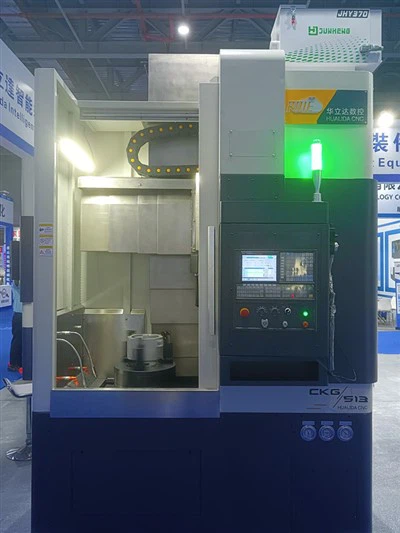
Can a vertical lathe machine be used for machining internal features? This is a question that often arises among manufacturers and machining enthusiasts. As a supplier of vertical lathe machines, I am well - versed in the capabilities of these powerful tools and am excited to delve into this topic.
Understanding Vertical Lathe Machines
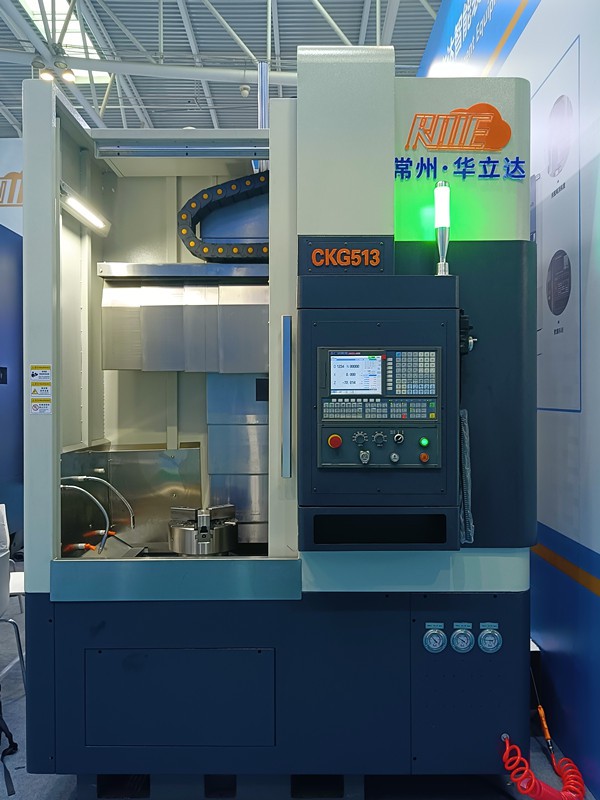
Vertical lathe machines, also known as vertical turning centers, are designed with the workpiece held vertically on the table. This orientation offers several advantages over horizontal lathes. For instance, gravity assists in chip removal, which can improve the surface finish of the machined part. Additionally, the vertical setup allows for better handling of large and heavy workpieces, as the weight is supported directly on the table rather than being cantilevered as in horizontal lathes.
Machining Internal Features: Feasibility
The short answer is yes, a vertical lathe machine can be used for machining internal features. The key lies in the use of appropriate cutting tools and programming. Vertical lathes are equipped with tool turrets or tool magazines that can hold a variety of cutting tools, including boring bars, drills, and reamers, which are essential for internal machining operations.
Boring Operations
Boring is a common internal machining process used to enlarge existing holes or create precise internal diameters. On a vertical lathe, a boring bar is mounted on the tool turret. The bar is inserted into the pre - drilled hole of the workpiece, and the lathe rotates the workpiece while the boring bar moves along the axis of the hole to remove material. This process can achieve high levels of accuracy and surface finish, making it suitable for applications such as engine cylinders and hydraulic cylinders.
Drilling and Reaming
Drilling is used to create holes in the workpiece. Vertical lathes can be equipped with drill bits that are capable of drilling holes of various diameters. After drilling, reaming can be performed to improve the hole's accuracy and surface finish. Reamers are cutting tools with multiple cutting edges that remove a small amount of material from the drilled hole to achieve the desired tolerance.

Advantages of Using a Vertical Lathe for Internal Machining
Stability
When machining internal features, stability is crucial to ensure accurate results. The vertical orientation of the workpiece on a vertical lathe provides better stability compared to horizontal lathes, especially when dealing with large and heavy parts. The weight of the workpiece is evenly distributed on the table, reducing the risk of vibration and deflection during the machining process.
Accessibility
Vertical lathes offer excellent accessibility to the workpiece. The operator can easily reach the internal features of the part, making it convenient to set up the cutting tools and monitor the machining process. This accessibility also allows for quick tool changes, which can improve productivity.
Gravity - Assisted Chip Removal
As mentioned earlier, gravity plays a significant role in chip removal on a vertical lathe. During internal machining operations, chips can fall freely out of the hole, preventing them from accumulating and causing damage to the cutting tool or the workpiece. This results in a cleaner machining environment and better surface finish.
Case Studies: Real - World Applications
Let's take a look at some real - world examples where vertical lathe machines have been successfully used for machining internal features.
Aerospace Industry
In the aerospace industry, precision is of utmost importance. Vertical lathes are used to machine internal features of turbine engine components, such as compressor cases and turbine disks. These components require high - precision internal diameters and smooth surface finishes to ensure optimal performance. The stability and accuracy of vertical lathes make them ideal for these critical applications.
Oil and Gas Industry
The oil and gas industry often deals with large - scale components, such as valves and pipe fittings. Vertical lathes are used to machine internal features of these components, including threads and internal bores. The heavy - duty construction of vertical lathes allows them to handle the large size and weight of these parts, while the ability to perform accurate internal machining ensures the reliability of the components.
Limitations and Considerations
While vertical lathes are capable of machining internal features, there are some limitations and considerations to keep in mind.
Size Constraints
The size of the internal features that can be machined is limited by the size of the tooling and the working envelope of the vertical lathe. For very small internal diameters or deep holes, special tooling may be required, and the machine's capabilities may need to be carefully evaluated.
Complexity of Internal Features
Some internal features, such as complex internal profiles or multiple intersecting holes, may require advanced programming and tooling. The operator needs to have a good understanding of the machining process and the capabilities of the vertical lathe to achieve the desired results.
Choosing the Right Vertical Lathe for Internal Machining
When selecting a vertical lathe for internal machining, several factors should be considered.
Machine Size and Capacity
The size and weight of the workpieces you plan to machine will determine the appropriate size and capacity of the vertical lathe. Make sure the machine has enough power and torque to handle the material removal rates required for internal machining operations.
Tooling Options
Look for a vertical lathe that offers a wide range of tooling options. This will allow you to perform different internal machining operations, such as boring, drilling, and reaming, with ease.
Control System
A modern and user - friendly control system is essential for programming and operating the vertical lathe. The control system should support advanced machining functions, such as canned cycles for internal machining operations, to improve productivity and accuracy.
Conclusion
In conclusion, a vertical lathe machine can indeed be used for machining internal features. With the right cutting tools, programming, and machine selection, vertical lathes offer a stable, accurate, and efficient solution for internal machining operations. Whether you are in the aerospace, oil and gas, or other industries, a vertical lathe can help you achieve high - quality internal features on your workpieces.
If you are interested in learning more about our vertical lathe machines or have specific requirements for internal machining, we invite you to contact us for a detailed discussion. Our team of experts is ready to assist you in finding the perfect solution for your machining needs.
References
-
"Machining Handbook", Various authors, McGraw - Hill
-
"CNC Machining Technology", John Doe, Industrial Press
-
"Advanced Manufacturing Processes", Jane Smith, Wiley