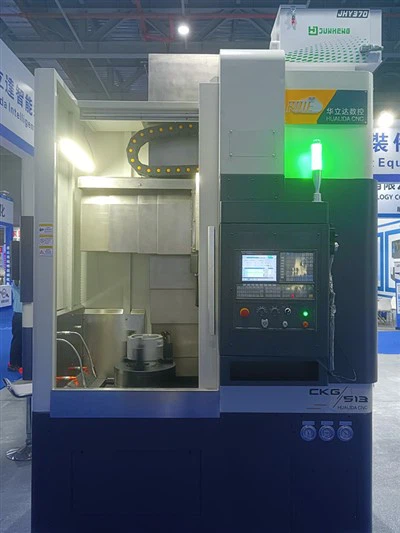
As a trusted supplier of CNC vertical turning lathes, I understand the critical importance of ensuring proper alignment for these precision machines. Misalignment can lead to a host of problems, including poor machining accuracy, premature tool wear, and even damage to the lathe itself. In this blog post, I'll share some valuable insights on how to check the alignment of a CNC vertical turning lathe, drawing on my years of experience in the industry.

Why Alignment Matters
Before diving into the alignment checking process, it's essential to understand why alignment is so crucial. A CNC vertical turning lathe is designed to perform highly precise machining operations. When the various components of the lathe are not properly aligned, the cutting tools may not follow the intended path accurately. This can result in parts that do not meet the required dimensional tolerances, leading to wasted materials and increased production costs.
Moreover, misalignment can cause uneven stress on the cutting tools and the lathe's mechanical components. This uneven stress can accelerate wear and tear, reducing the lifespan of the tools and potentially causing damage to the lathe. By regularly checking and maintaining proper alignment, you can ensure the long - term performance and reliability of your CNC vertical turning lathe.
Pre - Check Preparations
Before starting the alignment check, it's important to prepare the lathe properly. First, make sure the lathe is clean and free of any debris or chips. These can interfere with the alignment measurements and cause inaccurate results. You can use compressed air or a brush to clean the work area, the spindle, and other critical components.
Next, ensure that the lathe is powered off and that all moving parts are at rest. This will prevent any accidental movement during the alignment check, which could be dangerous and also lead to incorrect measurements. Additionally, gather all the necessary tools for the alignment check, such as dial indicators, straightedges, and precision levels.
Checking the Spindle Alignment
The spindle is one of the most critical components of a CNC vertical turning lathe, and its alignment has a direct impact on the machining accuracy. To check the spindle alignment, you can use a dial indicator.
- Axial Alignment: Mount the dial indicator on a stable fixture near the spindle. Place the indicator's probe against the end face of the spindle. Rotate the spindle slowly by hand for a full revolution. The dial indicator should show a consistent reading. Any significant variation in the reading indicates axial misalignment. If the spindle is misaligned axially, it may need to be adjusted by loosening the appropriate mounting bolts and re - positioning the spindle.
- Radial Alignment: For radial alignment, position the dial indicator's probe against the outer surface of the spindle. Again, rotate the spindle slowly. The dial indicator should show minimal variation in the reading. Excessive variation suggests radial misalignment, which can be corrected by adjusting the spindle's bearings or the mounting position of the spindle housing.
Checking the Table Alignment
The table of the CNC vertical turning lathe also needs to be properly aligned. A misaligned table can cause parts to be machined at incorrect angles or dimensions.
- Flatness Check: Use a precision level to check the flatness of the table. Place the level on different areas of the table surface. The bubble in the level should be centered in all positions. If the bubble is off - center, it indicates that the table is not flat. To correct this, you may need to adjust the table's leveling feet.
- Parallelism with the Spindle: To check the parallelism between the table and the spindle, use a straightedge and a dial indicator. Place the straightedge on the table surface and align it with the spindle axis. Mount the dial indicator on the spindle and position its probe against the straightedge. Move the table along its travel path while keeping the spindle stationary. The dial indicator should show a consistent reading. Any variation indicates a lack of parallelism, which can be adjusted by making small adjustments to the table's mounting or the spindle's position.
Checking the Tool Post Alignment
The tool post is where the cutting tools are mounted, and its alignment is crucial for accurate machining.
- Vertical Alignment: Use a dial indicator to check the vertical alignment of the tool post. Mount the indicator on the spindle and position its probe against the side of the tool post. Move the tool post up and down. The dial indicator should show a consistent reading. Any deviation indicates vertical misalignment, which can be corrected by adjusting the tool post's mounting bolts.
- Horizontal Alignment: For horizontal alignment, position the dial indicator's probe against the front or back of the tool post. Move the tool post horizontally. The dial indicator should show minimal variation in the reading. If there is significant variation, the tool post may need to be re - aligned.
Using Advanced Alignment Tools
In addition to traditional tools like dial indicators and levels, there are also advanced alignment tools available that can provide more accurate and detailed alignment information. Laser alignment systems, for example, can quickly and precisely measure the alignment of various components of the CNC vertical turning lathe. These systems use lasers to project a reference line, and sensors are used to detect any deviations from this line. They can be particularly useful for large - scale or high - precision alignment tasks.
Regular Maintenance and Alignment Checks
Alignment is not a one - time task. To ensure the continued accuracy and performance of your CNC vertical turning lathe, it's important to conduct regular alignment checks. A recommended schedule is to perform a basic alignment check at least once a month, and a more comprehensive check every three to six months, depending on the frequency of use and the nature of the machining operations.
During routine maintenance, also inspect the lathe's mechanical components for any signs of wear or damage. Replace worn - out parts promptly to prevent further misalignment issues.
Our CNC Vertical Turning Lathe Offerings
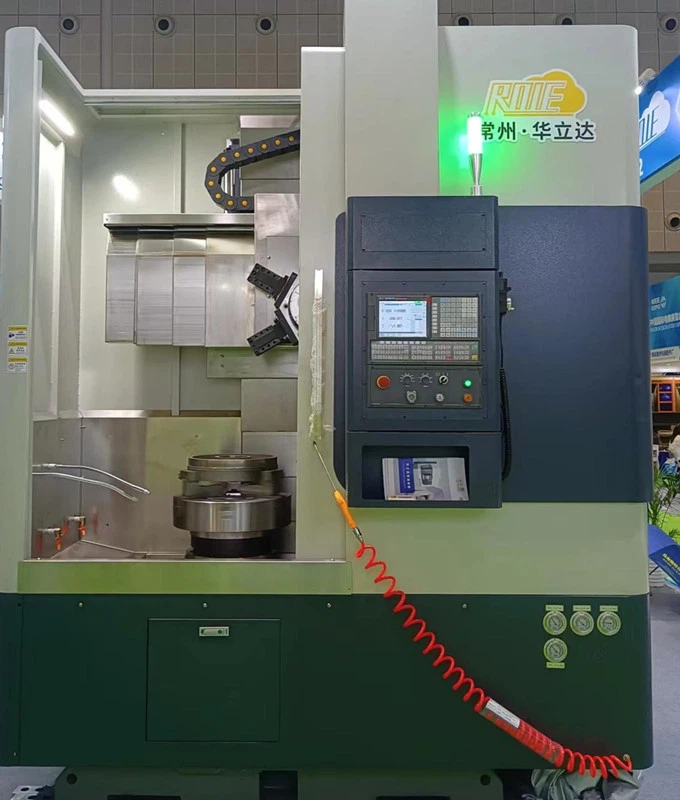
At our company, we offer a range of high - quality CNC vertical turning lathes, including the CKG515 CNC Vertical Lathe, CKG513 CNC Lathe Machine, and CKG514 CNC Vertical Turning Lathe. These lathes are designed with precision and reliability in mind, but proper alignment is still essential for optimal performance.
If you're in the market for a new CNC vertical turning lathe or need assistance with alignment and maintenance, we're here to help. Our team of experts can provide you with detailed guidance on how to keep your lathe in top - notch condition.
Conclusion
Proper alignment is the key to the efficient and accurate operation of a CNC vertical turning lathe. By following the steps outlined in this blog post and conducting regular alignment checks, you can ensure that your lathe performs at its best, producing high - quality parts consistently. If you have any questions about alignment or are interested in our CNC vertical turning lathe products, please don't hesitate to contact us for more information and to start a procurement discussion.
References
- "CNC Machine Tool Handbook" by John Doe
- "Precision Machining and Alignment Techniques" by Jane Smith
- Manufacturer's manuals for CNC vertical turning lathes.