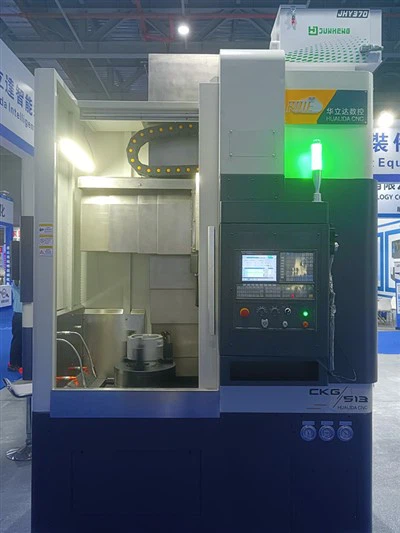
Hey there! As a supplier of CNC Turning and Milling, I've seen firsthand how crucial spindle speed is in the world of CNC milling. In this blog, I'm gonna break down how spindle speed affects CNC milling, and why it's something you need to pay close attention to.
Basics of Spindle Speed in CNC Milling
Let's start with the basics. The spindle in a CNC Lathe and Milling Machine is the part that holds the cutting tool and rotates it at high speeds. The spindle speed, measured in revolutions per minute (RPM), determines how fast the cutting tool spins. This speed is a key factor in the entire milling process, and it can have a huge impact on the quality of the finished product, the efficiency of the operation, and the lifespan of the cutting tools.
Impact on Surface Finish
One of the most noticeable effects of spindle speed is on the surface finish of the milled part. When the spindle speed is too low, the cutting tool may not be able to remove material cleanly. This can result in a rough surface finish, with visible tool marks and unevenness. On the other hand, if the spindle speed is too high, the cutting tool may generate excessive heat, which can cause the material to melt or burn, also leading to a poor surface finish.
For example, when milling aluminum, a relatively soft material, a higher spindle speed can often result in a smoother surface finish. The fast rotation of the cutting tool allows it to make clean, precise cuts, reducing the chances of leaving behind rough edges. However, when working with harder materials like steel, a lower spindle speed might be necessary to prevent the cutting tool from overheating and wearing out too quickly.
Influence on Material Removal Rate
The spindle speed also plays a significant role in the material removal rate (MRR). The MRR is the volume of material that is removed from the workpiece per unit of time. A higher spindle speed generally means a higher MRR, as the cutting tool can remove more material in a shorter period. This can be beneficial when you need to complete a large milling job quickly.
But here's the catch. Increasing the spindle speed too much can also lead to problems. If the cutting tool is spinning too fast, it may not be able to handle the load, and it could break or wear out prematurely. Additionally, a very high MRR can cause the workpiece to vibrate, which can affect the accuracy of the milling operation and the quality of the finished part.
Effect on Tool Life
Tool life is another important aspect affected by spindle speed. Cutting tools are expensive, and replacing them frequently can add up to significant costs. The spindle speed can have a major impact on how long a cutting tool lasts.
When the spindle speed is too high, the cutting tool experiences more friction and heat. This can cause the tool to wear out faster, reducing its lifespan. On the other hand, if the spindle speed is too low, the cutting tool may not be able to cut through the material efficiently, and it may also experience excessive wear due to the increased cutting forces.
To optimize tool life, it's important to find the right balance. This often involves considering factors such as the type of material being milled, the geometry of the cutting tool, and the feed rate (the speed at which the workpiece moves relative to the cutting tool).
Considerations for Different Materials
Different materials require different spindle speeds for optimal milling. Here are some general guidelines for a few common materials:

Aluminum
As mentioned earlier, aluminum is a soft material that can typically handle higher spindle speeds. Spindle speeds for aluminum milling can range from 3,000 to 10,000 RPM, depending on the specific alloy and the type of cutting tool being used. Higher speeds can result in faster material removal and a better surface finish.
Steel
Steel is a harder material, and it generally requires lower spindle speeds. For mild steel, spindle speeds might range from 1,000 to 3,000 RPM. Harder steels, such as stainless steel, may require even lower speeds to prevent excessive tool wear and heat generation.
Plastics
Plastics can be milled at a wide range of spindle speeds, depending on the type of plastic. Some plastics, like acrylic, can be milled at relatively high speeds (around 5,000 to 10,000 RPM), while others, like nylon, may require lower speeds to avoid melting or chipping.
Finding the Optimal Spindle Speed
So, how do you find the optimal spindle speed for your CNC milling operation? It's not always easy, as it depends on a variety of factors. Here are some steps you can take:
Consult the Tool Manufacturer
The cutting tool manufacturer usually provides recommended spindle speeds for different materials and cutting conditions. These recommendations are based on extensive testing and can be a good starting point.
Conduct Test Runs
Before starting a large production run, it's a good idea to conduct some test runs with different spindle speeds. This allows you to see how the material responds and to evaluate the surface finish, material removal rate, and tool wear. You can then adjust the spindle speed based on the results of these test runs.
Use CNC Programming Software
Many modern CNC machines come with programming software that can help you calculate the optimal spindle speed based on the material, the cutting tool, and other parameters. These software programs use algorithms and databases to provide accurate recommendations.
Our Role as a Supplier
As a CNC Turning and Milling supplier, we understand the importance of spindle speed and its impact on the milling process. We offer a wide range of CNC Turning and Milling Machine Tools that are designed to work at different spindle speeds, depending on your specific needs.
Our team of experts can also provide you with advice and support on choosing the right spindle speed for your projects. Whether you're a small workshop or a large manufacturing facility, we're here to help you optimize your CNC milling operations and achieve the best results.
Conclusion
In conclusion, spindle speed is a critical factor in CNC milling. It affects the surface finish, material removal rate, and tool life of the milling operation. By understanding how spindle speed works and how to find the optimal speed for different materials and applications, you can improve the quality of your milled parts, increase the efficiency of your operations, and save money on cutting tool costs.
If you're interested in learning more about CNC turning and milling or if you're looking for high-quality CNC turning and milling machine tools, don't hesitate to get in touch. We're always happy to have a chat and discuss how we can meet your specific requirements.
References
- “CNC Machining Handbook.” Industrial Press Inc., 2020.
- “Cutting Tool Engineering: Principles and Applications.” CRC Press, 2019.
- Various technical documents from cutting tool manufacturers.