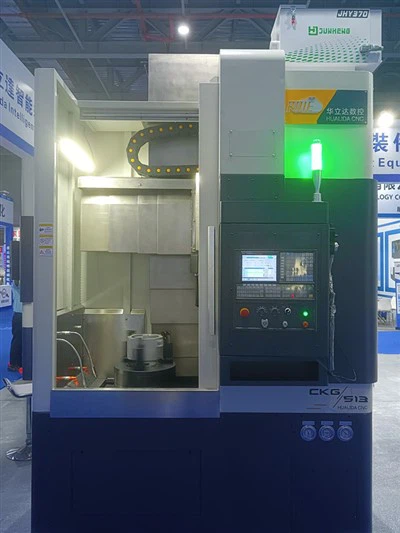
Adjusting the rapid traverse speed of a CNC vertical lathe is a crucial task that can significantly impact the efficiency and productivity of your machining operations. As a supplier of CNC vertical lathes, I understand the importance of this adjustment and the impact it can have on your manufacturing processes. In this blog post, I will share some insights on how to adjust the rapid traverse speed of a CNC vertical lathe effectively.


Understanding Rapid Traverse Speed
Before delving into the adjustment process, it's essential to understand what rapid traverse speed is. The rapid traverse speed refers to the maximum speed at which the machine's axes (such as the X, Y, and Z axes) can move without performing any cutting operations. This speed is used for quickly positioning the cutting tool to the starting point of a machining operation or moving it between different machining locations.
The rapid traverse speed is determined by several factors, including the machine's mechanical design, the power of the servo motors, and the control system settings. By adjusting this speed, you can optimize the machine's performance, reduce non - cutting time, and improve overall productivity.
Factors to Consider Before Adjusting
- Machine Specifications: Every CNC vertical lathe has its own maximum and minimum rapid traverse speed limits specified by the manufacturer. These limits are set based on the machine's mechanical capabilities, such as the strength of the ball screws, the load - carrying capacity of the linear guides, and the power of the servo motors. Before making any adjustments, refer to the machine's user manual to ensure that you stay within these limits.
- Workpiece Requirements: The type of workpiece you are machining can also influence the appropriate rapid traverse speed. For example, if you are working on a large and heavy workpiece, a higher rapid traverse speed may cause vibrations that can affect the machining accuracy. On the other hand, for small and lightweight workpieces, a higher speed can be used to reduce the non - cutting time.
- Tooling and Fixturing: The type of cutting tools and fixtures used in the machining process can also impact the rapid traverse speed. Some tools may be more sensitive to vibrations, and using a high rapid traverse speed may cause premature tool wear or breakage. Similarly, the stability of the fixtures is crucial. If the fixtures are not properly secured, a high rapid traverse speed can cause the workpiece to move or shift, leading to inaccurate machining.
Steps to Adjust the Rapid Traverse Speed
- Access the Control System: Most modern CNC vertical lathes are equipped with a control system that allows you to adjust various parameters, including the rapid traverse speed. To access the control system, turn on the machine and navigate to the parameter settings menu. The exact location of this menu may vary depending on the make and model of the lathe.
- Locate the Rapid Traverse Speed Parameter: Once you are in the parameter settings menu, look for the parameter related to the rapid traverse speed. This parameter is usually labeled as "Rapid Traverse Speed", "G00 Speed", or something similar. In some control systems, you may need to enter a specific code or password to access and modify these parameters.
- Modify the Speed Value: After locating the rapid traverse speed parameter, you can modify the speed value. You can increase or decrease the speed in small increments, typically in units of millimeters per minute (mm/min) or inches per minute (ipm). It's important to make these adjustments gradually and test the machine's performance after each change.
- Test the Adjustment: After modifying the rapid traverse speed, run a test program on the machine. This program should include rapid movements of the axes to different positions. Observe the machine's behavior during these movements. Check for any abnormal vibrations, noises, or jerks. If you notice any issues, immediately stop the machine and reduce the rapid traverse speed to a more appropriate level.
Fine - Tuning the Adjustment
- Monitoring the Machining Process: Once you have made the initial adjustment and tested the machine, start a real - world machining operation. Monitor the entire process closely. Pay attention to the time it takes for the machine to move between different machining locations. If the non - cutting time is still too long, you may consider increasing the rapid traverse speed slightly. However, be cautious not to exceed the machine's capabilities.
- Feedback from Operators: The operators who work with the CNC vertical lathe on a daily basis can provide valuable feedback. They can tell you if the new rapid traverse speed is causing any problems, such as difficulty in loading or unloading workpieces, or if it is improving the overall efficiency of the machining process. Take their feedback into account and make further adjustments as needed.
Our CNC Vertical Lathes and Rapid Traverse Speed
At our company, we offer a range of high - quality CNC vertical lathes, including the CKG5110 CNC Vertical Turning Lathe, the CKG514 CNC Vertical Lathe, and the High Speed Vertical Lathe. These machines are designed with advanced control systems that allow for easy adjustment of the rapid traverse speed. Our technical support team is also available to assist you in making the appropriate adjustments based on your specific machining requirements.
Conclusion
Adjusting the rapid traverse speed of a CNC vertical lathe is a process that requires careful consideration of various factors. By following the steps outlined in this blog post and taking into account the machine's specifications, workpiece requirements, and tooling, you can optimize the rapid traverse speed to improve the efficiency and productivity of your machining operations.
If you are interested in learning more about our CNC vertical lathes or need assistance with adjusting the rapid traverse speed, we encourage you to contact us for a detailed discussion. Our team of experts is ready to help you find the best solutions for your manufacturing needs.
References
- Manufacturer's User Manuals for CNC Vertical Lathes
- Industry Standards for CNC Machining Operations
- Technical Papers on CNC Machine Tool Optimization