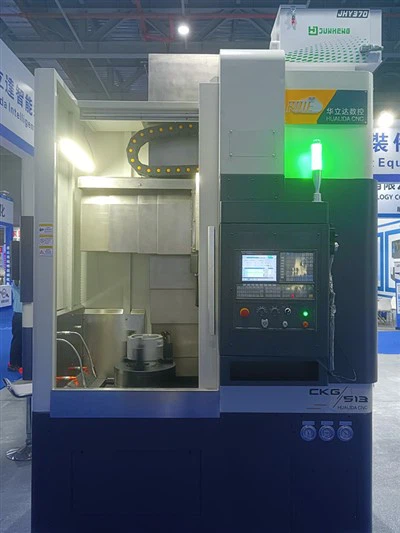
Hey there! As a supplier of CNC Vertical Grinding Machines, I've seen firsthand how thermal deformation can throw a wrench in the works. It's a common headache in the machining world, but don't worry – I'm here to share some tips on how to compensate for it.
Understanding Thermal Deformation
First things first, let's talk about what thermal deformation is. When a CNC vertical grinding machine is in operation, various components generate heat. The grinding wheel, the spindle, and even the cutting process itself can all produce significant amounts of heat. This heat causes the machine's parts to expand, leading to changes in dimensions and positions. And these changes can have a big impact on the accuracy of your machining.
For example, if the spindle expands due to heat, the grinding wheel might not be in the exact position it's supposed to be. This can result in parts being machined out of tolerance, which is a big no - no in precision manufacturing.
Measuring Thermal Deformation
Before you can compensate for thermal deformation, you need to know how much it's happening. There are a few ways to measure it. One common method is to use temperature sensors. You can place these sensors at key points on the machine, like the spindle, the bed, and the column. By monitoring the temperature changes over time, you can get an idea of how much the machine is expanding or contracting.
Another way is to use displacement sensors. These sensors can directly measure the changes in position of different machine parts. For instance, you can measure the movement of the grinding wheel relative to the workpiece. By combining the data from temperature and displacement sensors, you can build a more accurate picture of the thermal deformation.
Compensating for Thermal Deformation
Software Compensation
One of the most effective ways to compensate for thermal deformation is through software. Modern CNC control systems are pretty smart. They can take the data from the sensors and use it to adjust the machine's movements in real - time.
For example, if the temperature sensors detect that the spindle is getting hot and expanding, the control system can adjust the position of the grinding wheel accordingly. It can move the wheel a little bit closer or farther away from the workpiece to maintain the correct machining dimensions.
There are also some advanced software algorithms that can predict thermal deformation based on historical data. These algorithms can analyze patterns in temperature changes and how they relate to deformation. Then, they can make proactive adjustments to the machine's operation before the deformation actually causes problems.
Cooling Systems
Another important way to deal with thermal deformation is to control the heat in the first place. That's where cooling systems come in. There are different types of cooling systems for CNC vertical grinding machines.
One common type is a liquid cooling system. This system circulates a coolant, usually a special type of oil or water - based fluid, through the machine's components. The coolant absorbs the heat generated during operation and carries it away. For example, it can be circulated around the spindle to keep it at a stable temperature.
Air cooling systems are also used in some cases. These systems use fans or blowers to direct cool air over the machine's parts. They're a bit less efficient than liquid cooling systems, but they can still help reduce the overall temperature and minimize thermal deformation.
Machine Design
The design of the CNC vertical grinding machine itself can also play a role in compensating for thermal deformation. For example, some machines are designed with materials that have low coefficients of thermal expansion. This means that they expand and contract less when the temperature changes.
The layout of the machine can also be optimized. For instance, the positioning of the heat - generating components can be arranged in a way that minimizes the impact of heat on the critical machining areas. And some machines are designed with flexible structures that can absorb the thermal expansion without affecting the accuracy of the machining.


Real - World Applications
Let's take a look at how these compensation methods work in real - world situations. Suppose you're using a CNC Vertical Grinding Machine to machine high - precision parts for the aerospace industry. These parts have very tight tolerances, and even a small amount of thermal deformation can cause them to be rejected.
By using temperature and displacement sensors, you can closely monitor the thermal conditions of the machine. The software compensation system can then make real - time adjustments to ensure that the parts are machined within the required tolerances. And the cooling system can help keep the machine's temperature stable, reducing the risk of excessive deformation.
If you're dealing with more complex machining tasks, like combining turning and grinding operations, a Turning and Grinding Compound Machine Tools might be a good choice. These machines can perform multiple operations in one setup, but they also generate more heat. So, the compensation methods we've discussed are even more important.
And for those who need an all - in - one solution, the CNC Vertical Grinding Compound Machine offers a great combination of grinding and other machining capabilities. With proper thermal compensation, you can achieve high - quality results with these machines.
Conclusion
Compensating for thermal deformation in a CNC vertical grinding machine is crucial for achieving high - precision machining. By understanding the causes of thermal deformation, measuring it accurately, and using a combination of software compensation, cooling systems, and smart machine design, you can minimize its impact on your machining operations.
If you're in the market for a CNC vertical grinding machine or need more information on how to deal with thermal deformation, don't hesitate to reach out. We're here to help you find the best solutions for your specific needs. Whether you're a small - scale workshop or a large - scale manufacturing plant, we've got the expertise and the products to support you.
References
- Smith, J. (2020). Precision Machining: Dealing with Thermal Effects. Machining World Journal, 15(3), 45 - 52.
- Johnson, A. (2019). Advanced CNC Control Systems for Thermal Compensation. Manufacturing Technology Review, 22(2), 67 - 74.
- Brown, C. (2021). Cooling Systems in CNC Machines: A Comparative Analysis. Industrial Cooling Magazine, 30(4), 23 - 31.