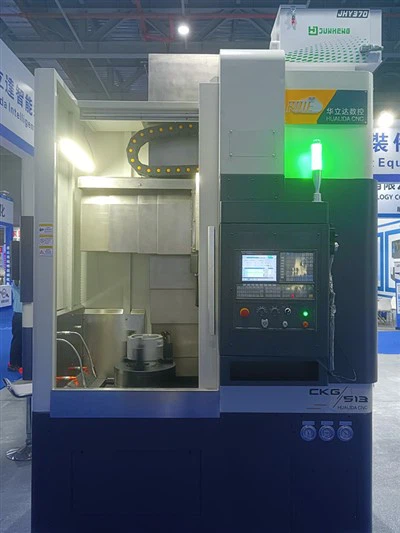
As a supplier of High Speed Vertical Lathes, I understand the critical role that optimizing cutting parameters plays in enhancing the performance and efficiency of these machines. In this blog post, I'll share some insights on how to optimize the cutting parameters of a High Speed Vertical Lathe, drawing on my experience in the industry.
Understanding the Basics of Cutting Parameters
Before diving into optimization strategies, it's essential to understand the key cutting parameters involved in turning operations on a High Speed Vertical Lathe. These parameters include cutting speed, feed rate, and depth of cut.
- Cutting Speed: This refers to the speed at which the cutting tool moves relative to the workpiece. It is typically measured in surface feet per minute (SFM) or meters per minute (m/min). The cutting speed has a significant impact on the tool life, surface finish, and material removal rate.
- Feed Rate: The feed rate is the distance the cutting tool advances along the workpiece in one revolution. It is measured in inches per revolution (IPR) or millimeters per revolution (mm/r). The feed rate affects the surface finish, chip formation, and cutting forces.
- Depth of Cut: This is the thickness of the material removed in each pass of the cutting tool. It is measured in inches or millimeters. The depth of cut influences the cutting forces, power consumption, and tool life.
Factors Affecting Cutting Parameters
Several factors need to be considered when determining the optimal cutting parameters for a High Speed Vertical Lathe. These factors include:
- Workpiece Material: Different materials have different properties, such as hardness, toughness, and thermal conductivity. These properties affect the cutting forces, tool wear, and chip formation. For example, harder materials require lower cutting speeds and higher feed rates to avoid excessive tool wear.
- Cutting Tool Material: The choice of cutting tool material depends on the workpiece material, cutting conditions, and desired surface finish. Common cutting tool materials include high-speed steel (HSS), carbide, ceramic, and cubic boron nitride (CBN). Each material has its own advantages and limitations in terms of cutting performance and cost.
- Machine Tool Capabilities: The capabilities of the High Speed Vertical Lathe, such as spindle speed, power, and rigidity, also play a crucial role in determining the optimal cutting parameters. The machine should be able to handle the cutting forces and power requirements without excessive vibration or deflection.
- Surface Finish Requirements: The desired surface finish of the workpiece is another important factor to consider. Finer surface finishes generally require lower feed rates and cutting speeds, while coarser finishes can tolerate higher feed rates and cutting speeds.
Optimization Strategies
Now that we understand the basics of cutting parameters and the factors that affect them, let's explore some strategies for optimizing the cutting parameters of a High Speed Vertical Lathe.
1. Start with Manufacturer Recommendations
Most cutting tool manufacturers provide recommended cutting parameters for their tools based on the workpiece material and cutting conditions. These recommendations are a good starting point for optimizing the cutting parameters. However, it's important to note that these recommendations are general guidelines and may need to be adjusted based on the specific requirements of your application.
2. Conduct Cutting Tests
To determine the optimal cutting parameters for your specific application, it's often necessary to conduct cutting tests. Start by using the manufacturer's recommended parameters as a baseline and then make small adjustments to the cutting speed, feed rate, and depth of cut. Monitor the cutting performance, including tool wear, surface finish, and chip formation, and record the results. Based on the test results, make further adjustments to the cutting parameters until you achieve the desired performance.
3. Use Cutting Parameter Optimization Software
There are several cutting parameter optimization software programs available on the market that can help you determine the optimal cutting parameters for your High Speed Vertical Lathe. These programs use advanced algorithms and models to analyze the workpiece material, cutting tool material, and machine tool capabilities and recommend the optimal cutting parameters. Using cutting parameter optimization software can save time and improve the accuracy of your cutting parameter selection.
4. Consider Tool Path Optimization
In addition to optimizing the cutting parameters, tool path optimization can also improve the cutting performance of a High Speed Vertical Lathe. By using advanced CAM software, you can generate efficient tool paths that minimize the cutting time, reduce the cutting forces, and improve the surface finish. Tool path optimization can also help to avoid tool collisions and reduce the risk of tool breakage.
5. Monitor and Adjust Cutting Parameters
Once you have determined the optimal cutting parameters for your application, it's important to monitor the cutting performance regularly and make adjustments as needed. Factors such as tool wear, workpiece material variations, and machine tool conditions can all affect the cutting performance over time. By monitoring the cutting performance and making adjustments to the cutting parameters as needed, you can ensure consistent quality and productivity.
Specific Applications and Examples
Let's take a look at some specific applications and examples of optimizing the cutting parameters of a High Speed Vertical Lathe.
1. Turning Aluminum Alloys
Aluminum alloys are commonly used in the aerospace, automotive, and electronics industries due to their lightweight, high strength, and good corrosion resistance. When turning aluminum alloys on a High Speed Vertical Lathe, the following cutting parameters can be used as a starting point:
- Cutting Speed: 1000 - 3000 SFM (305 - 914 m/min)
- Feed Rate: 0.005 - 0.020 IPR (0.127 - 0.508 mm/r)
- Depth of Cut: 0.020 - 0.100 inches (0.508 - 2.54 mm)
These parameters may need to be adjusted based on the specific aluminum alloy, cutting tool material, and surface finish requirements.
2. Turning Steel Alloys
Steel alloys are widely used in the manufacturing industry due to their high strength, hardness, and wear resistance. When turning steel alloys on a High Speed Vertical Lathe, the following cutting parameters can be used as a starting point:
- Cutting Speed: 200 - 600 SFM (61 - 183 m/min)
- Feed Rate: 0.002 - 0.010 IPR (0.051 - 0.254 mm/r)
- Depth of Cut: 0.010 - 0.050 inches (0.254 - 1.27 mm)
Again, these parameters may need to be adjusted based on the specific steel alloy, cutting tool material, and surface finish requirements.
3. Turning Titanium Alloys
Titanium alloys are known for their high strength-to-weight ratio, excellent corrosion resistance, and biocompatibility. However, they are also difficult to machine due to their low thermal conductivity and high chemical reactivity. When turning titanium alloys on a High Speed Vertical Lathe, the following cutting parameters can be used as a starting point:
- Cutting Speed: 50 - 200 SFM (15 - 61 m/min)
- Feed Rate: 0.002 - 0.006 IPR (0.051 - 0.152 mm/r)
- Depth of Cut: 0.005 - 0.020 inches (0.127 - 0.508 mm)
These parameters are relatively low compared to other materials due to the challenges associated with machining titanium alloys.
Conclusion
Optimizing the cutting parameters of a High Speed Vertical Lathe is essential for achieving high-quality results, improving productivity, and reducing costs. By understanding the basics of cutting parameters, considering the factors that affect them, and using optimization strategies such as starting with manufacturer recommendations, conducting cutting tests, using cutting parameter optimization software, considering tool path optimization, and monitoring and adjusting the cutting parameters, you can optimize the cutting performance of your High Speed Vertical Lathe.
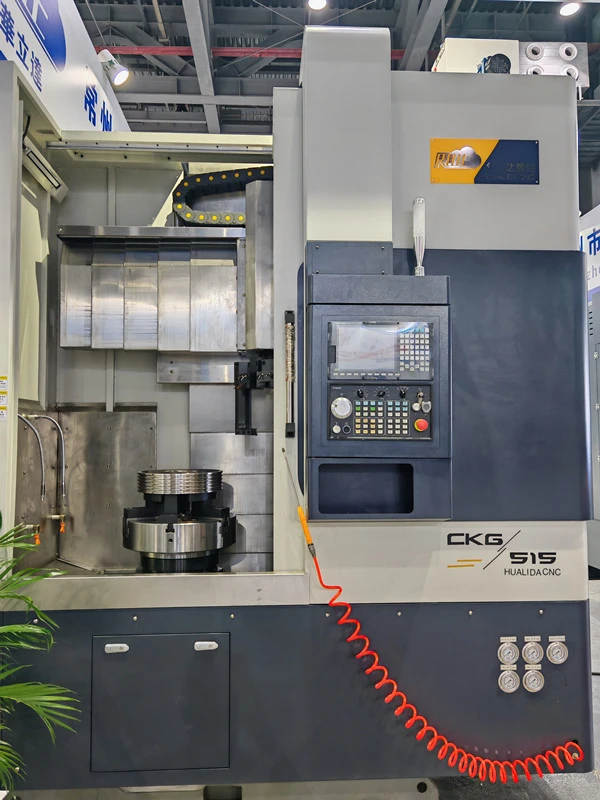
If you're interested in learning more about our CKG513 CNC Vertical Turning Lathe, CNC Vertical Turning Lathe, or CKG515 CNC Vertical Lathe, or if you have any questions about optimizing the cutting parameters of a High Speed Vertical Lathe, please feel free to contact us. We'd be happy to discuss your specific requirements and provide you with the best solutions for your application.

References
- Kalpakjian, S., & Schmid, S. R. (2010). Manufacturing Engineering and Technology (5th ed.). Pearson.
- Trent, E. M., & Wright, P. K. (2000). Metal Cutting (4th ed.). Butterworth-Heinemann.
- Stephenson, D. A., & Agapiou, J. S. (2006). Metal Cutting Theory and Practice. CRC Press.