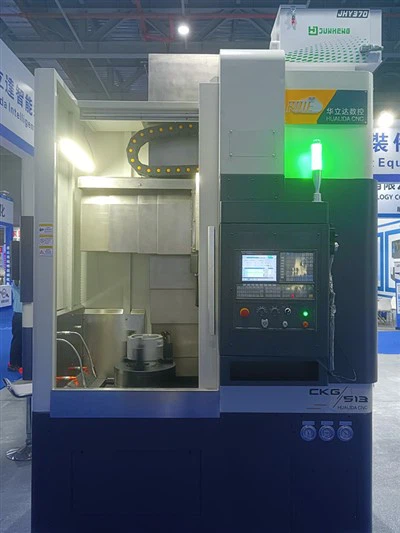
Programming for CNC turning is a critical skill in the manufacturing industry, especially for those involved in precision machining. As a supplier of CNC Turning and Milling, I've witnessed firsthand the impact of effective programming on the quality and efficiency of the turning process. In this blog post, I'll share some insights on how to program for CNC turning, covering everything from basic concepts to advanced techniques.
Understanding the Basics of CNC Turning
Before diving into programming, it's essential to have a solid understanding of the CNC turning process. CNC turning involves rotating a workpiece while a cutting tool removes material to create a desired shape. This process is commonly used to produce cylindrical parts, such as shafts, pins, and bushings.
The key components of a CNC turning machine include the lathe bed, headstock, tailstock, carriage, and cutting tool. The headstock holds the workpiece and rotates it at a specified speed, while the tailstock provides support for the other end of the workpiece. The carriage moves the cutting tool along the X and Z axes to perform the cutting operation.
G-Code and M-Code: The Language of CNC Programming
CNC machines are controlled using a programming language called G-code and M-code. G-code is used to control the movement of the cutting tool, while M-code is used to control the auxiliary functions of the machine, such as coolant flow and spindle speed.
Here are some of the most commonly used G-codes in CNC turning:
- G00: Rapid positioning. This code moves the cutting tool to a specified position at the maximum feed rate.
- G01: Linear interpolation. This code moves the cutting tool in a straight line at a specified feed rate.
- G02 and G03: Circular interpolation. These codes are used to move the cutting tool in a circular path, either clockwise (G02) or counterclockwise (G03).
- G90 and G91: Absolute and incremental programming. G90 is used for absolute programming, where the coordinates are specified relative to the origin of the workpiece. G91 is used for incremental programming, where the coordinates are specified relative to the current position of the cutting tool.
M-codes are used to control the non-movement functions of the CNC machine. Some common M-codes include:
- M03 and M04: Spindle on, clockwise and counterclockwise rotation.
- M05: Spindle off.
- M08 and M09: Coolant on and off.
- M30: Program end and return to the start of the program.
Creating a CNC Turning Program
Now that you have a basic understanding of G-code and M-code, let's walk through the steps of creating a CNC turning program.
Step 1: Define the Workpiece and Tooling
Before you start programming, you need to define the dimensions and material of the workpiece, as well as the type and size of the cutting tool. This information will help you determine the appropriate cutting parameters, such as spindle speed, feed rate, and depth of cut.
Step 2: Set Up the Coordinate System
The next step is to set up the coordinate system for the workpiece. This involves defining the origin of the coordinate system and the orientation of the X and Z axes. Most CNC turning machines use a Cartesian coordinate system, where the X-axis represents the radial direction and the Z-axis represents the longitudinal direction.
Step 3: Write the G-Code Program
Once you have defined the workpiece and set up the coordinate system, you can start writing the G-code program. The program should include the following sections:
- Program header: This section includes the program number, the name of the workpiece, and any other relevant information.
- Tool selection and setup: This section specifies the type and size of the cutting tool, as well as the tool offset values.
- Cutting operations: This section includes the G-codes and M-codes required to perform the cutting operations, such as roughing, finishing, and threading.
- Program end: This section includes the M30 code to end the program and return to the start of the program.
Here is an example of a simple CNC turning program:
O1000 (PROGRAM NAME: SIMPLE TURNING)
N10 G21 (SET UNITS TO MILLIMETERS)
N20 G90 (SET ABSOLUTE PROGRAMMING)
N30 T0101 (SELECT TOOL 1 AND SET TOOL OFFSET)
N40 M03 S1000 (SPINDLE ON, CLOCKWISE ROTATION AT 1000 RPM)
N50 G00 X50 Z2 (RAPID POSITIONING TO START POINT)
N60 G01 Z-50 F0.2 (LINEAR INTERPOLATION TO CUT THE OD)
N70 G00 X60 Z2 (RAPID POSITIONING TO CLEAR THE WORKPIECE)
N80 M05 (SPINDLE OFF)
N90 M30 (PROGRAM END)
Step 4: Simulate and Verify the Program
Before running the program on the CNC machine, it's important to simulate and verify it to ensure that it is correct. Most CNC machines come with simulation software that allows you to visualize the cutting process and check for any errors or collisions.
Advanced CNC Turning Programming Techniques
In addition to the basic programming techniques, there are several advanced techniques that can be used to improve the efficiency and quality of the CNC turning process.
Threading
Threading is a common operation in CNC turning, used to create external or internal threads on a workpiece. Threading can be programmed using the G76 or G92 codes, depending on the type of thread and the machine capabilities.

Grooving
Grooving is used to create a groove or a recess on the surface of a workpiece. Grooving can be programmed using the G01 or G02/G03 codes, depending on the shape of the groove.
Taper Turning
Taper turning is used to create a tapered surface on a workpiece. Taper turning can be programmed using the G01 or G02/G03 codes, with the appropriate taper angle specified in the program.
Choosing the Right CNC Lathe and Milling Machine
As a CNC Turning and Milling supplier, I understand the importance of choosing the right machine for your specific application. When selecting a CNC lathe and milling machine, consider the following factors:
- Machine size and capacity: The size and capacity of the machine should be appropriate for the size and complexity of the workpieces you need to produce.
- Spindle speed and power: The spindle speed and power of the machine should be sufficient to handle the materials and cutting parameters you plan to use.
- Control system: The control system of the machine should be user-friendly and support the programming languages and features you need.
- Tooling and accessories: The machine should be compatible with a wide range of cutting tools and accessories, allowing you to perform a variety of operations.
The Role of CNC Turning and Milling Machine Tools
In addition to the CNC machine itself, the quality of the cutting tools and accessories used in the turning process can have a significant impact on the quality and efficiency of the operation. When selecting CNC Turning and Milling Machine Tools, consider the following factors:
- Tool material: The tool material should be appropriate for the type of material you are cutting. Common tool materials include high-speed steel (HSS), carbide, and ceramic.
- Tool geometry: The tool geometry should be optimized for the specific cutting operation you are performing. This includes the rake angle, clearance angle, and cutting edge radius.
- Coating: Tool coatings can improve the wear resistance and performance of the cutting tool. Common coatings include titanium nitride (TiN), titanium carbonitride (TiCN), and aluminum titanium nitride (AlTiN).
Conclusion
Programming for CNC turning is a complex but rewarding skill that requires a solid understanding of the CNC turning process, G-code and M-code programming, and advanced programming techniques. By following the steps outlined in this blog post and choosing the right CNC Lathe and Milling Machine and CNC Turning and Milling Machine Tools, you can improve the quality and efficiency of your CNC turning operations.
If you're interested in learning more about CNC turning programming or are looking for a reliable supplier of CNC Turning and Milling services, please don't hesitate to contact us. We'd be happy to discuss your specific needs and provide you with a customized solution.
References
- "CNC Programming Handbook" by Dan Holtz
- "Modern Manufacturing Technology" by Peter K. Wright and David A. Bourne
- "CNC Machining Basics" by Mark Linfield