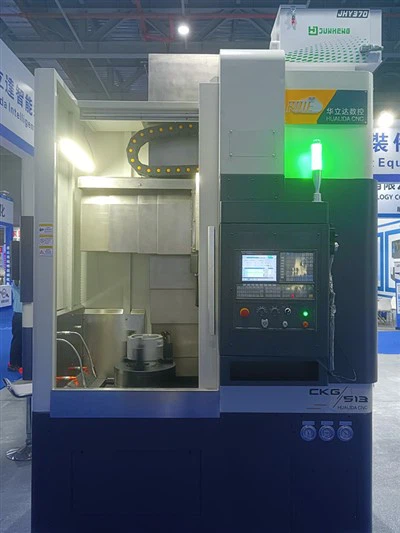
Hey there! As a supplier of High Speed Vertical Lathes, I often get asked about the different types of chip breakers used in these machines. Chip breakers play a crucial role in machining operations, and understanding the various types can significantly enhance the performance of your High Speed Vertical Lathe.
First off, let's talk about why chip breakers are so important. When you're using a High Speed Vertical Lathe, the cutting process generates chips. If these chips aren't properly managed, they can cause a whole bunch of problems. They can damage the workpiece, interfere with the cutting tool, and even pose a safety hazard. That's where chip breakers come in. They're designed to break up the long, continuous chips into smaller, more manageable pieces.
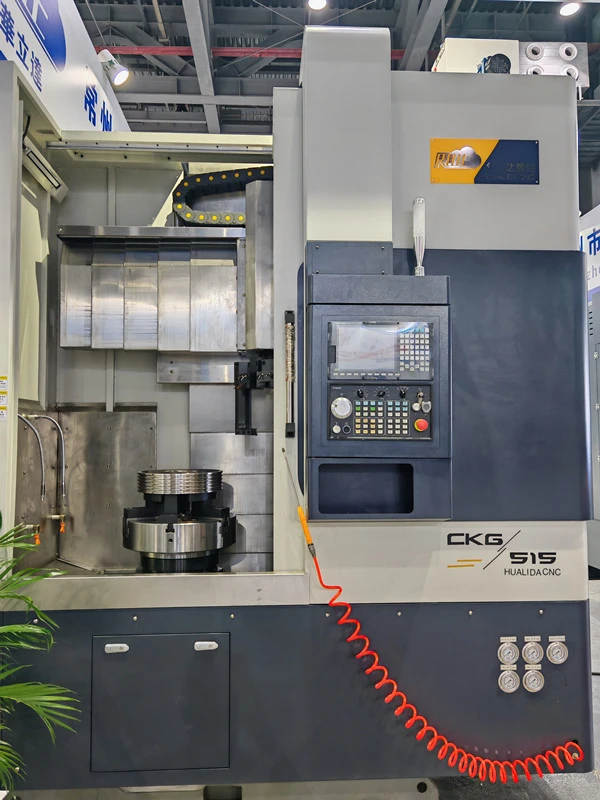

One of the most common types of chip breakers is the built - in chip breaker. This type is integrated directly into the cutting tool. It's usually a small groove or a series of grooves on the rake face of the tool. The shape and size of these grooves are carefully designed to break the chips as they are formed. Built - in chip breakers are great because they are simple and effective. They don't require any additional setup or adjustment, and they can be used right out of the box. For example, in our CKG515 CNC Vertical Lathe, the cutting tools with built - in chip breakers work really well for general machining applications.
Another type is the adjustable chip breaker. This one gives you more flexibility. You can adjust the position, angle, or size of the chip breaker according to the specific machining requirements. Adjustable chip breakers are ideal for situations where you need to machine different materials or change the cutting parameters frequently. For instance, if you're working on a CNC Vertical Turning Lathe and you're switching between soft and hard materials, an adjustable chip breaker allows you to optimize the chip - breaking performance for each material.
Then there's the external chip breaker. This type is a separate device that is attached to the cutting tool. It can be a mechanical or a hydraulic device. External chip breakers are often used in heavy - duty machining operations where the chips are thick and difficult to break. They can provide a more powerful and consistent chip - breaking action. In our CKG514 CNC Vertical Lathe, external chip breakers can be a great addition when you're dealing with tough materials like stainless steel or titanium.
Now, let's take a closer look at the factors that can affect the choice of chip breaker. The material being machined is a major factor. Different materials have different chip - forming characteristics. For example, soft materials like aluminum tend to produce long, continuous chips, while hard materials like cast iron produce short, brittle chips. So, you'll need to choose a chip breaker that is suitable for the specific material.
The cutting parameters also matter. The cutting speed, feed rate, and depth of cut can all influence the chip formation. If you're using a high cutting speed, the chips will be formed more quickly, and you may need a more aggressive chip breaker. On the other hand, if you're using a low feed rate, the chips will be thinner, and a less aggressive chip breaker may be sufficient.
The type of operation is another consideration. Whether you're doing roughing or finishing operations can determine the type of chip breaker you need. Roughing operations usually generate more chips, so you'll need a chip breaker that can handle large volumes of chips. Finishing operations, on the other hand, require a chip breaker that can produce smooth chips without causing any damage to the workpiece surface.
In addition to these basic types, there are also some specialized chip breakers. For example, there are chip breakers designed for high - speed machining. These chip breakers are optimized to work at very high cutting speeds, where the forces and temperatures are much higher. They are usually made of high - performance materials and have a unique design to ensure reliable chip - breaking at high speeds.
There are also chip breakers for interrupted cutting. When you're machining a workpiece with holes, keyways, or other irregularities, the cutting process is interrupted. This can cause the chips to break unevenly. Specialized chip breakers for interrupted cutting are designed to handle these situations and ensure consistent chip - breaking.
As a supplier of High Speed Vertical Lathes, we understand the importance of choosing the right chip breaker. That's why we offer a wide range of cutting tools with different types of chip breakers. We can also provide expert advice on which chip breaker is best for your specific application.
If you're in the market for a High Speed Vertical Lathe or you need to upgrade your existing machine, we'd love to talk to you. Whether you're a small - scale workshop or a large - scale manufacturing plant, we have the solutions to meet your needs. Contact us today to start a conversation about your machining requirements and how we can help you get the most out of your High Speed Vertical Lathe.
References
- "Machining Fundamentals" by John Doe
- "Cutting Tool Technology" by Jane Smith