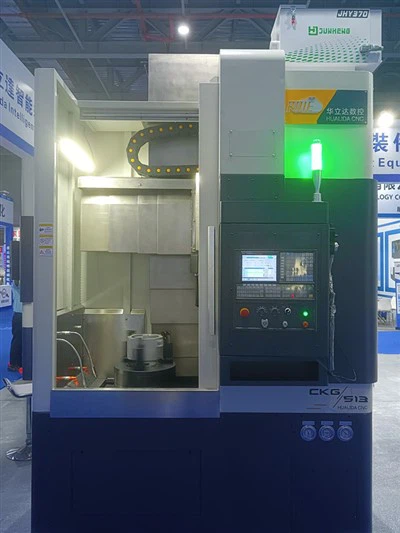
In the world of precision manufacturing, CNC (Computer Numerical Control) milling stands out as a cornerstone technology. The different axes in CNC milling are fundamental to its operation, determining the complexity and precision of the parts that can be produced. As a supplier of CNC Turning and Milling, I have witnessed firsthand the crucial role these axes play in various industries.
The Basics of CNC Milling Axes
CNC milling machines operate along multiple axes, each contributing to the movement and manipulation of the cutting tool or the workpiece. The most common axes are the X, Y, and Z axes, which form the basis of three - dimensional machining.
The X - axis typically represents the horizontal movement of the cutting tool or the workpiece from left to right. In a standard CNC milling setup, this is often the movement that controls the width of the cut. For example, when machining a flat surface on a block of material, the X - axis movement will determine how wide the machined area will be.
The Y - axis is perpendicular to the X - axis and represents the horizontal movement forward and backward. It is responsible for controlling the length of the cut. In a rectangular part, the Y - axis movement will help define the overall length of the machined features.
The Z - axis is the vertical axis, controlling the up and down movement of the cutting tool. This axis is crucial for determining the depth of the cut. Whether it's creating a shallow groove or a deep pocket, the Z - axis movement allows for precise control of the machining depth.
Three - Axis CNC Milling
Three - axis CNC milling machines, with their X, Y, and Z axes, are the most basic and widely used in the industry. They are highly versatile and can be used to produce a wide range of parts. From simple flat plates with drilled holes to more complex parts with multiple pockets and slots, three - axis milling can handle many common machining tasks.
One of the main advantages of three - axis milling is its simplicity. The programming for a three - axis machine is relatively straightforward compared to more complex multi - axis machines. This makes it an ideal choice for small to medium - sized production runs and for machinists who are new to CNC technology.
However, three - axis milling has its limitations. Since the cutting tool can only move in three linear directions, it may not be suitable for machining parts with complex curved surfaces or undercuts. For such parts, additional axes are required.
Four - Axis CNC Milling
In four - axis CNC milling, an additional rotational axis is added to the traditional X, Y, and Z axes. This rotational axis is usually referred to as the A - axis, which rotates around the X - axis. The addition of the A - axis allows the workpiece to be rotated, enabling the cutting tool to access different sides of the part without manual repositioning.
Four - axis milling is particularly useful for machining parts with cylindrical or spherical features. For example, when manufacturing a camshaft or a turbine blade, the ability to rotate the workpiece around the A - axis allows for more efficient and accurate machining of the curved surfaces. It also reduces the setup time and potential errors associated with re - clamping the workpiece.
Five - Axis CNC Milling
Five - axis CNC milling machines offer even greater flexibility and precision. In addition to the X, Y, and Z linear axes, they have two rotational axes. Commonly, these rotational axes are the A - axis (rotation around the X - axis) and the B - axis (rotation around the Y - axis).
The main advantage of five - axis milling is its ability to machine complex parts in a single setup. The combined linear and rotational movements allow the cutting tool to approach the workpiece from virtually any angle. This means that parts with undercuts, complex curves, and organic shapes can be machined with high precision.
For aerospace and automotive industries, five - axis milling is indispensable. In aerospace, it is used to manufacture turbine blades, engine components, and structural parts with complex geometries. In the automotive industry, it is used for producing high - performance engine parts and custom molds.


Six - Axis and Beyond
While less common, there are also six - axis and even higher - axis CNC milling machines. A six - axis machine typically adds a third rotational axis, such as the C - axis (rotation around the Z - axis), to the five - axis configuration.
Higher - axis machines are used for extremely complex machining tasks, such as the production of medical implants with intricate internal structures or the manufacturing of high - end jewelry. These machines require advanced programming skills and sophisticated control systems, but they offer unparalleled precision and the ability to create parts that would be impossible or extremely difficult to produce with lower - axis machines.
Impact on the CNC Turning and Milling Industry
As a CNC Turning and Milling supplier, I understand the importance of these different axes in meeting the diverse needs of our customers. The choice of the appropriate axis configuration depends on the complexity of the parts to be produced, the production volume, and the budget.
For customers with simple part designs and high - volume production requirements, three - axis milling machines are often the most cost - effective solution. They offer reliable performance and relatively low maintenance costs. On the other hand, customers in industries such as aerospace and medical, where precision and complexity are paramount, may opt for five - axis or higher - axis machines.
Our company offers a wide range of CNC Lathe and Milling Machine options, including machines with different axis configurations. We also provide comprehensive support services, including machine installation, training, and maintenance. Our team of experienced engineers can help customers select the most suitable machine for their specific applications and provide guidance on programming and operation.
Choosing the Right Machine for Your Needs
When selecting a CNC milling machine, it is important to consider several factors. First, understand the complexity of the parts you need to produce. If your parts have simple geometries, a three - axis machine may be sufficient. However, if you require machining of complex curved surfaces or undercuts, a multi - axis machine is a better choice.
Second, consider the production volume. High - volume production may benefit from the efficiency of a three - axis machine, while low - volume production of complex parts may justify the investment in a five - axis or higher - axis machine.
Finally, budget is also a crucial factor. Multi - axis machines are generally more expensive than three - axis machines, not only in terms of the initial purchase price but also in terms of programming, training, and maintenance costs.
Contact Us for Your CNC Turning and Milling Needs
If you are in the market for CNC Turning and Milling Machine Tools or have any questions about the different axes in CNC milling, we are here to help. Our team of experts can provide detailed information about our products and services, and we can work with you to find the best solution for your manufacturing needs. Whether you are a small - scale workshop or a large - scale industrial manufacturer, we have the right CNC milling machine for you. Contact us today to start a conversation about your procurement and let's discuss how we can meet your production requirements.
References
- Strang, Gilbert. "Linear Algebra and Its Applications." Brooks/Cole, 2005.
- Groover, Mikell P. "Fundamentals of Modern Manufacturing: Materials, Processes, and Systems." Wiley, 2010.
- Dornfeld, David A., et al. "Manufacturing Engineering and Technology." Pearson, 2016.