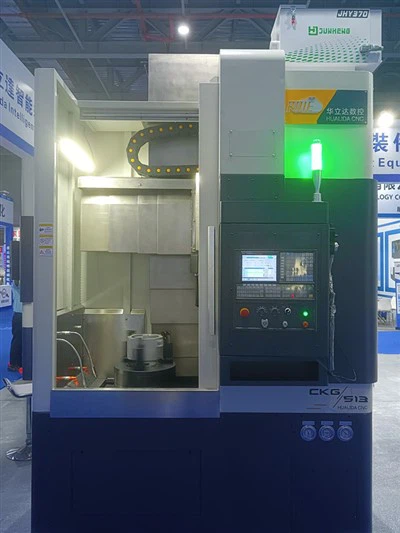
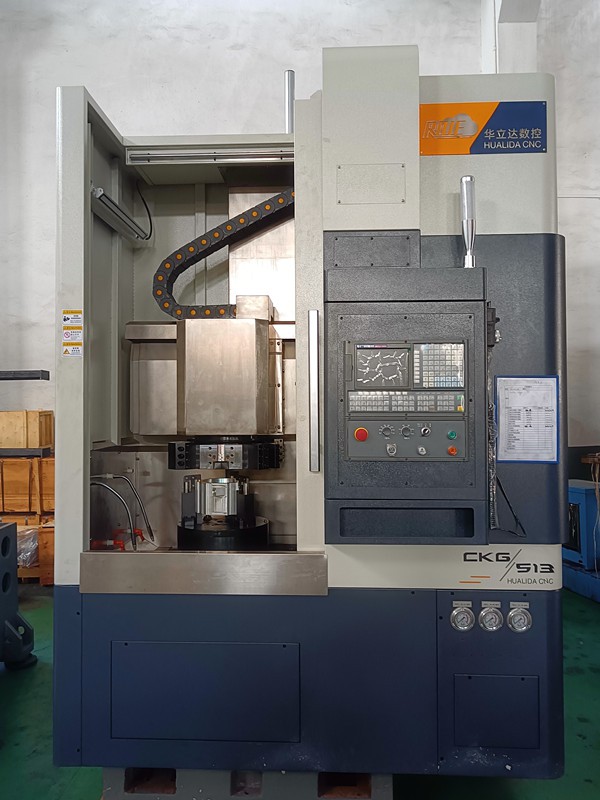
Hey there! As a supplier of Large Cutting Vertical Lathes, I often get asked about the cutting speed formula for these bad boys. So, I thought I'd break it down for you in this blog post.
First off, let's talk about what a Large Cutting Vertical Lathe is. It's a powerful machine designed for heavy-duty machining tasks. Whether you're working with large workpieces or need to make deep cuts, these lathes are up to the job. We offer a range of models, including the Hard Rail Vertical Lathe and the Heavy Cutting Vertical Lathe, but today we're focusing on the Large Cutting Vertical Lathe.
Now, onto the cutting speed formula. The cutting speed (V) is the speed at which the cutting edge of the tool passes over the surface of the workpiece. It's usually measured in meters per minute (m/min) or feet per minute (ft/min). The formula for calculating the cutting speed is:
V = π * D * N / 1000
Where:
- V is the cutting speed in m/min
- π (pi) is a mathematical constant approximately equal to 3.14159
- D is the diameter of the workpiece in millimeters (mm)
- N is the rotational speed of the workpiece in revolutions per minute (RPM)
Let's break this down a bit. The π * D part of the formula calculates the circumference of the workpiece. The circumference is the distance around the outside of the circle. When the workpiece rotates, the cutting tool moves along this circumference. The N value represents how many times the workpiece rotates in one minute. By multiplying the circumference by the number of rotations per minute, we get the total distance the cutting tool travels in one minute, which is the cutting speed.
The division by 1000 is there to convert the result from millimeters per minute to meters per minute. If you want to use feet per minute instead, you'll need to make some adjustments to the formula. The conversion factor from millimeters to feet is 0.00328084. So, if you want the cutting speed in ft/min, the formula becomes:

V = π * D * N * 0.00328084
Now, why is the cutting speed so important? Well, it has a big impact on the quality of the cut, the tool life, and the efficiency of the machining process. If the cutting speed is too low, the tool may not cut effectively, and you'll end up with a poor surface finish. The tool may also wear out more quickly because it's taking longer to remove the material. On the other hand, if the cutting speed is too high, the tool can overheat and break. This can damage the workpiece and also lead to costly tool replacements.
So, how do you determine the right cutting speed for your job? There are a few factors to consider.
Workpiece Material
Different materials have different properties, and these properties affect the cutting speed. For example, softer materials like aluminum can be cut at higher speeds than harder materials like steel. Here are some general guidelines for cutting speeds based on the workpiece material:
- Aluminum: 100 - 500 m/min
- Brass: 80 - 300 m/min
- Mild Steel: 30 - 120 m/min
- Stainless Steel: 20 - 60 m/min
- Cast Iron: 40 - 100 m/min
These are just rough estimates, and the actual cutting speed may vary depending on the specific grade of the material, the type of cutting tool, and other factors.
Cutting Tool Material
The material of the cutting tool also plays a role in determining the cutting speed. Common cutting tool materials include high-speed steel (HSS), carbide, and ceramic. Carbide tools are generally more wear-resistant and can handle higher cutting speeds than HSS tools. Ceramic tools can handle even higher cutting speeds but are more brittle and may require more careful handling.
Depth of Cut and Feed Rate
The depth of cut (the amount of material removed in one pass) and the feed rate (the distance the tool moves along the workpiece in one revolution) also affect the cutting speed. A larger depth of cut or a higher feed rate may require a lower cutting speed to prevent the tool from overloading.
Machine Capability
Your Large Cutting Vertical Lathe has its own limitations. The machine may not be able to achieve very high rotational speeds, or it may not be able to handle heavy cuts at high speeds. Make sure to check the machine's specifications and follow the manufacturer's recommendations.
Let's look at an example. Suppose you're machining a steel workpiece with a diameter of 200 mm, and you want to use a cutting speed of 60 m/min. You can use the cutting speed formula to calculate the required rotational speed (N):
V = π * D * N / 1000
60 = 3.14159 * 200 * N / 1000
60 * 1000 = 3.14159 * 200 * N
60000 = 628.318 * N
N = 60000 / 628.318
N ≈ 95.5 RPM
So, you'd need to set the lathe to rotate the workpiece at approximately 95.5 RPM to achieve a cutting speed of 60 m/min.
In conclusion, understanding the cutting speed formula is essential for getting the most out of your Large Cutting Vertical Lathe. By calculating the right cutting speed, you can improve the quality of your cuts, extend the life of your cutting tools, and increase the efficiency of your machining process.
If you're in the market for a Large Cutting Vertical Lathe or have any questions about the cutting speed formula or our products, don't hesitate to reach out. We're here to help you find the right solution for your machining needs.
References
- "Machining Fundamentals" - A general guide to machining processes and calculations
- Manufacturer's manuals for Large Cutting Vertical Lathes