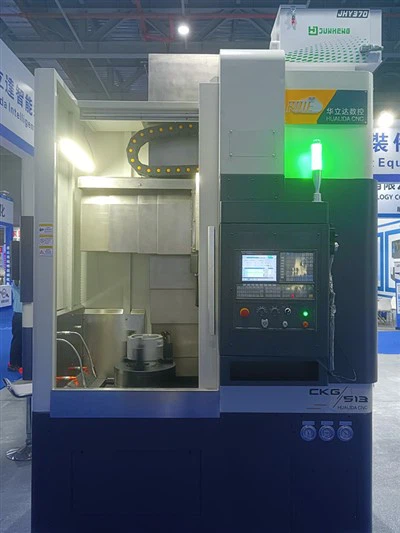
Hey there! As a supplier of CNC vertical mills, I often get asked about the feed rate range of these machines. It's a crucial aspect that can significantly impact the efficiency and quality of machining operations. So, let's dive right in and explore what the feed rate range of a CNC vertical mill is all about.
First off, what exactly is the feed rate? Well, in simple terms, the feed rate is the speed at which the cutting tool moves along the workpiece during a machining operation. It's measured in units like inches per minute (IPM) or millimeters per minute (mm/min). The feed rate plays a vital role in determining how much material is removed from the workpiece, the surface finish of the machined part, and the overall productivity of the process.
The feed rate range of a CNC vertical mill can vary widely depending on several factors. One of the primary factors is the type of material being machined. Different materials have different properties, such as hardness, toughness, and machinability. For example, machining a soft material like aluminum will typically allow for a higher feed rate compared to a hard material like stainless steel or titanium.
Another important factor is the type of cutting tool being used. The geometry, material, and coating of the cutting tool can all affect the optimal feed rate. A sharp, high - quality cutting tool can generally handle higher feed rates without excessive wear or breakage. For instance, a carbide cutting tool can often tolerate higher feed rates than a high - speed steel tool.
The machine's power and rigidity also play a significant role in determining the feed rate range. A more powerful and rigid CNC vertical mill can handle higher feed rates because it can withstand the cutting forces without excessive vibration or deflection. Our Turning and Grinding Compound Machine Tools are designed with high - power motors and robust structures to support a wide range of feed rates.
Typically, the feed rate range for a standard CNC vertical mill can start from as low as 0.1 IPM (2.54 mm/min) for very delicate operations, such as fine finishing or when working with brittle materials. This slow feed rate allows for precise control and a high - quality surface finish.
On the upper end, the feed rate can go up to several hundred IPM or even more, depending on the machine and the application. For roughing operations, where the goal is to remove a large amount of material quickly, a higher feed rate can be used. Our High Precision Vertical Lathe is capable of achieving relatively high feed rates during roughing to boost productivity.
However, it's important to note that just because a machine can theoretically reach a high feed rate doesn't mean it should always be used at that level. There are trade - offs. Using an extremely high feed rate can lead to increased tool wear, poor surface finish, and even damage to the machine or the workpiece. So, it's essential to find the right balance based on the specific requirements of the job.
When setting the feed rate, machinists also need to consider the depth of cut. A larger depth of cut usually requires a lower feed rate to maintain the cutting tool's integrity and ensure a stable machining process. Conversely, a smaller depth of cut may allow for a higher feed rate.
Let's take a look at some common applications and the typical feed rate ranges associated with them. In milling a flat surface on an aluminum workpiece, a feed rate in the range of 50 - 200 IPM (1270 - 5080 mm/min) might be appropriate for roughing, while a feed rate of 10 - 50 IPM (254 - 1270 mm/min) could be used for finishing.
For steel workpieces, the feed rates will generally be lower. For roughing a steel part, a feed rate of 10 - 50 IPM (254 - 1270 mm/min) is common, and for finishing, it could be in the range of 1 - 10 IPM (25.4 - 254 mm/min).
Our Fixed Beam CNC Vertical Milling Machine is highly versatile and can be adjusted to accommodate these different feed rate requirements for various materials and operations.

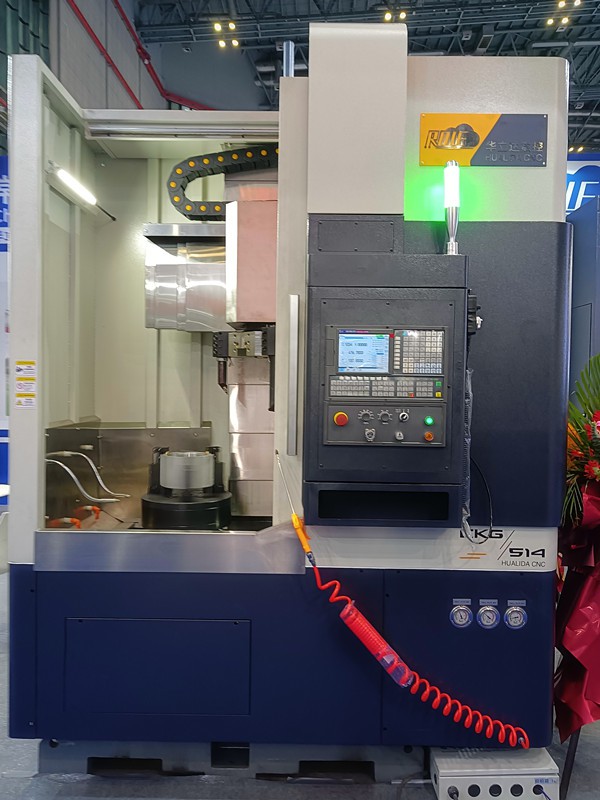
As a supplier, we understand that finding the optimal feed rate for your specific application can be a challenge. That's why we offer comprehensive technical support to our customers. Our team of experts can help you determine the best feed rate based on your workpiece material, cutting tool, and machining goals.
If you're in the market for a CNC vertical mill or need advice on feed rates and other machining parameters, don't hesitate to get in touch with us. We're here to help you make the most of your machining operations and achieve the best results. Whether you're a small - scale workshop or a large - scale manufacturing facility, we have the right CNC vertical mill for you.
In conclusion, the feed rate range of a CNC vertical mill is a complex but crucial aspect of machining. It depends on multiple factors such as material, cutting tool, machine capabilities, and machining operation. By understanding these factors and working with a reliable supplier, you can optimize your feed rates for maximum productivity and quality.
References:
- Machinery's Handbook, 31st Edition
- Cutting Tool Engineering Magazine articles on CNC machining
- Industry - specific whitepapers on CNC vertical mill operations