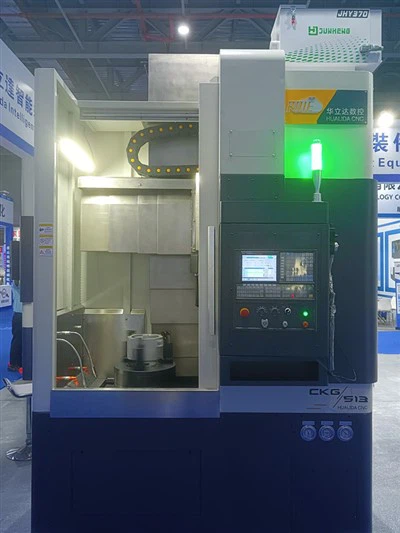
In the world of machining, hard rail vertical lathes play a pivotal role in numerous industries, from automotive to aerospace. As a leading supplier of hard rail vertical lathes, I've witnessed firsthand the importance of understanding every component of these machines. One such crucial component is the spindle bearing. In this blog, I'll delve into the various types of spindle bearings used in hard rail vertical lathes, their characteristics, and how they impact the performance of the machine.
Understanding Spindle Bearings in Hard Rail Vertical Lathes
Spindle bearings are essential for the smooth operation of a hard rail vertical lathe. They support the spindle, which holds the cutting tool or workpiece, and allow it to rotate at high speeds with minimal friction and vibration. The type of spindle bearing used can significantly affect the machine's precision, cutting performance, and overall durability.
There are several types of spindle bearings commonly used in hard rail vertical lathes, each with its own unique features and advantages. Let's take a closer look at some of the most popular types.
Angular Contact Ball Bearings
Angular contact ball bearings are one of the most widely used types of spindle bearings in hard rail vertical lathes. These bearings are designed to support both radial and axial loads, making them ideal for applications where high-speed rotation and precision are required.
One of the key advantages of angular contact ball bearings is their ability to handle high axial loads in one direction. This is achieved by the design of the bearing, which allows the balls to contact the raceways at an angle. The angle of contact determines the bearing's ability to support axial loads, with larger angles providing greater axial load capacity.
Another advantage of angular contact ball bearings is their high-speed capability. These bearings are designed to minimize friction and heat generation, allowing the spindle to rotate at high speeds without compromising precision. This makes them ideal for applications where high-speed machining is required, such as in the aerospace and automotive industries.
In addition to their high-speed and load-carrying capabilities, angular contact ball bearings are also known for their excellent rigidity. This helps to minimize deflection and ensure the accuracy of the machining process.
Cylindrical Roller Bearings
Cylindrical roller bearings are another popular type of spindle bearing used in hard rail vertical lathes. These bearings are designed to support radial loads and are commonly used in applications where high radial load capacity is required.
One of the main advantages of cylindrical roller bearings is their high radial load capacity. The cylindrical shape of the rollers allows them to distribute the load evenly across the bearing, resulting in a higher load-carrying capacity compared to other types of bearings.
Another advantage of cylindrical roller bearings is their ability to accommodate misalignment. The rollers in these bearings are free to move axially, which allows them to compensate for any misalignment between the shaft and the housing. This makes them ideal for applications where there may be some degree of misalignment, such as in heavy-duty machining operations.
Cylindrical roller bearings are also known for their high-speed capability. These bearings are designed to minimize friction and heat generation, allowing the spindle to rotate at high speeds without compromising performance.
Tapered Roller Bearings
Tapered roller bearings are a type of bearing that can support both radial and axial loads. These bearings are commonly used in hard rail vertical lathes where high load capacity and precision are required.
One of the key advantages of tapered roller bearings is their ability to handle both radial and axial loads simultaneously. This is achieved by the design of the bearing, which allows the rollers to contact the raceways at an angle. The angle of contact determines the bearing's ability to support axial loads, with larger angles providing greater axial load capacity.
Another advantage of tapered roller bearings is their high load-carrying capacity. The tapered shape of the rollers allows them to distribute the load evenly across the bearing, resulting in a higher load-carrying capacity compared to other types of bearings.
Tapered roller bearings are also known for their excellent rigidity. This helps to minimize deflection and ensure the accuracy of the machining process.
Spherical Roller Bearings
Spherical roller bearings are designed to accommodate misalignment and support heavy radial and axial loads. These bearings are commonly used in hard rail vertical lathes where there may be some degree of misalignment or where heavy loads need to be supported.
One of the main advantages of spherical roller bearings is their ability to accommodate misalignment. The spherical shape of the rollers allows them to self-align, which helps to compensate for any misalignment between the shaft and the housing. This makes them ideal for applications where there may be some degree of misalignment, such as in heavy-duty machining operations.
Another advantage of spherical roller bearings is their high load-carrying capacity. The spherical shape of the rollers allows them to distribute the load evenly across the bearing, resulting in a higher load-carrying capacity compared to other types of bearings.


Spherical roller bearings are also known for their excellent durability. These bearings are designed to withstand heavy loads and harsh operating conditions, making them ideal for use in hard rail vertical lathes.
Selecting the Right Spindle Bearing for Your Hard Rail Vertical Lathe
Selecting the right spindle bearing for your hard rail vertical lathe is crucial for ensuring optimal performance and efficiency. When choosing a spindle bearing, there are several factors to consider, including the type of application, the load requirements, the speed requirements, and the level of precision required.
Here are some tips to help you select the right spindle bearing for your hard rail vertical lathe:
- Understand the Application: Before selecting a spindle bearing, it's important to understand the specific requirements of your application. Consider factors such as the type of material being machined, the cutting forces involved, and the level of precision required.
- Consider the Load Requirements: The load requirements of your application will determine the type and size of the spindle bearing you need. Consider both the radial and axial loads that the bearing will need to support, as well as the magnitude and direction of these loads.
- Evaluate the Speed Requirements: The speed requirements of your application will also play a role in determining the type of spindle bearing you need. Consider the maximum rotational speed of the spindle, as well as the acceleration and deceleration rates.
- Ensure Compatibility: Make sure that the spindle bearing you select is compatible with the other components of your hard rail vertical lathe, such as the spindle, the housing, and the lubrication system.
- Seek Expert Advice: If you're unsure which type of spindle bearing is right for your application, don't hesitate to seek expert advice. A qualified engineer or bearing specialist can help you select the right bearing based on your specific requirements.
Conclusion
In conclusion, the type of spindle bearing used in a hard rail vertical lathe can significantly affect the machine's performance, precision, and durability. By understanding the different types of spindle bearings available and their characteristics, you can make an informed decision when selecting a bearing for your hard rail vertical lathe.
As a supplier of Vertical Lathe Machine, Heavy Cutting Vertical Lathe, and Large Cutting Vertical Lathe, we have the expertise and experience to help you select the right spindle bearing for your application. If you're interested in learning more about our products or would like to discuss your specific requirements, please don't hesitate to contact us. We look forward to working with you to achieve your machining goals.
References
- Schaeffler Group. (n.d.). Bearing Basics. Retrieved from https://www.schaeffler.com/remotemedien/media/_shared_media_pool/gb/support_training/learning_systems/bearing_basics/bearing_basics.pdf
- SKF Group. (n.d.). Rolling Bearing Selection. Retrieved from https://www.skf.com/group/products/bearings-units-housings/rolling-bearings/rolling-bearing-selection.html
- Timken Company. (n.d.). Tapered Roller Bearings. Retrieved from https://www.timken.com/en-us/products/bearings/tapered-roller-bearings/