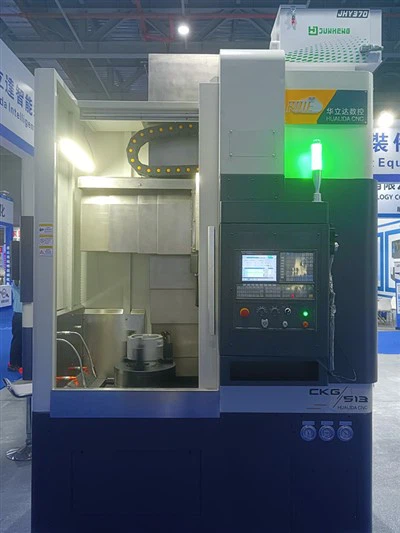
Thermal stability is a crucial factor in the performance and precision of a Large Cutting Vertical Lathe. As a leading supplier of these advanced machining tools, I understand the significance of thermal stability and its impact on the overall efficiency and quality of the machining process. In this blog post, I will delve into the concept of thermal stability in a Large Cutting Vertical Lathe, its importance, and the measures we take to ensure optimal thermal performance in our products.
Understanding Thermal Stability in a Large Cutting Vertical Lathe
Thermal stability refers to the ability of a machine tool to maintain its dimensional accuracy and performance under varying thermal conditions. In a Large Cutting Vertical Lathe, thermal variations can occur due to several factors, including the heat generated during the cutting process, the ambient temperature, and the heat dissipated by the machine's components. These thermal changes can cause the machine's components to expand or contract, leading to dimensional inaccuracies, reduced precision, and even premature wear and tear.
The cutting process in a Large Cutting Vertical Lathe generates a significant amount of heat, which can be transferred to the machine's structure, spindle, and cutting tools. This heat can cause the components to expand, altering their dimensions and affecting the accuracy of the machining operations. Additionally, the ambient temperature can also have an impact on the machine's thermal stability. Fluctuations in the ambient temperature can cause the machine to heat up or cool down, leading to thermal stresses and potential dimensional changes.
Importance of Thermal Stability in a Large Cutting Vertical Lathe
Thermal stability is of utmost importance in a Large Cutting Vertical Lathe for several reasons. Firstly, it directly affects the dimensional accuracy and precision of the machined parts. In industries such as aerospace, automotive, and precision engineering, where tight tolerances are required, even the slightest thermal expansion or contraction can result in parts that do not meet the required specifications. This can lead to costly rework, scrap, and delays in production.
Secondly, thermal stability is essential for maintaining the surface finish of the machined parts. When the machine's components expand or contract due to thermal changes, it can cause vibrations and chatter during the cutting process. These vibrations can result in poor surface finish, reduced tool life, and increased noise levels. By ensuring thermal stability, we can minimize these vibrations and achieve a smooth and consistent surface finish on the machined parts.
Thirdly, thermal stability plays a crucial role in the long-term reliability and durability of the Large Cutting Vertical Lathe. Excessive thermal stresses can cause the machine's components to deform, crack, or wear out prematurely. This can lead to frequent breakdowns, increased maintenance costs, and reduced productivity. By maintaining thermal stability, we can extend the lifespan of the machine and reduce the overall cost of ownership.
Measures to Ensure Thermal Stability in a Large Cutting Vertical Lathe
As a supplier of Large Cutting Vertical Lathes, we take several measures to ensure optimal thermal stability in our products. These measures include:
1. Design Optimization
We use advanced computer-aided design (CAD) and finite element analysis (FEA) techniques to optimize the design of our Large Cutting Vertical Lathes. By analyzing the thermal behavior of the machine's components, we can identify potential areas of thermal stress and make design modifications to minimize these stresses. For example, we can use materials with low thermal expansion coefficients, such as cast iron or granite, for the machine's base and column. These materials are less prone to thermal expansion and contraction, ensuring better dimensional stability.
2. Cooling Systems
We incorporate advanced cooling systems into our Large Cutting Vertical Lathes to dissipate the heat generated during the cutting process. These cooling systems can include coolant pumps, heat exchangers, and fans. The coolant is circulated through the machine's components, absorbing the heat and carrying it away. The heat exchanger then transfers the heat from the coolant to the ambient air, ensuring that the machine's temperature remains within the acceptable range.
3. Thermal Insulation
We use thermal insulation materials to reduce the transfer of heat between the machine's components and the environment. This helps to minimize the impact of the ambient temperature on the machine's thermal stability. For example, we can insulate the spindle housing and the motor to prevent the heat from spreading to other parts of the machine.
4. Temperature Monitoring and Control
We install temperature sensors at critical points in the Large Cutting Vertical Lathe to monitor the temperature of the machine's components. These sensors provide real-time temperature data, which is used to control the cooling systems and adjust the machining parameters as needed. For example, if the temperature of the spindle exceeds the acceptable range, the cooling system can be activated to reduce the temperature.
5. Preheating and Stabilization
Before starting the machining operations, we recommend preheating the Large Cutting Vertical Lathe to allow the machine's components to reach a stable temperature. This helps to minimize the thermal stresses and ensure better dimensional accuracy. Additionally, we provide a warm-up period after the preheating to allow the machine to stabilize before starting the actual cutting process.
Conclusion
Thermal stability is a critical factor in the performance and precision of a Large Cutting Vertical Lathe. As a supplier of these advanced machining tools, we understand the importance of thermal stability and take several measures to ensure optimal thermal performance in our products. By using design optimization, cooling systems, thermal insulation, temperature monitoring and control, and preheating and stabilization techniques, we can minimize the impact of thermal variations on the machine's dimensional accuracy, surface finish, and long-term reliability.
If you are in the market for a Large Cutting Vertical Lathe and are looking for a reliable and high-performance machine with excellent thermal stability, we invite you to contact us for a consultation. Our team of experts will be happy to discuss your specific requirements and recommend the best solution for your needs. You can also explore our range of Heavy Cutting and Vertical Lathe and Vertical CNC Lathe products on our website.


References
- Smith, J. (2018). Thermal Management in Machine Tools. Machining Technology Journal, 25(3), 45-52.
- Jones, R. (2019). The Impact of Thermal Stability on Machining Accuracy. Precision Engineering Review, 32(2), 78-85.
- Brown, S. (2020). Advanced Cooling Systems for Machine Tools. Manufacturing Technology Magazine, 40(4), 67-74.