


As a supplier of hard rail vertical lathes, I often encounter inquiries from customers about the machine's capabilities, especially regarding its suitability for machining non - circular workpieces. In this blog post, I will delve into the question of whether a hard rail vertical lathe can be used for machining non - circular workpieces, exploring the relevant principles, techniques, and limitations.
Understanding Hard Rail Vertical Lathes
Before discussing the machining of non - circular workpieces, it is essential to understand the basic features of a hard rail vertical lathe. A hard rail vertical lathe is a type of machine tool that uses a vertical spindle orientation. The hard rail design provides high rigidity and stability, which is ideal for heavy - duty cutting operations. It is commonly used in industries such as automotive, aerospace, and general machinery manufacturing for machining large - sized workpieces, including cylinders, discs, and flanges.
The structure of a hard rail vertical lathe typically consists of a base, a column, a cross - rail, a saddle, a tool post, and a spindle. The workpiece is mounted on the spindle table, and the cutting tool is held on the tool post. The movement of the tool post along the X and Z axes allows for the machining of different shapes and sizes of workpieces.
Traditional Machining of Circular Workpieces
Hard rail vertical lathes are well - known for their excellent performance in machining circular workpieces. The rotational motion of the spindle and the linear motion of the tool post can be precisely controlled to achieve high - precision turning of cylindrical and conical surfaces. For circular workpieces, the cutting process is relatively straightforward. The tool moves along a circular path determined by the radius of the workpiece, and the cutting depth and feed rate can be adjusted according to the material and requirements of the workpiece.
Challenges in Machining Non - Circular Workpieces
Machining non - circular workpieces presents several challenges compared to circular workpieces. Non - circular workpieces, such as elliptical, cam, or polygonal shapes, have varying radii and profiles. To machine these shapes, the cutting tool needs to follow a non - circular path, which requires more complex control of the tool's motion.
One of the main challenges is the need for coordinated motion between the spindle and the tool post. In circular machining, the spindle rotates at a constant speed, and the tool moves linearly. However, for non - circular machining, the spindle speed may need to be adjusted in real - time to synchronize with the tool's motion. This requires advanced control systems and programming techniques.
Another challenge is the cutting force distribution. Non - circular machining often results in uneven cutting forces, which can cause vibrations and affect the surface quality and dimensional accuracy of the workpiece. The high rigidity of the hard rail vertical lathe helps to mitigate these issues to some extent, but proper tool selection and cutting parameters are still crucial.
Techniques for Machining Non - Circular Workpieces on a Hard Rail Vertical Lathe
CNC Programming
Computer Numerical Control (CNC) programming is the key to machining non - circular workpieces on a hard rail vertical lathe. CNC systems can precisely control the movement of the spindle and the tool post according to the programmed path. By using G - codes and M - codes, the operator can define the shape, size, and machining parameters of the non - circular workpiece.
For example, to machine an elliptical workpiece, the CNC program can calculate the coordinates of the tool path based on the equation of an ellipse. The program then controls the spindle speed and the movement of the tool post along the X and Z axes to follow the elliptical path.
Cam - Driven Mechanisms
In some cases, cam - driven mechanisms can be used to machine non - circular workpieces. A cam is a mechanical device that converts rotary motion into linear or oscillating motion. By designing a cam with the desired non - circular profile, the tool can be made to follow the same profile during machining.
However, cam - driven mechanisms have some limitations. They are usually limited to specific shapes and may require the fabrication of custom - made cams for different workpieces. Additionally, the accuracy of the cam - driven system depends on the precision of the cam manufacturing.
Electronic Servo Systems
Modern hard rail vertical lathes are often equipped with electronic servo systems. These systems can provide high - speed and high - precision control of the spindle and the tool post. The servo motors can adjust the speed and position of the components in real - time, allowing for more flexible and accurate machining of non - circular workpieces.
For instance, the servo system can detect the position of the tool and the workpiece and adjust the cutting parameters accordingly. This helps to compensate for any errors and ensures the quality of the machined surface.
Advantages of Using a Hard Rail Vertical Lathe for Non - Circular Machining
Despite the challenges, there are several advantages to using a hard rail vertical lathe for machining non - circular workpieces.
High Rigidity
The hard rail design of the vertical lathe provides high rigidity, which is essential for withstanding the uneven cutting forces generated during non - circular machining. This helps to reduce vibrations and ensures the stability of the machining process, resulting in better surface quality and dimensional accuracy.
Large Workpiece Capacity
Hard rail vertical lathes are typically capable of handling large - sized workpieces. This is beneficial for non - circular machining, as many non - circular components in industries such as aerospace and heavy machinery are large in size. The large spindle table and the long travel of the tool post allow for the machining of oversized non - circular workpieces.
Versatility
With the combination of CNC programming and advanced control systems, a hard rail vertical lathe can be used to machine a wide variety of non - circular shapes. This versatility makes it a valuable asset in a manufacturing facility, as it can handle different types of workpieces without the need for multiple specialized machines.
Limitations and Considerations
While a hard rail vertical lathe can be used for machining non - circular workpieces, there are still some limitations and considerations.
Complexity of Programming
Machining non - circular workpieces requires more complex CNC programming compared to circular workpieces. The programmer needs to have a good understanding of the geometry of the non - circular shape and the capabilities of the lathe. This may require additional training and expertise.
Tool Wear
The uneven cutting forces in non - circular machining can cause more rapid tool wear. The cutting tool needs to be carefully selected and monitored to ensure its performance and longevity. Regular tool replacement and maintenance are necessary to maintain the quality of the machined parts.
Cost
The use of advanced control systems and techniques for non - circular machining may increase the cost of the machining process. Additionally, the fabrication of custom - made cams or the development of specialized CNC programs can also add to the overall cost.
Conclusion
In conclusion, a hard rail vertical lathe can indeed be used for machining non - circular workpieces. With the help of advanced CNC programming, cam - driven mechanisms, and electronic servo systems, it is possible to achieve high - precision machining of various non - circular shapes. The high rigidity, large workpiece capacity, and versatility of the hard rail vertical lathe make it a suitable choice for many non - circular machining applications.
However, it is important to be aware of the challenges, limitations, and considerations associated with non - circular machining. Proper programming, tool selection, and maintenance are crucial for ensuring the quality and efficiency of the machining process.
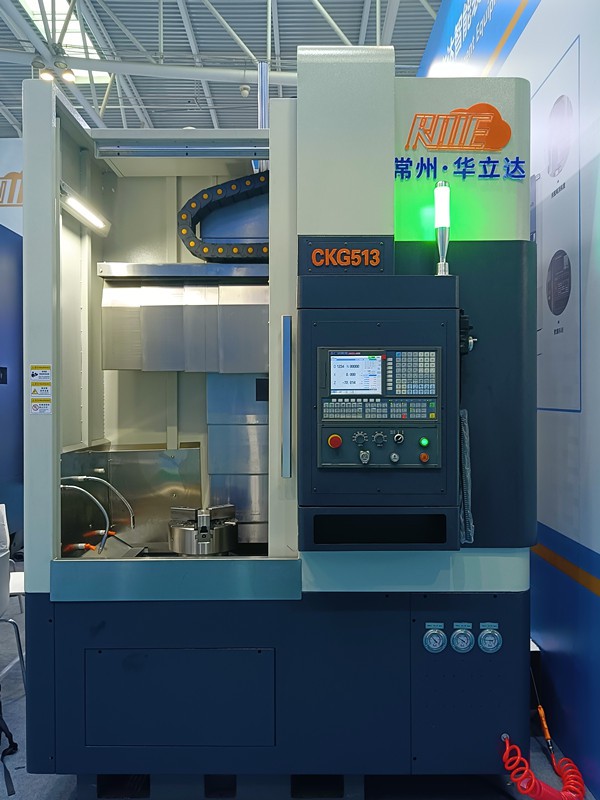

If you are interested in using a hard rail vertical lathe for machining non - circular workpieces or have any other questions about our Vertical Lathe Machine, Heavy Vertical Lathe, or Heavy Cutting and Vertical Lathe, please feel free to contact us for more information and to discuss your specific requirements. We are committed to providing you with the best solutions for your machining needs.
References
- "Machine Tool Handbook" by Oberg et al.
- "CNC Programming Handbook" by Peter Smid
- Technical manuals of hard rail vertical lathes from leading manufacturers


