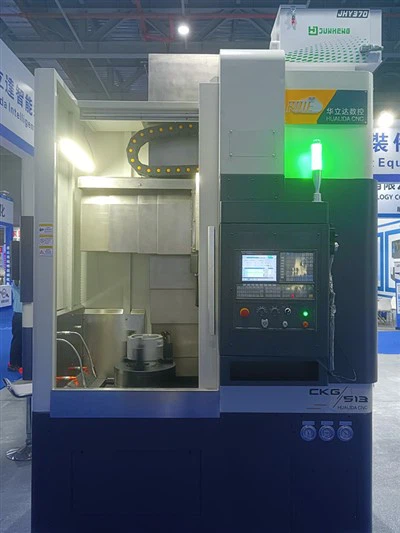
Hey there! As a supplier of CNC vertical mills, I've seen firsthand how crucial the servo system is in these machines. So, let's dive into what role the servo system plays in a CNC vertical mill.
First off, what's a servo system? Well, it's a control system that uses feedback to regulate the position, speed, or torque of a machine component. In a CNC vertical mill, the servo system is responsible for moving the cutting tool and the workpiece with high precision.


One of the main roles of the servo system is to ensure accurate positioning. When you're working on a CNC vertical mill, you need the cutting tool to be in the exact right place at the right time. The servo system uses sensors to detect the position of the tool and the workpiece and then adjusts the movement accordingly. This means that you can achieve extremely precise cuts, which is essential for high - quality machining.
For example, if you're making a complex part with tight tolerances, the servo system will make sure that the tool moves precisely along the programmed path. It can correct for any small errors in the movement, such as vibrations or mechanical play in the machine. This results in parts that meet the exact specifications, which is a huge advantage in industries like aerospace and automotive manufacturing.
Another important role of the servo system is speed control. Different machining operations require different cutting speeds. The servo system can adjust the speed of the spindle (where the cutting tool is mounted) and the feed rate of the workpiece. This allows for efficient machining. For instance, when roughing out a part, you might want a higher feed rate to remove material quickly. But when finishing the part, a slower feed rate and a different spindle speed are needed for a smooth surface finish. The servo system makes these adjustments on the fly, based on the programmed instructions.
Torque control is also a key function of the servo system. When the cutting tool encounters a harder material or a larger amount of material to remove, it needs more torque to keep cutting. The servo system can sense the load on the tool and increase the torque as needed. This prevents the tool from stalling or breaking, which can save a lot of time and money in terms of tool replacement and re - machining.
Now, let's talk about how the servo system integrates with the overall CNC control of the vertical mill. The CNC controller sends commands to the servo system, telling it where to move the tool and at what speed. The servo system then executes these commands and provides feedback to the controller. This closed - loop system ensures that the machine operates as intended.
In addition to these basic functions, modern servo systems in CNC vertical mills often come with advanced features. For example, some servo systems can compensate for thermal expansion. As the machine heats up during operation, the components can expand, which can affect the accuracy of the machining. The servo system can detect these changes and adjust the movement to maintain precision.
There are also servo systems that offer adaptive control. This means that the system can adjust the machining parameters based on real - time conditions. For example, if the material being cut has some variability in hardness, the servo system can adapt the cutting speed and feed rate to optimize the process.
When it comes to the types of servo systems used in CNC vertical mills, there are generally two main types: DC servo systems and AC servo systems. DC servo systems were more common in the past. They are relatively simple and easy to control. However, AC servo systems have become more popular in recent years. They offer higher efficiency, better speed and torque control, and are more reliable. They also tend to have a longer lifespan, which is an important consideration for a long - term investment like a CNC vertical mill.
If you're in the market for a CNC vertical mill, it's important to pay attention to the quality of the servo system. A high - quality servo system can make a big difference in the performance and reliability of the machine. At our company, we offer a range of CNC vertical mills with top - of - the - line servo systems. Whether you're looking for a Turning and Grinding Compound Machine Tools, a CNC Vertical Grinding Compound Machine, or a CNC Vertical Grinding Machine, we've got you covered.
Our machines are designed to provide the best combination of precision, speed, and durability. The servo systems in our CNC vertical mills are carefully selected and tested to ensure they meet the highest standards. We understand that in today's competitive manufacturing environment, you need a machine that can deliver consistent, high - quality results.
If you're interested in learning more about our CNC vertical mills and how the servo system can benefit your business, don't hesitate to get in touch. We're always happy to have a chat about your specific needs and see how our machines can fit into your production process. Whether you're a small job shop or a large manufacturing plant, we have solutions that can work for you.
In conclusion, the servo system is an integral part of a CNC vertical mill. It plays a vital role in accurate positioning, speed control, torque control, and overall machine performance. With the right servo system, you can achieve high - quality machining, increased efficiency, and reduced downtime. So, if you're considering investing in a CNC vertical mill, make sure to give due consideration to the servo system.
References:
- "CNC Machining Handbook" - A comprehensive guide on CNC machines and their components, including servo systems.
- Industry whitepapers on modern servo system technologies for CNC machines.
- Technical documentation from servo system manufacturers.