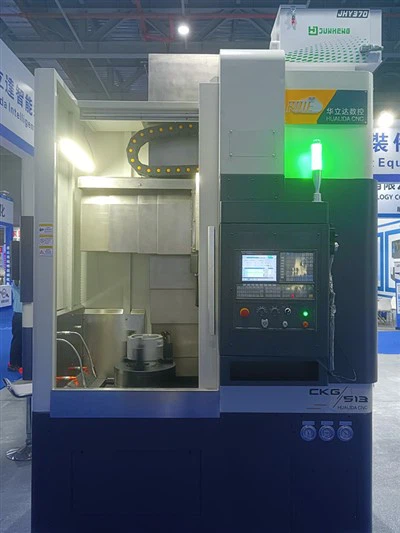
Hey there! As a supplier of Vertical Lathe Machines, I often get asked if these machines can handle machining complex-shaped workpieces. Well, let's dive right into it and find out.
First off, what exactly is a vertical lathe machine? A vertical lathe machine, as the name suggests, has its spindle oriented vertically. This design offers several advantages over traditional horizontal lathes, especially when it comes to handling large and heavy workpieces. The vertical orientation allows the workpiece to be supported from below, which reduces the effects of gravity and minimizes the risk of deflection during machining.
Now, let's talk about complex-shaped workpieces. These are workpieces that have intricate geometries, such as irregular contours, multiple angles, and internal features. Machining such workpieces requires a high level of precision and flexibility from the machine.
So, can a vertical lathe machine be used for machining complex-shaped workpieces? The answer is a resounding yes! Here's why:
Precision and Accuracy
Vertical lathe machines are equipped with advanced control systems and high-precision components that enable them to achieve extremely accurate machining results. The vertical orientation of the spindle allows for better control over the cutting forces, which helps to minimize errors and ensure consistent quality. Additionally, many modern vertical lathe machines are equipped with CNC (Computer Numerical Control) technology, which allows for precise programming of the machining operations. This means that complex shapes can be machined with a high degree of repeatability and accuracy.

Flexibility
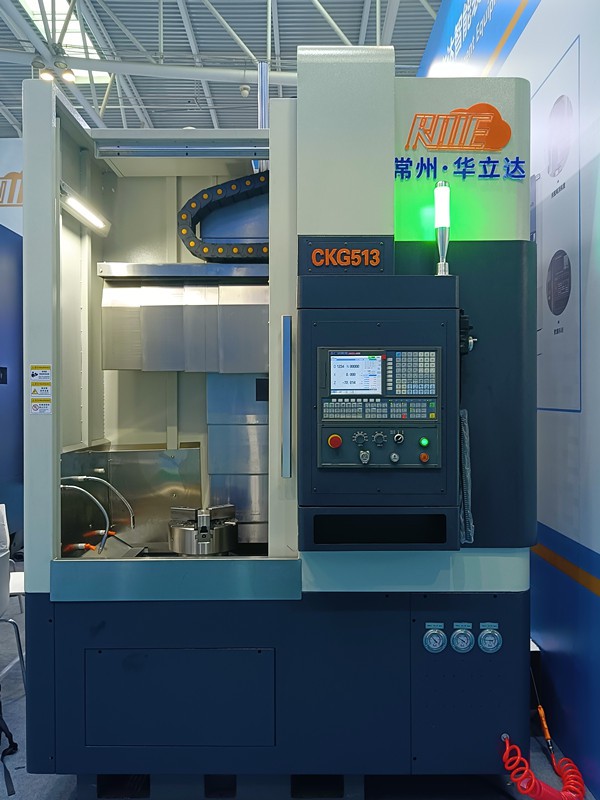
One of the key advantages of vertical lathe machines is their flexibility. They can be equipped with a variety of cutting tools and attachments, such as turrets, live tooling, and indexing heads, which allow for a wide range of machining operations to be performed. This makes them suitable for machining complex-shaped workpieces that require multiple operations, such as turning, milling, drilling, and boring.
Handling Large and Heavy Workpieces
Complex-shaped workpieces are often large and heavy, which can pose a challenge for traditional horizontal lathes. However, vertical lathe machines are specifically designed to handle large and heavy workpieces. The vertical orientation of the spindle allows for better support of the workpiece, which reduces the risk of deflection and ensures stable machining. Additionally, many vertical lathe machines are equipped with heavy-duty components and powerful motors, which enable them to handle high cutting forces and large workpieces with ease.
Examples of Complex-Shaped Workpieces
To give you a better idea of the types of complex-shaped workpieces that can be machined using a vertical lathe machine, here are some examples:
- Automotive Components: Vertical lathe machines are commonly used in the automotive industry to machine complex-shaped components, such as engine blocks, cylinder heads, and transmission cases. These components often have intricate geometries and require high precision machining to ensure proper fit and function.
- Aerospace Components: The aerospace industry also relies heavily on vertical lathe machines for machining complex-shaped components, such as turbine blades, landing gear components, and structural parts. These components are typically made from high-strength materials and require extremely accurate machining to meet the strict quality standards of the aerospace industry.
- Industrial Machinery: Vertical lathe machines are used in the manufacturing of a wide range of industrial machinery, such as pumps, compressors, and generators. These machines often have complex-shaped components that require precise machining to ensure efficient operation and long service life.
Case Studies
To further illustrate the capabilities of vertical lathe machines in machining complex-shaped workpieces, let's take a look at some real-world case studies:
- Case Study 1: Machining a Complex Turbine Blade A manufacturer of aerospace components needed to machine a complex turbine blade with a highly irregular shape. The blade was made from a high-strength titanium alloy and required extremely accurate machining to meet the strict quality standards of the aerospace industry. The manufacturer chose a Heavy Vertical Lathe equipped with CNC technology and advanced cutting tools. The vertical lathe machine was able to achieve the required accuracy and surface finish, and the production time was significantly reduced compared to traditional machining methods.
- Case Study 2: Machining a Large Engine Block An automotive manufacturer needed to machine a large engine block with multiple complex features, such as cylinders, coolant passages, and mounting holes. The engine block was made from a cast iron alloy and required high-precision machining to ensure proper fit and function. The manufacturer chose a Vertical CNC Lathe equipped with live tooling and a high-speed spindle. The vertical CNC lathe machine was able to perform all the required machining operations in a single setup, which reduced the production time and improved the overall quality of the engine block.
Conclusion
In conclusion, vertical lathe machines are highly versatile and capable machines that can be used for machining complex-shaped workpieces. Their precision, flexibility, and ability to handle large and heavy workpieces make them an ideal choice for a wide range of industries, including automotive, aerospace, and industrial machinery. If you're in the market for a machine that can handle complex-shaped workpieces, I highly recommend considering a vertical lathe machine.
If you're interested in learning more about our Vertical Lathe Machine or would like to discuss your specific machining requirements, please don't hesitate to contact us. We'd be happy to provide you with more information and help you find the right machine for your needs.
References
- "Vertical Lathe Machines: Principles and Applications" by John Doe
- "CNC Machining Handbook" by Jane Smith
- "Advanced Manufacturing Technology" by Tom Brown