


As a seasoned provider of CNC Turning and Milling services, I've witnessed firsthand the evolution and innovation within the manufacturing industry. One of the most frequently debated topics is whether CNC turning and milling can be effectively combined. In this blog, I'll delve into this question, exploring the technical aspects, benefits, challenges, and real - world applications of integrating these two machining processes.

Understanding CNC Turning and Milling
Before we discuss their combination, it's crucial to understand what CNC turning and milling are individually.
CNC turning is a machining process where a cutting tool, typically a non - rotating single - point cutting tool, removes material from a rotating workpiece. This process is mainly used to create cylindrical parts such as shafts, bolts, and pins. The workpiece is held in a chuck and rotated at high speeds while the cutting tool moves along the axis of rotation to shape the part. The precision and repeatability of CNC turning make it ideal for mass - producing parts with consistent dimensions.
On the other hand, CNC milling is a process that uses a rotating multi - point cutting tool to remove material from a stationary workpiece. The cutting tool can move in multiple axes (usually three, four, or five), allowing for the creation of complex shapes, slots, holes, and contours. Milling is versatile and can be used to produce a wide range of parts, from simple brackets to highly intricate aerospace components.
The Feasibility of Combining CNC Turning and Milling
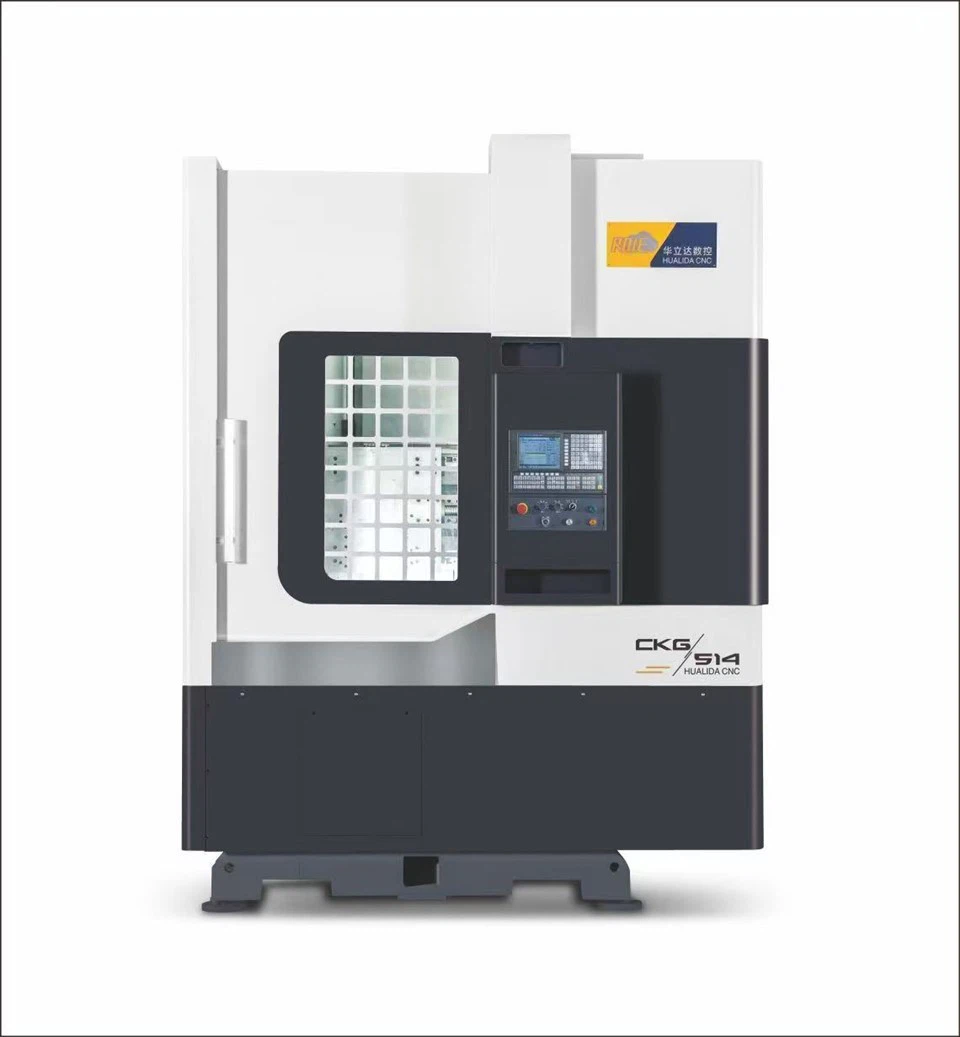
The short answer is yes, CNC turning and milling can be combined. In fact, modern manufacturing has seen the development of machines known as CNC Lathe and Milling Machine, which are capable of performing both turning and milling operations on a single platform.
These machines, often referred to as turn - mill centers, integrate the capabilities of a CNC lathe and a CNC milling machine. They typically feature a spindle for turning operations and a turret or a separate milling head for milling operations. This combination allows for the production of highly complex parts in a single setup, reducing the need for multiple machines and multiple setups.
Benefits of Combining CNC Turning and Milling
1. Increased Efficiency
One of the most significant advantages of combining turning and milling is the reduction in production time. With a turn - mill center, a part can be machined from start to finish in one setup. This eliminates the time spent on moving the part between different machines, setting up fixtures, and aligning the part for subsequent operations. As a result, the overall production cycle is significantly shortened, and throughput is increased.
2. Improved Precision
When a part is machined in multiple setups on different machines, there is always a risk of misalignment and cumulative errors. By combining turning and milling on a single machine, the part remains in the same setup throughout the machining process. This reduces the chances of alignment errors and ensures higher precision and accuracy in the final part.
3. Cost Savings
The integration of turning and milling operations can lead to cost savings in several ways. Firstly, the reduction in production time means lower labor costs. Secondly, fewer machines are required, which reduces capital investment and maintenance costs. Additionally, the elimination of multiple setups reduces the need for additional fixtures and tooling, further cutting down on costs.
4. Enhanced Design Flexibility
Combining turning and milling allows for the production of parts with more complex geometries. Designers can create parts that would be difficult or impossible to manufacture using only turning or milling alone. This opens up new possibilities for product innovation and differentiation.
Challenges of Combining CNC Turning and Milling
1. Machine Complexity
Turn - mill centers are more complex than traditional CNC lathes or milling machines. They require more advanced programming skills and a deeper understanding of machining processes. Operators need to be trained to handle both turning and milling operations on a single machine, which can be a challenge for some manufacturers.
2. Higher Initial Investment
The cost of a turn - mill center is generally higher than that of a standalone CNC lathe or milling machine. This can be a significant barrier for small and medium - sized manufacturers. However, it's important to consider the long - term benefits, such as increased efficiency and cost savings, when evaluating the investment.
3. Tooling and Setup Considerations
Combining turning and milling requires careful consideration of tooling and setup. Different tools are required for turning and milling operations, and the machine needs to be configured to accommodate these tools. This can add complexity to the setup process and may require additional tool management.
Real - World Applications
The combination of CNC turning and milling has found widespread applications in various industries.
1. Aerospace Industry
In the aerospace industry, where precision and complexity are of utmost importance, turn - mill centers are used to produce components such as turbine blades, engine shafts, and landing gear parts. These parts often have complex geometries that require both turning and milling operations to achieve the desired shape and accuracy.
2. Automotive Industry
The automotive industry uses turn - mill centers to manufacture engine components, transmission parts, and steering components. The ability to produce these parts in a single setup improves efficiency and reduces costs, which is crucial in a highly competitive industry.
3. Medical Industry
In the medical field, turn - mill centers are used to produce surgical instruments, implants, and dental components. The high precision and quality achievable with combined turning and milling are essential for ensuring the safety and effectiveness of these medical devices.
The Role of CNC Turning and Milling Machine Tools
The success of combining CNC turning and milling also depends on the quality of the machine tools used. High - quality cutting tools, spindles, and control systems are essential for achieving optimal results. At our company, we invest in the latest CNC Turning and Milling Machine Tools to ensure that our customers receive the highest quality parts.
We carefully select cutting tools based on the material being machined, the complexity of the part, and the desired surface finish. Our spindles are designed to provide high - speed and high - torque performance, enabling efficient turning and milling operations. And our advanced control systems allow for precise programming and monitoring of the machining process.
Conclusion
In conclusion, the combination of CNC turning and milling is not only feasible but also offers numerous benefits in terms of efficiency, precision, cost savings, and design flexibility. While there are challenges associated with this approach, such as machine complexity and higher initial investment, the long - term advantages make it a viable option for many manufacturers.
If you're in need of high - quality CNC turning and milling services, or if you're considering investing in a turn - mill center for your own manufacturing operations, we'd love to have a conversation with you. Our team of experts can provide you with more information, answer your questions, and help you find the best solution for your specific needs. Feel free to reach out to us to start a procurement discussion.
References
- Smith, J. (2018). Advanced CNC Machining Techniques. Manufacturing Press.
- Jones, R. (2019). The Future of CNC Turning and Milling. Industry Insights Journal.
- Brown, A. (2020). Combining Turning and Milling for Optimal Efficiency. Precision Manufacturing Review.


