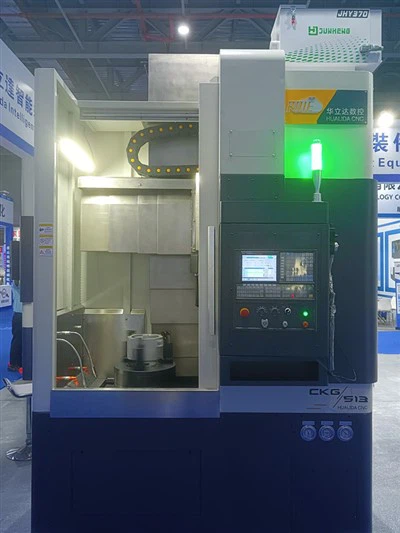
Hey there! As a supplier of the CKG516 CNC Vertical Lathe, I'm stoked to share with you how to set up the milling operation on this awesome machine. It might seem a bit daunting at first, but once you get the hang of it, you'll be churning out high - quality parts in no time.
1. Pre - setup Checks
Before we dive into the actual milling setup, we need to do some pre - setup checks. First off, make sure the machine is clean. Any debris or dust on the lathe can mess up the precision of your milling operation. I usually use a compressed air gun to blow away any loose particles from the work area, chuck, and spindle.
Next, check the lubrication levels. The CKG516 needs proper lubrication for all its moving parts to function smoothly. Refer to the machine's manual to find the lubrication points and fill them up if necessary. This simple step can prevent a lot of wear and tear in the long run.
Also, inspect the cutting tools. You want to use sharp and undamaged tools for the best results. Dull or damaged tools can lead to poor surface finishes and inaccurate cuts. If you notice any issues with the tools, replace them before starting the milling operation.


2. Mounting the Workpiece
Now, let's talk about mounting the workpiece. The CKG516 comes with a chuck that can hold a variety of workpiece sizes and shapes. First, clean the chuck jaws to ensure a good grip on the workpiece. Place the workpiece in the chuck and tighten the jaws evenly. You don't want the workpiece to move during the milling process, as this can cause serious safety hazards and ruin your part.
If you're working with a large or irregularly shaped workpiece, you might need to use additional fixtures. There are different types of fixtures available, like clamps and vises, which can help secure the workpiece firmly in place. Make sure to position the workpiece in such a way that it's centered on the spindle axis. This will ensure that the milling operation is accurate and efficient.
3. Selecting the Right Cutting Tools
Choosing the right cutting tools is crucial for a successful milling operation. For the CKG516, there are several factors to consider when selecting tools. The material of the workpiece is the first thing to think about. If you're milling a soft material like aluminum, you can use high - speed steel (HSS) tools. But for harder materials like stainless steel, carbide tools are a better choice as they can withstand higher cutting speeds and pressures.
The type of milling operation also matters. For example, if you're doing face milling, you'll need a face mill cutter. For slot milling, an end mill is the way to go. The size of the tool should match the size of the feature you're milling. A tool that's too small might take a long time to complete the job, while a tool that's too large can cause excessive vibrations and damage the workpiece.
4. Programming the CNC Controller
The CKG516 is equipped with a CNC controller, which allows you to program the milling operation. If you're new to CNC programming, don't worry. The controller has a user - friendly interface that makes it relatively easy to create programs.
First, you need to define the coordinates of the workpiece. This is called setting up the work coordinate system. You can do this by using the controller's built - in functions. Once the work coordinate system is set, you can start programming the tool path. You'll need to specify the cutting speed, feed rate, and depth of cut for each operation.
There are different ways to program the CNC controller. You can use G - code, which is a standard programming language for CNC machines. Or, if you're not comfortable with G - code, the CKG516 also supports conversational programming. With conversational programming, you can enter the machining parameters in plain English, and the controller will generate the corresponding G - code for you.
5. Setting the Cutting Parameters
Cutting parameters play a huge role in the quality of the milling operation. The cutting speed is the speed at which the cutting tool rotates. It's usually measured in revolutions per minute (RPM). You need to set the cutting speed based on the material of the workpiece and the type of cutting tool. As a general rule, harder materials require lower cutting speeds, while softer materials can tolerate higher speeds.
The feed rate is the speed at which the cutting tool moves along the workpiece. It's measured in inches per minute (IPM) or millimeters per minute (mm/min). A higher feed rate can increase the productivity of the milling operation, but it can also lead to poor surface finishes if set too high. You need to find the right balance between productivity and quality.
The depth of cut is the amount of material removed in each pass of the cutting tool. It depends on the strength of the cutting tool and the rigidity of the machine. You don't want to take too deep of a cut at once, as this can overload the tool and cause it to break. Instead, make multiple shallow cuts to achieve the desired depth.
6. Testing the Setup
Before starting the full - scale milling operation, it's a good idea to do a test run. This can help you identify any potential issues with the setup and make adjustments if needed. First, run the program in a dry run mode. In dry run mode, the machine will move the cutting tool along the programmed path without actually cutting the material. This allows you to check if the tool path is correct and if there are any collisions.
If everything looks good in the dry run, you can do a trial cut on a scrap piece of the same material. This will give you a better idea of how the machine and the cutting tools are performing. Check the surface finish and the dimensions of the trial cut. If the results are not satisfactory, you can go back and adjust the cutting parameters or the tool path.
7. Starting the Milling Operation
Once you're satisfied with the test run, you're ready to start the actual milling operation. Make sure all the safety guards are in place and that you're wearing the appropriate safety gear, like safety glasses and ear protection.
Press the start button on the CNC controller, and the machine will start the milling process. Keep an eye on the machine during the operation. Listen for any unusual noises, which could indicate a problem with the cutting tools or the machine itself. If you notice anything out of the ordinary, stop the machine immediately and investigate the issue.
After the milling operation is complete, remove the workpiece carefully from the chuck. Inspect the part to make sure it meets the required specifications. You can use measuring tools like calipers and micrometers to check the dimensions.
8. Maintenance after the Operation
After you're done with the milling operation, it's important to perform some maintenance on the CKG516. First, clean the machine again to remove any chips and coolant. This will prevent corrosion and keep the machine in good condition.
Check the cutting tools for wear and tear. If they're getting dull, you can sharpen them or replace them. Also, lubricate the moving parts again to ensure smooth operation in the next use.
If you want to explore other models of CNC vertical lathes, we also offer the CKG513 CNC Vertical Turning Lathe and the CKG515 CNC Vertical Turning Lathe. You can find more information about our CNC Vertical Turning Lathe on our website.
If you're interested in purchasing the CKG516 CNC Vertical Lathe or have any questions about setting up the milling operation, feel free to reach out to us. We're here to help you get the most out of our machines and take your manufacturing process to the next level.
References
- "CNC Machining Handbook" - A comprehensive guide to CNC machining operations and techniques.
- Manufacturer's manual for the CKG516 CNC Vertical Lathe.