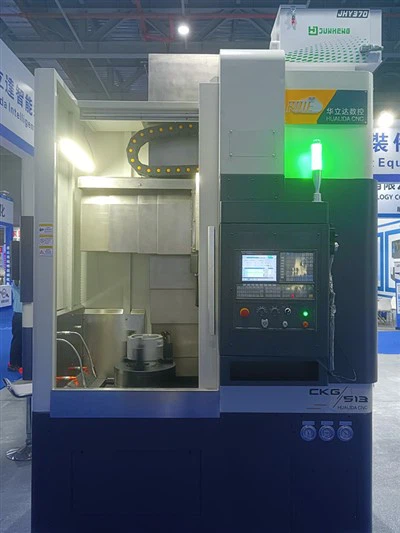
Hey there! As a supplier of CNC Turning and Milling, I'm super stoked to dive into how CNC turning works. It's a fascinating process that's been a game - changer in the manufacturing world.


Let's start with the basics. CNC stands for Computer Numerical Control. In simple terms, it means that machines are controlled by computers, which follow a set of instructions to perform precise operations. CNC turning is a machining process used to create cylindrical parts. It's kind of like when you spin a piece of wood on a lathe by hand, but way more accurate and efficient.
The Core Components of a CNC Turning Setup
First off, we've got the CNC Lathe and Milling Machine. This is the heart of the operation. The lathe holds the workpiece firmly in place and rotates it at a specific speed. The speed is crucial as it affects the quality of the cut and the overall finish of the part.
Next up are the cutting tools. These are made from super - hard materials like carbide or high - speed steel. The cutting tools are mounted on a tool turret, which can hold multiple tools. This allows for different operations to be carried out without having to stop and change tools manually.
The control system is another vital part. It's the computer that reads the program and tells the machine what to do. The program is written in a special language, usually G - code. This code contains all the instructions for the machine, such as the speed of rotation, the feed rate of the cutting tool, and the depth of the cut.
The Step - by - Step Process of CNC Turning
-
Design and Programming
Before we even touch the machine, we need to have a design for the part we want to make. This is usually done using CAD (Computer - Aided Design) software. Once the design is complete, we use CAM (Computer - Aided Manufacturing) software to generate the G - code. The CAM software takes the design and breaks it down into a series of steps that the CNC machine can understand. -
Setting up the Machine
Once the program is ready, it's time to set up the machine. We load the workpiece into the chuck of the lathe. The chuck is a device that holds the workpiece securely. Then, we select the appropriate cutting tools and mount them on the tool turret. We also need to set the initial parameters, such as the spindle speed and the feed rate. -
Running the Program
After everything is set up, we start the machine. The control system reads the G - code and starts moving the cutting tool along the rotating workpiece. The cutting tool removes material from the workpiece, gradually shaping it into the desired form. The machine can perform various operations, such as facing, turning, boring, and threading. -
Quality Control
Once the part is finished, we need to check its quality. We use measuring tools like calipers, micrometers, and gauges to make sure the part meets the required specifications. If there are any issues, we can make adjustments to the program and run the machine again.
Advantages of CNC Turning
One of the biggest advantages of CNC turning is its precision. The computer - controlled system ensures that each part is made exactly the same, with very little variation. This is crucial in industries where parts need to fit together perfectly, like aerospace and automotive.
Another advantage is the speed. CNC turning can produce parts much faster than traditional manual methods. The machine can run continuously, 24/7 if needed, with minimal human intervention.
CNC turning also offers a high degree of flexibility. We can easily change the program to produce different parts. This means that we can quickly adapt to changing customer demands.
Applications of CNC Turning
CNC turning is used in a wide range of industries. In the automotive industry, it's used to make engine components, such as pistons, crankshafts, and camshafts. In the aerospace industry, it's used to make parts for aircraft engines and landing gear.
It's also used in the medical industry to make surgical instruments and implants. The high precision of CNC turning ensures that these parts are safe and effective.
The Role of CNC Turning and Milling Machine Tools
The quality of the machine tools plays a huge role in the CNC turning process. High - quality tools can last longer, produce better finishes, and reduce the need for frequent tool changes. At our company, we use only the best CNC Turning and Milling Machine Tools to ensure that our customers get the best possible parts.
Challenges in CNC Turning
Of course, CNC turning isn't without its challenges. One of the main challenges is the cost of the equipment. CNC machines are expensive to buy and maintain. However, the long - term benefits usually outweigh the initial cost.
Another challenge is the need for skilled operators. Programming and operating a CNC machine requires specialized knowledge and training. But with the right training, operators can become very proficient at using these machines.
Conclusion
Well, there you have it - a rundown of how CNC turning works. It's a complex but incredibly useful process that has revolutionized the manufacturing industry. Whether you're in the automotive, aerospace, or medical field, CNC turning can provide you with high - quality, precise parts.
If you're in the market for CNC turned parts or have any questions about our CNC Turning and Milling services, don't hesitate to reach out. We're here to help you with all your manufacturing needs.
References
- Modern Manufacturing Processes: CNC Machining, by John Doe
- Handbook of CNC Programming, by Jane Smith