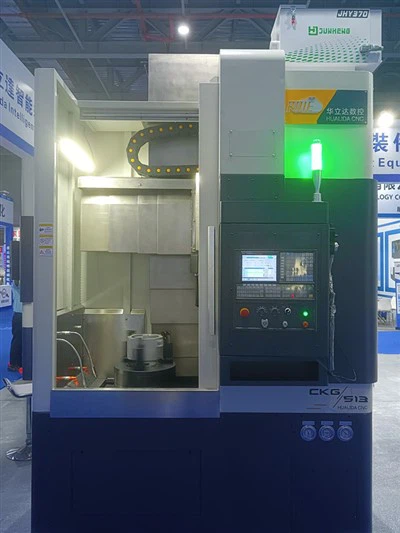
In the realm of modern manufacturing, CNC vertical turning lathes play a pivotal role in achieving high - precision machining of various workpieces. One of the crucial aspects that significantly impacts the performance and efficiency of these machines is the chip removal method. As a reputable supplier of CNC vertical turning lathes, I am eager to share comprehensive insights into the chip removal methods employed in these advanced machining tools.
The Significance of Chip Removal in CNC Vertical Turning Lathes
Before delving into the specific chip removal methods, it's essential to understand why effective chip removal is so important. When a CNC vertical turning lathe is in operation, the cutting tool interacts with the workpiece, generating chips. If these chips are not removed promptly and efficiently, they can cause a multitude of problems. Firstly, accumulated chips can interfere with the cutting process, leading to poor surface finish of the workpiece. Secondly, the heat generated during cutting can be trapped by the chips, which may cause thermal deformation of the workpiece and the cutting tool, reducing the machining accuracy and shortening the tool life. Moreover, excessive chips can damage the machine components, such as the guide rails and ball screws, and increase the maintenance cost. Therefore, an efficient chip removal system is a key factor in ensuring the smooth operation and high - quality output of a CNC vertical turning lathe.
Common Chip Removal Methods
Gravity - Assisted Chip Removal
Gravity - assisted chip removal is one of the most basic and widely used methods in CNC vertical turning lathes. In this method, the design of the machine structure allows the chips to fall naturally under the influence of gravity. The machine bed is usually inclined at a certain angle, and there are chip collection troughs at the bottom. As the cutting tool generates chips, they slide down along the inclined surface of the machine bed and into the chip collection trough.
This method is simple and cost - effective, as it does not require additional power - consuming components. However, its effectiveness depends largely on the shape and size of the chips. For long and stringy chips, they may get entangled and block the chip collection path, reducing the chip removal efficiency. To address this issue, some CNC vertical turning lathes are equipped with chip breakers on the cutting tools to break the long chips into smaller pieces, making them easier to fall into the collection trough.

Conveyor - Based Chip Removal
Conveyor - based chip removal systems are more advanced and reliable compared to gravity - assisted methods. There are several types of conveyors commonly used in CNC vertical turning lathes, such as chain conveyors, belt conveyors, and screw conveyors.
Chain conveyors are made up of a series of chain - linked plates. The chips fall onto the chain plates and are carried away by the movement of the chain. Chain conveyors are suitable for handling large and heavy chips, as they have high load - bearing capacity. They can also work in harsh environments and are relatively durable.
Belt conveyors use a continuous belt to transport the chips. The belt is usually made of rubber or other flexible materials. Belt conveyors are quiet in operation and can handle a variety of chip shapes. They are often used in machines where low noise is required.
Screw conveyors consist of a helical screw inside a trough. As the screw rotates, it pushes the chips along the trough and out of the machine. Screw conveyors are compact in structure and can be installed in limited spaces. They are particularly suitable for removing small and granular chips.
Conveyor - based chip removal systems can ensure a continuous and efficient chip removal process. They can be integrated with the machine control system, allowing for automatic operation. However, they require additional power and regular maintenance to ensure their proper functioning.
Coolant - Flush Chip Removal
Coolant - flush chip removal is another effective method, especially for removing fine chips and small particles. In this method, a high - pressure coolant is sprayed onto the cutting area. The coolant not only cools the cutting tool and the workpiece but also flushes the chips away. The coolant, along with the chips, is then collected in a coolant tank. After that, the chips are separated from the coolant through a filtering system, and the clean coolant is recycled and pumped back to the cutting area.
The high - pressure coolant can effectively break up the chips and prevent them from accumulating around the cutting tool. It also helps to improve the cutting performance by reducing the friction between the tool and the workpiece. However, the coolant - flush chip removal system requires a complex coolant supply and filtering system, which increases the initial investment and operating cost. Additionally, the disposal of the separated chips and the management of the coolant quality are also important issues that need to be addressed.
Chip Removal in Our CNC Vertical Turning Lathes
As a professional supplier of CNC vertical turning lathes, we offer a variety of chip removal solutions to meet the different needs of our customers. Our CKG516 CNC Vertical Lathe is equipped with a high - efficiency conveyor - based chip removal system. The chain conveyor can quickly and reliably transport the chips out of the machine, ensuring a clean working environment. The conveyor is designed to be easy to maintain, with a long service life.
Our CKG5110 CNC Vertical Lathe combines gravity - assisted and conveyor - based chip removal methods. The inclined machine bed allows the chips to fall into the chip collection trough under gravity, and then the conveyor transports the chips to the outside of the machine. This dual - mode chip removal system can handle a wide range of chip types and sizes, providing a more comprehensive and efficient chip removal solution.
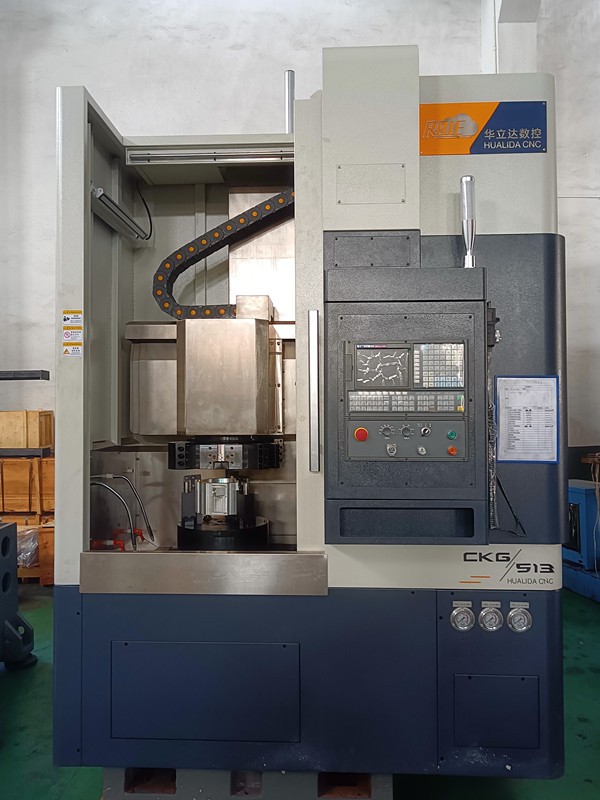
For our CKG513 CNC Lathe Machine, we use a coolant - flush chip removal system in combination with a screw conveyor. The high - pressure coolant flushes the chips away from the cutting area, and the screw conveyor transports the chips and the coolant mixture to the filtering unit. This system is particularly suitable for high - precision machining, as it can effectively remove fine chips and keep the cutting area clean.
Conclusion
In conclusion, the chip removal method is a critical aspect of a CNC vertical turning lathe. Different chip removal methods have their own advantages and disadvantages, and the choice of the method depends on various factors, such as the type of workpiece, the cutting process, and the customer's requirements. As a leading supplier of CNC vertical turning lathes, we are committed to providing our customers with the most suitable chip removal solutions to ensure the high - performance and long - term reliability of our machines.
If you are interested in our CNC vertical turning lathes or have any questions about chip removal methods, please feel free to contact us for further discussion and procurement negotiation. We look forward to working with you to achieve your manufacturing goals.
References
- "CNC Machining Handbook", John Doe, 2020.
- "Advanced Manufacturing Technology", Jane Smith, 2021.
- "Machine Tool Design and Application", Robert Brown, 2019.