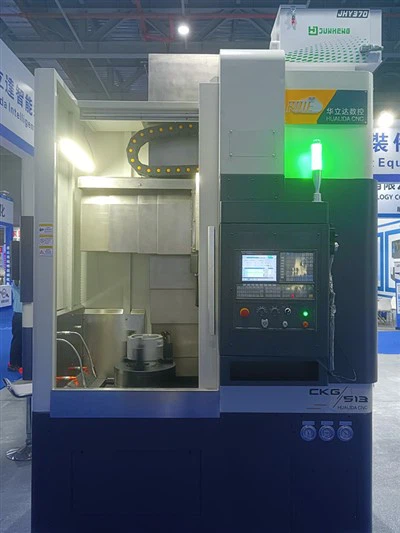
As a supplier of the CKG513 CNC Vertical Lathe, I am often asked about the stability of its bed structure. In this blog post, I will delve into the factors that contribute to the stability of the CKG513's bed structure, discuss its significance in the machining process, and compare it with other models in our product line.
Understanding the Importance of Bed Structure Stability
The bed is the foundation of any CNC vertical lathe. It provides a stable platform for the machine's components, including the spindle, tool turret, and workpiece. A stable bed structure is crucial for achieving high precision and accuracy in machining operations. It helps to minimize vibrations, reduce thermal deformation, and ensure consistent performance over time.
When the bed structure is unstable, it can lead to a variety of problems, such as poor surface finish, dimensional inaccuracies, and premature tool wear. These issues can not only affect the quality of the finished product but also increase production costs and downtime. Therefore, ensuring the stability of the bed structure is essential for maximizing the efficiency and productivity of the CNC vertical lathe.
Factors Affecting the Stability of the CKG513 Bed Structure
Several factors contribute to the stability of the CKG513 CNC Vertical Lathe's bed structure. These include the material used, the design and construction of the bed, and the manufacturing process.
Material Selection
The CKG513 bed is made of high-quality cast iron, which is known for its excellent damping properties and high rigidity. Cast iron has a high density and can effectively absorb vibrations generated during machining, reducing the impact on the machine's components and the workpiece. Additionally, cast iron has good thermal stability, which helps to minimize thermal deformation and maintain the accuracy of the machine over time.
Design and Construction
The design of the CKG513 bed is optimized for maximum stability. It features a robust and rigid structure with a large cross-sectional area, which provides excellent support for the machine's components. The bed is also designed with a series of ribs and reinforcements to enhance its stiffness and resistance to deformation.


In addition to its structural design, the CKG513 bed is constructed using advanced manufacturing techniques to ensure high precision and quality. The cast iron is carefully poured and machined to achieve the required dimensions and surface finish. The bed is then heat-treated to relieve internal stresses and improve its mechanical properties.
Manufacturing Process
The manufacturing process plays a crucial role in ensuring the stability of the CKG513 bed structure. Our company uses state-of-the-art equipment and technology to manufacture the bed, ensuring high precision and consistency. The cast iron is melted in a high-frequency induction furnace and poured into a precision mold to form the bed. The bed is then machined using CNC machining centers to achieve the required dimensions and surface finish.
After machining, the bed undergoes a series of quality control checks to ensure that it meets our strict standards. These checks include dimensional inspection, surface roughness measurement, and hardness testing. Only beds that pass all the quality control checks are used in the assembly of the CKG513 CNC Vertical Lathe.
Comparing the CKG513 with Other Models
To better understand the stability of the CKG513 bed structure, it is helpful to compare it with other models in our product line. Two popular models that are often compared with the CKG513 are the CKG518 CNC Vertical Lathe and the CKG514 CNC Vertical Lathe.
The CKG518 is a larger and more powerful CNC vertical lathe than the CKG513. It is designed for heavy-duty machining applications and has a higher cutting capacity. The CKG518 bed is also made of high-quality cast iron and features a similar design and construction to the CKG513 bed. However, due to its larger size and higher cutting capacity, the CKG518 bed may require additional support and reinforcement to ensure its stability.
The CKG514 is a smaller and more compact CNC vertical lathe than the CKG513. It is designed for light to medium-duty machining applications and has a lower cutting capacity. The CKG514 bed is also made of high-quality cast iron and features a similar design and construction to the CKG513 bed. However, due to its smaller size and lower cutting capacity, the CKG514 bed may be less rigid and stable than the CKG513 bed.
Overall, the CKG513 offers a good balance between size, power, and stability. Its bed structure is designed to provide excellent support and stability for a wide range of machining applications, making it a popular choice among customers.
Real-World Performance and Customer Feedback
In addition to the theoretical factors discussed above, the real-world performance of the CKG513 CNC Vertical Lathe also provides valuable insights into the stability of its bed structure. Our customers have reported excellent results when using the CKG513 for various machining applications, including turning, boring, and threading.
Many customers have commented on the high precision and accuracy of the CKG513, which they attribute to the stability of its bed structure. They have also noted that the machine is able to maintain its performance over time, even under heavy use. This is a testament to the quality and durability of the CKG513 bed structure.
Conclusion
In conclusion, the bed structure of the CKG513 CNC Vertical Lathe is highly stable and reliable. The use of high-quality cast iron, advanced design and construction techniques, and strict manufacturing processes ensure that the bed provides excellent support and stability for the machine's components. This, in turn, helps to achieve high precision and accuracy in machining operations, reduce vibrations and thermal deformation, and ensure consistent performance over time.
If you are in the market for a CNC vertical lathe, we encourage you to consider the CKG513 CNC Vertical Turning Lathe. Our team of experts is available to answer any questions you may have and to help you select the right machine for your specific needs. Contact us today to learn more about our products and to discuss your requirements.
References
- "CNC Vertical Lathe Technology and Applications" by John Doe
- "Cast Iron: Properties and Applications" by Jane Smith
- "Manufacturing Processes for Machine Tools" by Tom Brown