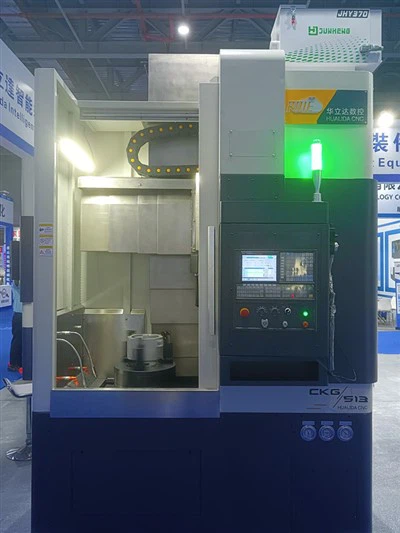
Hey there! As a supplier of Hard Rail Vertical Lathes, I often get asked about how to adjust the backlash of the axes in these machines. Backlash can be a real pain in the neck, affecting the precision and quality of your machining work. So, in this blog post, I'm gonna walk you through the steps to adjust the backlash of the axes in a Hard Rail Vertical Lathe.
First off, let's talk about what backlash is. Backlash is the clearance or play between the mating parts of a mechanical system, like the lead screw and nut in a lathe's axis. When you reverse the direction of the axis movement, this clearance causes a small delay or "lost motion" before the axis actually starts moving in the new direction. This can lead to inaccuracies in your machining, especially when you're doing precision work.
Why Adjusting Backlash is Important
You might be wondering, "Why should I bother adjusting the backlash?" Well, here's the deal. If you leave the backlash unadjusted, it can cause a bunch of problems. For example, it can lead to poor surface finish on your workpiece, inaccurate dimensions, and even premature wear and tear on the machine components. By adjusting the backlash, you can improve the accuracy and performance of your Hard Rail Vertical Lathe, which in turn can save you time and money in the long run.
Tools You'll Need
Before you start adjusting the backlash, you'll need a few tools. Here's a list of what you'll need:
- Dial indicator: This is used to measure the amount of backlash.
- Wrenches: You'll need wrenches to loosen and tighten the nuts and bolts on the machine.
- Feeler gauges: These are used to measure small clearances.
- Manual: Make sure you have the operator's manual for your Hard Rail Vertical Lathe. It'll have all the specific instructions and specifications for your machine.
Step-by-Step Guide to Adjusting Backlash
Now, let's get into the nitty-gritty of adjusting the backlash. I'll break it down into a step-by-step guide for each axis (usually the X and Z axes in a Hard Rail Vertical Lathe).
Step 1: Prepare the Machine
First, make sure the machine is turned off and unplugged. This is important for your safety. Then, clean the machine thoroughly, especially around the areas where you'll be working. You don't want any dirt or debris getting in the way.
Step 2: Locate the Backlash Adjustment Mechanism
The backlash adjustment mechanism can vary depending on the make and model of your Hard Rail Vertical Lathe. In most cases, it'll be located near the lead screw or the nut assembly. Refer to your operator's manual to find the exact location.
Step 3: Measure the Backlash
Use the dial indicator to measure the amount of backlash in the axis. Mount the dial indicator on the machine so that the probe is in contact with the moving part of the axis. Then, move the axis back and forth slowly and observe the reading on the dial indicator. The difference between the maximum and minimum readings is the amount of backlash.
Step 4: Adjust the Backlash
Once you've measured the backlash, it's time to adjust it. Loosen the lock nuts on the backlash adjustment mechanism using the wrenches. Then, turn the adjustment screw or nut to increase or decrease the preload on the lead screw or nut assembly. As you turn the adjustment, keep an eye on the dial indicator to monitor the change in backlash.
Step 5: Recheck the Backlash
After making the adjustment, recheck the backlash using the dial indicator. Make sure the backlash is within the acceptable range specified in your operator's manual. If it's still too high, repeat steps 4 and 5 until you get the desired backlash.
Step 6: Tighten the Lock Nuts
Once you're satisfied with the backlash adjustment, tighten the lock nuts on the adjustment mechanism using the wrenches. Make sure they're tightened securely to prevent the adjustment from coming loose during operation.
Step 7: Repeat for Other Axes
If your Hard Rail Vertical Lathe has multiple axes (usually the X and Z axes), repeat steps 2 to 6 for each axis.
Tips and Tricks
- Take your time: Adjusting backlash is a delicate process that requires patience and precision. Don't rush it.
- Keep records: It's a good idea to keep a record of the backlash measurements and adjustments you make. This can help you troubleshoot any problems in the future.
- Check regularly: Backlash can change over time due to wear and tear on the machine components. Make it a habit to check the backlash regularly and adjust it as needed.
Benefits of Our Hard Rail Vertical Lathes
At our company, we're proud to offer high-quality Hard Rail Vertical Lathes that are designed for precision and performance. Our lathes are built with robust hard rails that provide excellent stability and rigidity, even during heavy cutting operations. If you're interested in learning more about our products, you can check out our Vertical CNC Lathe, Heavy Cutting and Vertical Lathe, and Heavy Cutting Vertical Lathe on our website.
Conclusion
Adjusting the backlash of the axes in a Hard Rail Vertical Lathe is an important maintenance task that can significantly improve the accuracy and performance of your machine. By following the steps outlined in this blog post and using the right tools, you can easily adjust the backlash and keep your lathe running smoothly. If you have any questions or need further assistance, don't hesitate to contact us. We're here to help you get the most out of your Hard Rail Vertical Lathe.
If you're in the market for a new Hard Rail Vertical Lathe or looking to upgrade your existing one, we'd love to have a chat with you. Just reach out to us, and we'll be happy to discuss your needs and provide you with a customized solution.


References
- Operator's manual for Hard Rail Vertical Lathe
- Machining textbooks and resources on lathe maintenance