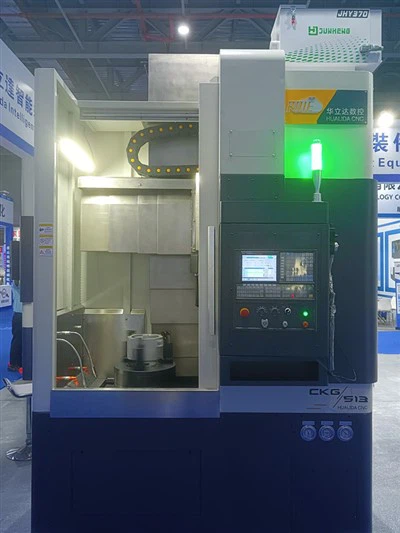
In the manufacturing industry, the efficiency and quality of the machining process are crucial for businesses to stay competitive. As a supplier of New Vertical Lathes, I understand the significance of optimizing the machining process to meet the diverse needs of our customers. In this blog, I will share some practical tips on how to optimize the machining process on a New Vertical Lathe.
Understanding the New Vertical Lathe
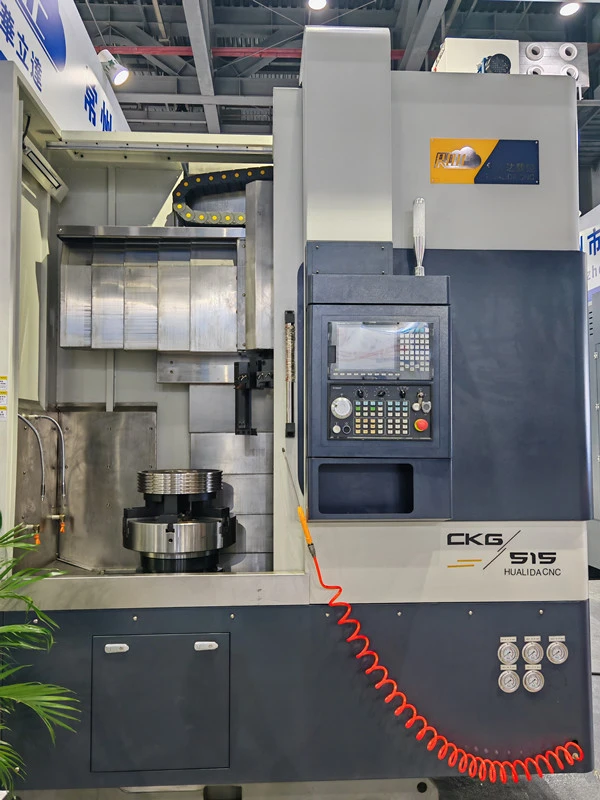
Before diving into the optimization process, it's essential to have a good understanding of the New Vertical Lathe. Our vertical lathes, such as the CNC Vertical Turning Lathe, CKG513 CNC Vertical Turning Lathe, and CKG518 CNC Vertical Lathe, are equipped with advanced features and technologies that offer high precision, stability, and efficiency.
The vertical design of these lathes allows for better chip evacuation, which reduces the risk of chip accumulation and improves the surface finish of the workpiece. Additionally, the vertical configuration provides better access to the workpiece, making it easier to load and unload parts, as well as perform tool changes.
Selecting the Right Tools
One of the key factors in optimizing the machining process is selecting the right tools. The choice of tools depends on several factors, including the material of the workpiece, the required surface finish, and the machining operation.
For example, when machining hard materials such as stainless steel or titanium, it's recommended to use carbide tools with a high cutting speed and feed rate. Carbide tools are known for their high hardness and wear resistance, which allows for longer tool life and better machining performance.
On the other hand, when machining softer materials such as aluminum or brass, high-speed steel (HSS) tools may be a more suitable option. HSS tools are more affordable and offer good cutting performance at lower cutting speeds.
It's also important to consider the geometry of the cutting tools. The shape and angle of the cutting edge can have a significant impact on the cutting forces, chip formation, and surface finish. For example, a tool with a positive rake angle will reduce the cutting forces and improve the chip flow, while a tool with a negative rake angle will increase the cutting forces but provide better tool life.
Optimizing Cutting Parameters
Another important aspect of optimizing the machining process is setting the right cutting parameters. The cutting parameters include the cutting speed, feed rate, and depth of cut. These parameters need to be carefully selected based on the material of the workpiece, the type of cutting tool, and the machining operation.
The cutting speed is the speed at which the cutting tool moves relative to the workpiece. It's usually measured in meters per minute (m/min) or surface feet per minute (SFM). The cutting speed affects the cutting forces, tool life, and surface finish. A higher cutting speed will generally result in a faster machining time but may also increase the wear on the cutting tool.
The feed rate is the distance the cutting tool moves along the workpiece in one revolution. It's usually measured in millimeters per revolution (mm/rev) or inches per revolution (ipr). The feed rate affects the cutting forces, chip formation, and surface finish. A higher feed rate will generally result in a faster machining time but may also reduce the surface finish.
The depth of cut is the thickness of the material removed by the cutting tool in one pass. It's usually measured in millimeters (mm) or inches (in). The depth of cut affects the cutting forces, tool life, and surface finish. A larger depth of cut will generally result in a faster machining time but may also increase the cutting forces and the risk of tool breakage.
To optimize the cutting parameters, it's recommended to start with the manufacturer's recommended values and then make adjustments based on the actual machining conditions. It's also important to monitor the cutting forces, tool wear, and surface finish during the machining process and make adjustments as needed.
Improving Workpiece Fixturing
Proper workpiece fixturing is essential for ensuring the accuracy and stability of the machining process. The workpiece needs to be securely held in place to prevent movement or vibration during the machining operation.
There are several types of workpiece fixturing methods available, including chucks, vises, clamps, and fixtures. The choice of fixturing method depends on the shape, size, and material of the workpiece, as well as the machining operation.
For example, when machining a round workpiece, a chuck may be the most suitable fixturing method. A chuck can securely hold the workpiece by gripping it from the outside or inside. When machining a rectangular workpiece, a vise or clamp may be a more appropriate option. A vise or clamp can hold the workpiece by applying pressure to the sides or top.
It's also important to ensure that the fixturing method does not interfere with the machining operation. For example, the fixturing device should not block the access to the cutting tool or the workpiece. Additionally, the fixturing method should not cause any deformation or damage to the workpiece.
Implementing Tool Management
Effective tool management is crucial for optimizing the machining process. Tool management involves several activities, including tool selection, tool storage, tool sharpening, and tool replacement.
It's important to keep a detailed inventory of all the cutting tools used in the machining process. This includes information such as the tool type, size, material, and usage history. By keeping track of the tool inventory, it's easier to select the right tool for the job and ensure that there are enough tools available when needed.
Tool storage is also an important aspect of tool management. The cutting tools should be stored in a clean, dry, and organized environment to prevent damage and corrosion. It's recommended to use tool holders or cabinets to store the cutting tools.
Tool sharpening is another important activity in tool management. Over time, the cutting edge of the tool will wear down, which will affect the cutting performance and surface finish. It's important to sharpen the cutting tools regularly to maintain their cutting performance. The frequency of tool sharpening depends on several factors, including the type of cutting tool, the material of the workpiece, and the machining operation.
Finally, tool replacement is necessary when the cutting tool has reached the end of its useful life. It's important to replace the cutting tool before it causes any damage to the workpiece or the machine. The replacement of the cutting tool should be based on the tool wear, cutting performance, and surface finish.
Monitoring and Analyzing the Machining Process
Monitoring and analyzing the machining process is essential for identifying any issues or areas for improvement. There are several methods and tools available for monitoring the machining process, including sensors, cameras, and data analysis software.
Sensors can be used to monitor various parameters during the machining process, such as cutting forces, temperature, vibration, and tool wear. By collecting and analyzing this data, it's possible to detect any abnormalities or trends in the machining process and take corrective actions before any serious problems occur.
Cameras can be used to visually monitor the machining process. This can be useful for detecting any issues such as chip accumulation, tool breakage, or workpiece movement. By using cameras, it's possible to identify the root cause of the problem and take appropriate measures to solve it.

Data analysis software can be used to analyze the data collected from the sensors and cameras. This software can provide valuable insights into the machining process, such as the cutting performance, tool wear, and surface finish. By using data analysis software, it's possible to optimize the cutting parameters, improve the tool management, and reduce the machining time and cost.
Conclusion
Optimizing the machining process on a New Vertical Lathe requires a combination of technical knowledge, experience, and the right tools and equipment. By selecting the right tools, optimizing the cutting parameters, improving the workpiece fixturing, implementing tool management, and monitoring and analyzing the machining process, it's possible to achieve high precision, stability, and efficiency in the machining process.
As a supplier of New Vertical Lathes, we are committed to providing our customers with the best products and services. If you are interested in learning more about our vertical lathes or need assistance in optimizing your machining process, please feel free to contact us. We look forward to working with you to achieve your manufacturing goals.
References
- Smith, J. (2018). Machining Technology: An Introduction. McGraw-Hill Education.
- Kalpakjian, S., & Schmid, S. R. (2019). Manufacturing Engineering and Technology. Pearson.
- Trent, E. M., & Wright, P. K. (2000). Metal Cutting. Butterworth-Heinemann.