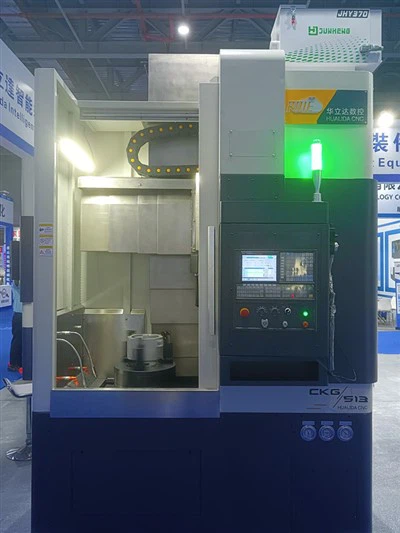
As a supplier of High Speed Vertical Lathes, understanding the backlash characteristics of these machines is crucial. Backlash is a significant factor that can impact the precision, efficiency, and overall performance of a High Speed Vertical Lathe. In this blog, we will delve into what backlash is, its characteristics in the context of High Speed Vertical Lathes, and how it affects the machining process.
What is Backlash?
Backlash refers to the clearance or play between the mating components of a mechanical system, such as gears, lead screws, or ball screws. In a High Speed Vertical Lathe, backlash can occur in various parts of the machine, including the feed drives, the spindle, and the tool - holding mechanisms. When there is backlash, there is a slight delay or movement in the system before the intended motion is accurately transmitted.
Backlash Characteristics in High Speed Vertical Lathes
1. Direction - Dependent
One of the primary characteristics of backlash in a High Speed Vertical Lathe is its direction - dependence. When the direction of motion changes, the backlash becomes apparent. For example, when the feed drive changes its direction from forward to reverse, there is a small amount of free movement before the actual cutting force is transmitted to the workpiece. This can lead to inaccuracies in the machined surface, especially when performing contouring or profiling operations. In contouring, the sudden change in direction due to backlash can cause the tool to deviate from the intended path, resulting in a less - than - perfect finish on the workpiece.
2. Speed - Related
Backlash characteristics are also closely related to the operating speed of the High Speed Vertical Lathe. At high speeds, the effects of backlash can be more pronounced. As the machine operates at high rotational speeds, the time available for the system to overcome the backlash is reduced. This can lead to increased vibrations and chatter, which not only affect the surface finish of the workpiece but also the tool life. For instance, in high - speed turning operations, the rapid changes in direction and high cutting forces can exacerbate the backlash problem, causing the tool to wear out more quickly and the workpiece to have a rough surface.
3. Wear - Induced
Over time, the components of a High Speed Vertical Lathe will experience wear. This wear can increase the amount of backlash in the system. For example, the gears in the feed drive or the spindle may wear down, causing the teeth to become less precise and increasing the clearance between them. As the backlash increases due to wear, the accuracy of the machine decreases. Regular maintenance and inspection are essential to detect and address wear - induced backlash. If left unaddressed, excessive backlash can lead to major breakdowns and costly repairs.
4. Temperature - Sensitive
Backlash can also be affected by temperature changes. As the High Speed Vertical Lathe operates, the components heat up due to friction. Different materials expand at different rates with temperature changes. This can cause the clearance between mating components to change, thereby altering the amount of backlash. For example, if the lead screw and its nut are made of different materials, the expansion of these materials at high operating temperatures can increase the backlash. This temperature - sensitive backlash can be a challenge to control, as it requires careful monitoring of the machine's operating temperature and, in some cases, the use of temperature - compensation techniques.
Impact of Backlash on Machining
1. Dimensional Accuracy
The most obvious impact of backlash on machining is on dimensional accuracy. As mentioned earlier, the free movement due to backlash can cause the tool to deviate from the intended path, resulting in parts that do not meet the specified dimensions. In industries where tight tolerances are required, such as aerospace and medical device manufacturing, even a small amount of backlash can lead to rejected parts. For example, in the production of aircraft engine components, where the dimensional accuracy can be as tight as a few micrometers, backlash can cause the parts to be out of specification, leading to safety risks and production delays.
2. Surface Finish
Backlash also has a significant impact on the surface finish of the machined parts. The vibrations and chatter caused by backlash can leave marks on the workpiece surface, making it rough and uneven. In applications where a smooth surface finish is required, such as in the production of optical lenses or precision molds, backlash can be a major problem. A poor surface finish not only affects the aesthetics of the part but also its functionality. For example, a rough surface on a hydraulic cylinder can lead to leakage and reduced performance.
3. Tool Life
The increased vibrations and chatter due to backlash can also reduce the tool life. The sudden changes in cutting forces caused by backlash can cause the tool to experience excessive stress, leading to premature wear and breakage. This increases the cost of production, as tools need to be replaced more frequently. Additionally, the downtime associated with tool changes can reduce the overall productivity of the High Speed Vertical Lathe.
Measuring and Controlling Backlash
1. Measuring Backlash
There are several methods to measure backlash in a High Speed Vertical Lathe. One common method is to use a dial indicator. The dial indicator is attached to the moving part of the machine, such as the tool post or the table. The machine is then moved in one direction until it reaches a certain position, and then the direction is reversed. The movement of the dial indicator shows the amount of backlash. Another method is to use laser interferometry, which can provide more accurate measurements of backlash, especially in high - precision applications.
2. Controlling Backlash
To control backlash, several techniques can be employed. One approach is to use pre - loaded components. For example, pre - loaded ball screws can reduce the amount of backlash in the feed drive. By applying a pre - load to the ball screw, the clearance between the screw and the nut is minimized, reducing the free movement. Another technique is to use backlash compensation in the machine's control system. The control system can be programmed to compensate for the known amount of backlash, ensuring that the tool follows the intended path accurately.
Our High Speed Vertical Lathes
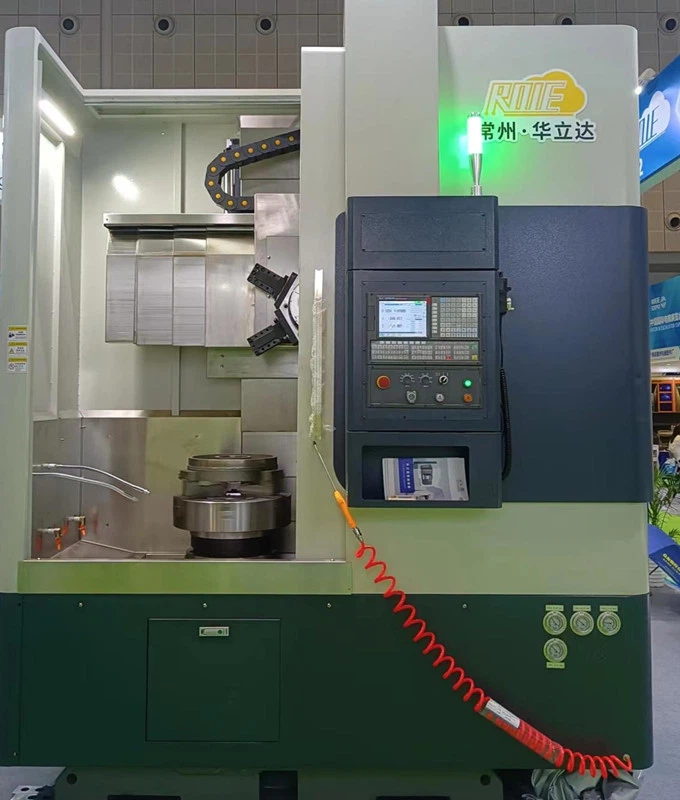
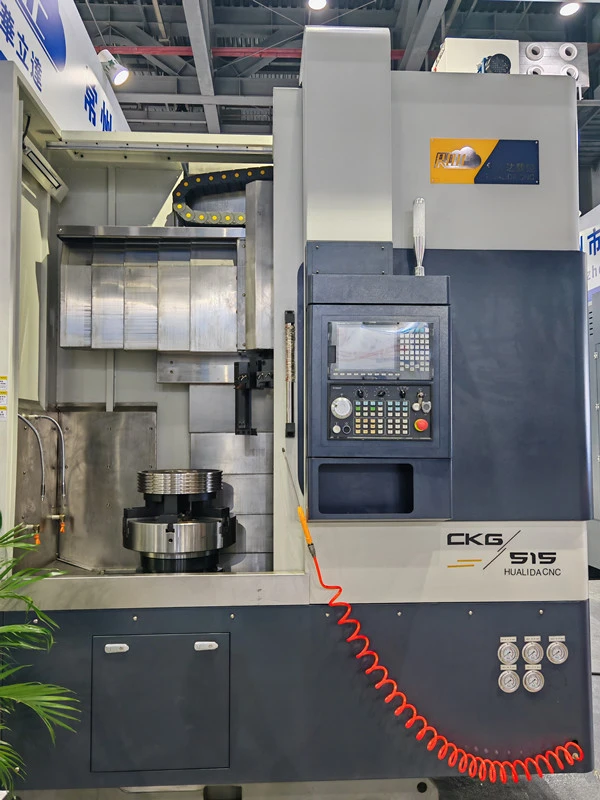
At our company, we are committed to providing high - quality High Speed Vertical Lathes with minimal backlash. Our CKG514 CNC Vertical Turning Lathe is designed with advanced technology and precision components to reduce backlash and ensure accurate machining. The CNC Vertical Turning Lathe Machine is equipped with high - performance feed drives and spindles that are carefully calibrated to minimize the effects of backlash. Our CNC Vertical Turning Lathe also features a state - of - the - art control system that can compensate for backlash, providing our customers with reliable and precise machining solutions.
Conclusion
Backlash is a critical factor that affects the performance of High Speed Vertical Lathes. Its direction - dependent, speed - related, wear - induced, and temperature - sensitive characteristics can have a significant impact on dimensional accuracy, surface finish, and tool life. By understanding these characteristics, measuring backlash accurately, and employing appropriate control techniques, we can minimize the negative effects of backlash. At our company, we strive to provide our customers with High Speed Vertical Lathes that are designed to overcome backlash challenges. If you are interested in learning more about our products or have any questions regarding High Speed Vertical Lathes, please feel free to contact us for procurement and further discussions.
References
- "Machining Handbook" by Industrial Press Inc.
- "Precision Machine Design" by Wayne A. Cross
- "CNC Machining Technology" by John A. Reha