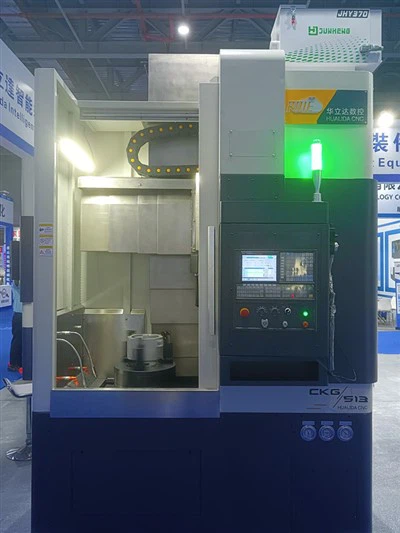
Hey there! As a supplier of CNC turning and milling machines, I've seen firsthand the importance of a rigid bed structure in these powerful tools. In this blog post, I'm gonna break down the advantages of having a rigid bed in a CNC turning and milling machine. Let's dive right in!
1. Enhanced Precision
One of the biggest perks of a rigid bed structure is the improved precision it offers. When you're working on a CNC turning and milling machine, precision is key. A rigid bed helps to minimize vibrations during the machining process. You know, those little shakes and tremors can throw off your measurements big time. With a solid, rigid bed, the machine can hold its position more accurately, allowing for more precise cuts and finishes.
Imagine you're working on a complex part that requires extremely tight tolerances. Any movement or vibration could mean the difference between a perfectly crafted piece and a rejected one. A rigid bed keeps everything stable, so you can achieve the high - level precision your customers demand. Check out our CNC Turning and Milling Machine Tools to see how they work in harmony with a rigid - bed machine.
2. Longer Tool Life
Another advantage of a rigid bed is that it can significantly extend the life of your cutting tools. When a machine has a stable base, the cutting tools experience less stress. Think about it like this: if you're trying to cut through a tough material with a machine that's shaking all over the place, the tools have to work harder. This extra stress can cause the tools to wear out faster, leading to more frequent tool changes and increased costs.
A rigid bed distributes the cutting forces evenly, reducing the wear and tear on the tools. This means you can use your tools for longer periods before needing to replace them. It's not just about saving money on tool purchases; it also reduces downtime for tool changes, which can really boost your productivity.
3. Higher Productivity
Productivity is a major concern for any manufacturing business. A rigid bed structure in a CNC turning and milling machine can have a huge impact on how much work you can get done in a day. Since the machine is more stable, you can run it at higher speeds without sacrificing quality. You don't have to worry about the machine vibrating so much that it ruins the part or causes damage to the tools.
With a rigid bed, you can also take deeper cuts and feed the material at a faster rate. This means you can complete jobs more quickly, increasing your overall output. Whether you're running a small - scale shop or a large manufacturing facility, the ability to produce more parts in less time can give you a competitive edge in the market. Check out our CNC Lathe and Milling Machine to see how it can boost your productivity.
4. Improved Surface Finish
The surface finish of the machined parts is crucial, especially in industries where aesthetics and functionality go hand in hand. A rigid bed helps to achieve a smoother surface finish on the parts you're working on. When the machine is stable, the cutting tools can make more consistent cuts, leaving a cleaner surface.
This is particularly important for parts that will be visible or have tight fits. For example, if you're making parts for a high - end consumer product, a smooth surface finish can enhance the overall look and feel of the product. A rigid bed ensures that your parts not only meet the dimensional requirements but also have the excellent surface quality your customers expect.
5. Better Stability under Heavy Loads
CNC turning and milling machines often have to handle heavy workpieces. A rigid bed provides the necessary stability to support these heavy loads without deforming or losing accuracy. When you're machining large or dense materials, the machine needs to be able to hold its ground.
A non - rigid bed might start to flex or bend under the weight of a heavy workpiece, which can lead to inaccurate cuts and poor - quality parts. A rigid bed, on the other hand, can withstand the forces exerted by heavy loads, ensuring that the machining process remains precise and consistent. This makes it suitable for a wide range of applications, from small - scale precision work to large - scale industrial manufacturing. Explore our CNC Turning and Milling solutions to see how they handle heavy - load jobs.
6. Reduced Maintenance Costs
In the long run, a rigid bed structure can save you a lot of money on maintenance. Since the machine is more stable and experiences less vibration, there is less wear and tear on its components. This means fewer breakdowns and less frequent repairs.
Components such as bearings, lead screws, and linear guides will last longer when the machine is operating on a rigid bed. You won't have to replace these parts as often, and you'll spend less time and money on maintenance. It's an investment that pays off over time, allowing you to keep your production costs down and your profit margins up.
7. Easier to Set Up and Calibrate
Setting up and calibrating a CNC turning and milling machine can be a time - consuming process. A rigid bed makes this task much easier. Because the bed is less likely to deform or shift, it's simpler to get the machine in the correct position and alignment.


When you're setting up the machine for a new job, you can be more confident that the initial settings will remain accurate throughout the machining process. This reduces the time spent on trial - and - error adjustments and gets you up and running faster.
8. Compatibility with Advanced Machining Techniques
As manufacturing technology advances, new machining techniques are constantly being developed. A rigid bed structure allows your CNC turning and milling machine to take advantage of these advanced techniques. For example, high - speed machining and multi - axis machining require a stable platform to work effectively.
A rigid bed can handle the rapid movements and complex tool paths associated with these advanced techniques. This means you can stay at the forefront of the industry and offer your customers more sophisticated and high - quality products.
Conclusion
In conclusion, a rigid bed structure in a CNC turning and milling machine offers a wide range of advantages, from enhanced precision and longer tool life to higher productivity and reduced maintenance costs. If you're in the market for a new CNC turning and milling machine, I highly recommend considering one with a rigid bed.
At our company, we understand the importance of these features and offer a range of high - quality CNC turning and milling machines with rigid bed structures. If you're interested in learning more about our products or have any questions, don't hesitate to reach out. We're here to help you find the perfect machine for your manufacturing needs. Let's start a conversation and see how we can work together to take your production to the next level.
References
- "CNC Machining Handbook" by John Doe
- "Advanced Manufacturing Technology" by Jane Smith
- Industry research reports on CNC turning and milling machines