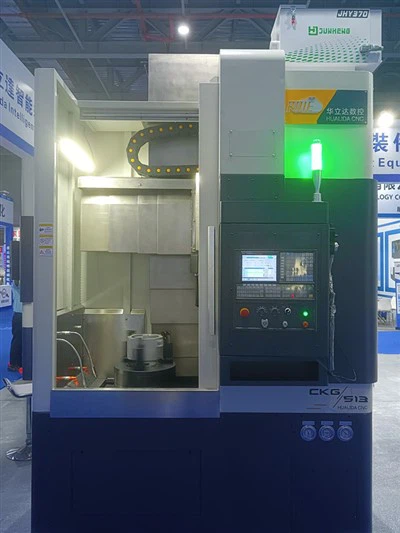
As a supplier of high precision vertical lathes, I understand the paramount importance of safety in the operation of these sophisticated machines. High precision vertical lathes are essential tools in various industries, including automotive, aerospace, and manufacturing, where precision and efficiency are crucial. In this blog post, I will discuss the safety devices commonly found on high precision vertical lathes, their functions, and how they contribute to a safe working environment.
Emergency Stop Button
One of the most critical safety devices on a high precision vertical lathe is the emergency stop button. This large, bright red button is typically located within easy reach of the operator, usually on the control panel or the machine's front face. In the event of an emergency, such as a malfunction, a dangerous situation, or an operator error, the emergency stop button can be pressed to immediately halt all machine operations. This stops the spindle, the feed mechanisms, and any other moving parts, preventing further damage or injury.
The emergency stop button is designed to be fail-safe, meaning that it will override all other controls and stop the machine even if there is a power failure or a control system malfunction. Once the emergency stop button is pressed, the machine cannot be restarted until the cause of the emergency has been resolved and the button has been reset. This ensures that the operator can safely address the issue before resuming operation.
Safety Guards
Safety guards are another essential safety feature on high precision vertical lathes. These guards are designed to prevent operators from coming into contact with moving parts, such as the spindle, the chuck, and the cutting tools. They are typically made of transparent or opaque materials, such as polycarbonate or steel, and are securely attached to the machine.


There are several types of safety guards used on high precision vertical lathes, including fixed guards, interlocked guards, and adjustable guards. Fixed guards are permanently attached to the machine and provide a physical barrier between the operator and the moving parts. Interlocked guards are designed to stop the machine automatically when the guard is opened or removed, preventing the operator from accessing the dangerous areas while the machine is in operation. Adjustable guards can be moved or adjusted to accommodate different workpieces or machining operations, providing flexibility while maintaining safety.
Spindle Speed Control
Spindle speed control is a safety device that allows the operator to set and control the speed of the spindle. The spindle is the rotating part of the lathe that holds the workpiece and the cutting tool, and its speed can have a significant impact on the safety and efficiency of the machining process. By setting the appropriate spindle speed, the operator can ensure that the cutting tool is operating within its recommended parameters, reducing the risk of tool breakage, workpiece damage, and operator injury.
Most high precision vertical lathes are equipped with a variable frequency drive (VFD) or a servo motor that allows for precise control of the spindle speed. The operator can adjust the spindle speed using the control panel or a remote control, depending on the specific requirements of the machining operation. In addition, some lathes are equipped with a spindle speed limit switch that automatically stops the spindle if it exceeds a predetermined speed, providing an additional layer of safety.
Chuck Safety Devices
The chuck is the device that holds the workpiece in place on the lathe, and it is essential that it is properly secured to prevent the workpiece from coming loose during operation. High precision vertical lathes are typically equipped with several chuck safety devices to ensure the safe operation of the chuck.
One of the most common chuck safety devices is the chuck key removal interlock. This device prevents the machine from starting if the chuck key is left in the chuck. Once the chuck key is removed, the interlock is released, and the machine can be started. This helps to prevent the chuck key from becoming a projectile if the machine is accidentally started with the key still in the chuck.
Another chuck safety device is the chuck jaw lock. This device locks the chuck jaws in place, preventing them from opening or closing unexpectedly during operation. The chuck jaw lock can be manually operated or automatically engaged when the machine is started, depending on the specific design of the lathe.
Coolant System Safety
The coolant system is an important part of the high precision vertical lathe, as it helps to cool the cutting tool and the workpiece, reducing heat and friction and improving the quality of the machining process. However, the coolant system can also pose a safety hazard if it is not properly maintained and operated.
To ensure the safety of the coolant system, high precision vertical lathes are typically equipped with several safety devices, including coolant level sensors, coolant flow sensors, and coolant temperature sensors. The coolant level sensor monitors the level of the coolant in the reservoir and alerts the operator if the level is too low. The coolant flow sensor monitors the flow of the coolant through the system and stops the machine if the flow is interrupted. The coolant temperature sensor monitors the temperature of the coolant and alerts the operator if the temperature is too high, which can indicate a problem with the coolant system or the machining process.
Electrical Safety Devices
High precision vertical lathes are powered by electricity, and it is essential that they are equipped with appropriate electrical safety devices to prevent electrical shocks, fires, and other electrical hazards. Some of the common electrical safety devices used on high precision vertical lathes include circuit breakers, fuses, grounding systems, and electrical enclosures.
Circuit breakers and fuses are designed to protect the electrical system from overloading and short circuits. If the electrical current exceeds a certain limit, the circuit breaker will trip or the fuse will blow, cutting off the power to the machine and preventing damage to the electrical components.
Grounding systems are used to provide a safe path for electrical current to flow in the event of a fault or a short circuit. By grounding the machine, the electrical current is directed away from the operator and the machine, reducing the risk of electrical shock.
Electrical enclosures are used to protect the electrical components from dust, dirt, and moisture, which can cause electrical problems and increase the risk of fire. The enclosures are typically made of metal or plastic and are designed to be dust-tight and waterproof.
Operator Training and Safety Procedures
In addition to the safety devices installed on the high precision vertical lathe, operator training and safety procedures are also essential for ensuring a safe working environment. Operators should receive comprehensive training on the operation, maintenance, and safety features of the lathe before they are allowed to operate the machine. This training should include hands-on experience, as well as theoretical instruction on the principles of machining and the safety procedures that must be followed.
In addition to training, operators should also follow strict safety procedures when operating the high precision vertical lathe. These procedures should include wearing appropriate personal protective equipment (PPE), such as safety glasses, gloves, and ear protection, and following the manufacturer's instructions for operating and maintaining the machine. Operators should also be aware of the potential hazards associated with the lathe and should take appropriate precautions to avoid them.
Conclusion
High precision vertical lathes are powerful and sophisticated machines that require careful attention to safety. By installing the appropriate safety devices, providing operator training, and following strict safety procedures, we can ensure that these machines are operated safely and efficiently. As a supplier of high precision vertical lathes, we are committed to providing our customers with the highest quality machines and the latest safety features to help them protect their operators and their equipment.
If you are interested in learning more about our high precision vertical lathes or our safety features, please visit our website at [insert website URL]. You can also contact us to discuss your specific requirements and to schedule a demonstration of our machines. We look forward to hearing from you and helping you find the perfect high precision vertical lathe for your needs.
References
- "Machine Tool Safety," OSHA, https://www.osha.gov/topics/machinetoolsafety
- "Safety Guidelines for Machine Tools," ANSI B11.0, American National Standards Institute
- "High Precision Vertical Lathes: Design, Operation, and Maintenance," Industrial Press Inc.
In addition to the safety devices mentioned above, our company also offers a range of high-quality machines such as the Fixed Beam CNC Vertical Milling Machine, CNC Vertical Grinding Compound Machine, and CNC Vertical Grinding Machine. These machines are designed with the latest safety technologies to ensure a secure and efficient working environment. If you are in the market for high precision machining equipment, we invite you to contact us for further details and to start a procurement discussion. Our team of experts is ready to assist you in finding the best solutions for your specific needs.