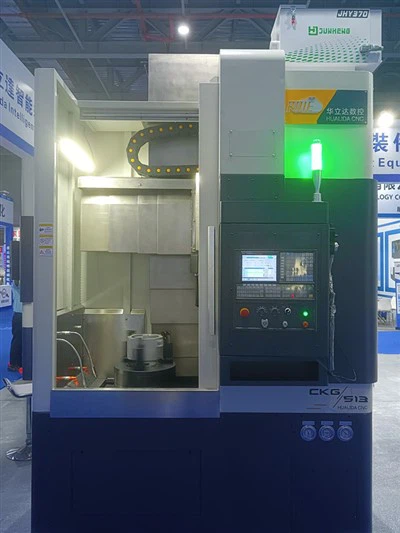
As a supplier of Vertical Lathe Machines, I've had the privilege of witnessing the intricate dance of components within these powerful machines. One such component that often goes unnoticed but plays a crucial role is the feed box. In this blog, we'll delve into the significance of the feed box in a vertical lathe machine and explore its functions and impact on machining operations.
Understanding the Vertical Lathe Machine
Before we dive into the role of the feed box, let's briefly understand what a Vertical Lathe Machine is. A vertical lathe, also known as a vertical turning center, is a type of lathe where the spindle is oriented vertically. This design allows for the machining of large and heavy workpieces with high precision. Vertical lathes are commonly used in industries such as aerospace, automotive, and heavy machinery manufacturing.
The Feed Box: An Overview
The feed box is an essential part of a vertical lathe machine. It is responsible for controlling the feed rate of the cutting tool, which is the speed at which the tool moves along the workpiece during machining. The feed rate is a critical parameter that affects the quality of the machined surface, the tool life, and the overall efficiency of the machining process.


Functions of the Feed Box
1. Feed Rate Control
The primary function of the feed box is to provide a range of feed rates for the cutting tool. This is achieved through a series of gears, shafts, and clutches within the feed box. By changing the gear ratios, the operator can adjust the feed rate to suit the specific requirements of the machining operation. For example, when machining a soft material, a higher feed rate can be used to increase the machining efficiency. On the other hand, when machining a hard material or a complex shape, a lower feed rate may be required to ensure the quality of the machined surface.
2. Direction Control
In addition to controlling the feed rate, the feed box also allows the operator to control the direction of the feed. The cutting tool can be fed either longitudinally (along the axis of the workpiece) or transversely (perpendicular to the axis of the workpiece). This flexibility enables the machining of various shapes and features on the workpiece.
3. Synchronization with Spindle Speed
The feed box is designed to work in synchronization with the spindle speed of the vertical lathe machine. The spindle speed determines the rotational speed of the workpiece, while the feed rate determines the speed at which the cutting tool moves along the workpiece. By coordinating these two parameters, the operator can achieve the optimal cutting conditions for a given machining operation. For example, when turning a cylindrical workpiece, the feed rate should be adjusted in proportion to the spindle speed to ensure a consistent cutting depth and surface finish.
Impact on Machining Operations
1. Surface Finish
The feed rate has a significant impact on the surface finish of the machined workpiece. A higher feed rate can result in a rougher surface finish, while a lower feed rate can produce a smoother surface. This is because a higher feed rate causes the cutting tool to remove material more quickly, which can lead to larger chips and more pronounced tool marks on the workpiece surface. On the other hand, a lower feed rate allows the cutting tool to remove material more gradually, resulting in a finer surface finish.
2. Tool Life
The feed rate also affects the tool life of the cutting tool. A high feed rate can increase the cutting forces acting on the tool, which can lead to premature tool wear and breakage. Conversely, a low feed rate can reduce the cutting forces and extend the tool life. Therefore, it is important to select the appropriate feed rate to balance the machining efficiency and the tool life.
3. Machining Efficiency
The feed rate is directly related to the machining efficiency of the vertical lathe machine. A higher feed rate allows the cutting tool to remove material more quickly, which can reduce the machining time and increase the productivity. However, it is important to note that increasing the feed rate beyond a certain limit can result in poor surface finish and tool damage. Therefore, the operator needs to find the optimal feed rate that maximizes the machining efficiency while maintaining the quality of the machined workpiece.
Types of Feed Boxes
1. Manual Feed Box
A manual feed box is the simplest type of feed box. It is operated by the operator using a handwheel or a lever. The operator can manually adjust the feed rate and direction by changing the gear ratios or engaging different clutches. Manual feed boxes are commonly used in small and medium-sized vertical lathe machines.
2. Automatic Feed Box
An automatic feed box is a more advanced type of feed box. It is controlled by a computer numerical control (CNC) system, which allows for precise and automated control of the feed rate and direction. The CNC system can be programmed to execute complex machining operations with high accuracy and repeatability. Automatic feed boxes are commonly used in large and high-precision vertical lathe machines, such as Large Cutting Vertical Lathe and Heavy Cutting Vertical Lathe.
Conclusion
In conclusion, the feed box plays a crucial role in a vertical lathe machine. It is responsible for controlling the feed rate and direction of the cutting tool, which are critical parameters that affect the quality of the machined surface, the tool life, and the overall efficiency of the machining process. By understanding the functions and impact of the feed box, operators can make informed decisions when selecting the appropriate feed rate and direction for a given machining operation.
If you are in the market for a vertical lathe machine or have any questions about the feed box or other components of the machine, please feel free to contact us. Our team of experts is ready to assist you in finding the right solution for your machining needs.
References
- ASM Handbook Volume 16: Machining. ASM International.
- Manufacturing Engineering and Technology. S. Kalpakjian and S. Schmid. Pearson.