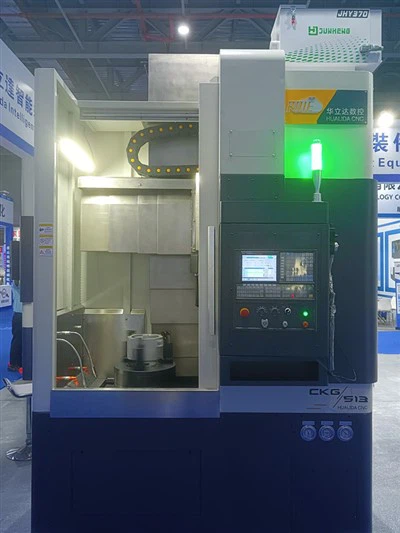
Hey there! As a supplier of heavy vertical lathes, I often get asked about the spindle speed control methods of these machines. In this blog post, I'll break down the different ways we can control the spindle speed of a heavy vertical lathe, and why it matters.
First off, let's understand why spindle speed control is so crucial. The spindle speed directly affects the cutting speed, which in turn impacts the quality of the machined surface, the tool life, and the overall efficiency of the machining process. Different materials and cutting operations require different spindle speeds to achieve the best results. For example, when machining soft materials like aluminum, a higher spindle speed can be used to increase the cutting efficiency. On the other hand, when machining hard materials like steel, a lower spindle speed may be necessary to avoid excessive tool wear.
Now, let's dive into the main spindle speed control methods used in heavy vertical lathes.
Mechanical Speed Control
One of the oldest and most straightforward methods is mechanical speed control. This method uses a gearbox to change the spindle speed. The gearbox consists of a series of gears with different tooth counts. By engaging different gears, we can achieve different speed ratios between the motor and the spindle.


The advantage of mechanical speed control is its simplicity and reliability. Since it doesn't rely on complex electronic components, there are fewer things that can go wrong. It can also handle high torque loads, which is important for heavy cutting operations. However, the downside is that the speed changes are discrete. That means we can only select from a limited number of pre - determined speeds. If we need a specific speed that's not available in the gearbox, we're out of luck.
For heavy cutting operations, a mechanical speed control system can be a great choice. You can learn more about heavy cutting and vertical lathes on our Heavy Cutting and Vertical Lathe page.
Hydraulic Speed Control
Hydraulic speed control uses a hydraulic system to regulate the spindle speed. In a hydraulic speed control system, a hydraulic pump is used to generate hydraulic pressure. The pressure is then used to drive a hydraulic motor, which is connected to the spindle. By adjusting the flow rate and pressure of the hydraulic fluid, we can control the speed of the hydraulic motor and thus the spindle.
One of the benefits of hydraulic speed control is its smooth speed adjustment. We can achieve a continuous range of speeds within a certain limit, which gives us more flexibility in the machining process. It also has good torque characteristics, especially at low speeds. However, hydraulic systems can be complex and require regular maintenance. They are also less energy - efficient compared to some other methods, as there are energy losses in the hydraulic fluid flow and pressure regulation.
Electrical Speed Control
Electrical speed control is the most common method used in modern heavy vertical lathes. There are two main types of electrical speed control: DC motor control and AC motor control.
DC Motor Control
In a DC motor control system, the speed of the DC motor is controlled by adjusting the voltage applied to the motor. A DC drive unit is used to convert the incoming AC power to DC power and then regulate the voltage. By increasing or decreasing the voltage, we can increase or decrease the speed of the DC motor.
DC motor control offers precise speed control and a wide speed range. It can also provide high torque at low speeds, which is useful for heavy cutting. However, DC motors have some drawbacks. They require regular maintenance, such as brush replacement, and they are more expensive than AC motors.
AC Motor Control
AC motor control has become more popular in recent years due to the development of variable frequency drives (VFDs). A VFD can convert the fixed - frequency AC power to variable - frequency AC power. By changing the frequency of the AC power supplied to the AC motor, we can control the motor speed.
The advantages of AC motor control with VFDs are numerous. AC motors are more reliable and require less maintenance compared to DC motors. They are also more energy - efficient, especially at partial loads. VFDs allow for smooth and precise speed control over a wide range. We can easily program the VFD to change the speed according to the machining requirements.
For more information about vertical lathe machines and their speed control systems, check out our Vertical Lathe Machine page. And if you're interested in CNC vertical lathes, which often use advanced electrical speed control methods, visit our Vertical CNC Lathe page.
CNC - Based Speed Control
With the development of computer numerical control (CNC) technology, we can integrate the spindle speed control into the CNC system. The CNC controller can automatically adjust the spindle speed based on the programmed machining parameters, such as the material type, cutting tool, and cutting depth.
This type of speed control offers the highest level of automation and precision. The CNC system can optimize the spindle speed in real - time to ensure the best machining quality and efficiency. It can also store different machining programs, allowing for quick and easy setup changes between different jobs.
When choosing a spindle speed control method for a heavy vertical lathe, we need to consider several factors. These include the type of machining operations, the required speed range, the precision of speed control, the cost, and the maintenance requirements.
In conclusion, each spindle speed control method has its own pros and cons. As a heavy vertical lathe supplier, we can help you choose the most suitable speed control method for your specific needs. Whether you need a simple mechanical system for basic heavy cutting or a high - tech CNC - based system for complex machining operations, we've got you covered.
If you're in the market for a heavy vertical lathe or want to learn more about spindle speed control, don't hesitate to get in touch with us. We're here to assist you in making the right choice for your machining business.
References
- Modern Machine Shop magazine articles on heavy vertical lathe technology.
- Manufacturer's manuals for heavy vertical lathes and related components.