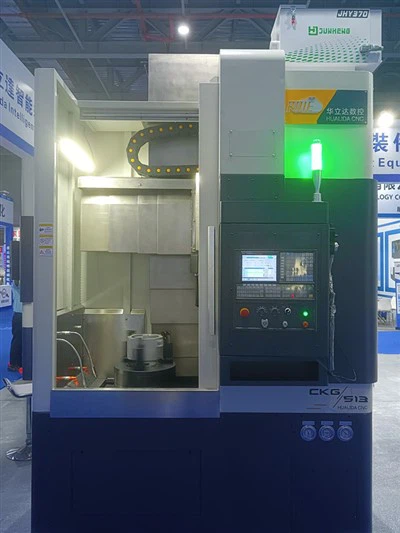
As a supplier of New Vertical Lathes, I'm often asked about the diverse range of materials these machines can process. Vertical lathes are versatile pieces of equipment that play a crucial role in various industries, from automotive to aerospace, and their ability to handle different materials is a key factor in their widespread use.
Metals
One of the most common materials processed by New Vertical Lathes is metal. Metals are known for their strength, durability, and conductivity, making them essential in many manufacturing applications.
Steel
Steel is perhaps the most widely used metal in manufacturing, and vertical lathes are well - equipped to handle it. Carbon steel, alloy steel, and stainless steel are all commonly machined on these lathes. Carbon steel, with its varying carbon content, can be used for a wide range of applications, from simple structural components to high - strength parts. Alloy steel, which has additional elements like chromium, nickel, and molybdenum, offers enhanced properties such as increased hardness and corrosion resistance. Stainless steel, a popular choice for its corrosion - resistant properties, is often used in the food, medical, and marine industries. Our CKG515 CNC Vertical Lathe is capable of precisely machining steel components, whether they are small - scale prototypes or large - scale production parts.
Aluminum
Aluminum is another metal that is frequently processed on vertical lathes. It is lightweight, has good corrosion resistance, and is highly conductive. These properties make it ideal for applications in the aerospace, automotive, and electronics industries. Aluminum alloys, which are created by adding other elements to pure aluminum, can have improved strength and hardness. Vertical lathes can easily cut, shape, and finish aluminum parts with high precision. The CKG518 CNC Vertical Lathe is particularly well - suited for machining aluminum due to its high - speed capabilities and advanced control systems.


Copper and Brass
Copper and brass are also commonly machined on vertical lathes. Copper is an excellent conductor of electricity and heat, and it is often used in electrical wiring, plumbing, and heat exchangers. Brass, an alloy of copper and zinc, has good corrosion resistance and is often used in decorative applications, as well as in the manufacturing of valves, fittings, and musical instruments. Vertical lathes can produce complex shapes and smooth finishes on copper and brass parts, ensuring high - quality products.
Titanium
Titanium is a high - strength, low - density metal that is widely used in the aerospace, medical, and military industries. It has excellent corrosion resistance and can withstand high temperatures. However, titanium is also a difficult material to machine due to its high strength and low thermal conductivity. Our New Vertical Lathes are designed with advanced cutting tools and control systems to handle the challenges of machining titanium. The CKG518 CNC Vertical Turning Lathe can achieve precise cuts and high - quality finishes on titanium components, making it a valuable asset for industries that require titanium parts.
Plastics
In addition to metals, New Vertical Lathes can also process a variety of plastics. Plastics are lightweight, corrosion - resistant, and can be easily molded into different shapes. They are used in a wide range of industries, from consumer products to medical devices.
Acrylic
Acrylic is a transparent plastic that is often used in the manufacturing of signs, displays, and optical components. It has good optical clarity and is easy to machine. Vertical lathes can cut, drill, and polish acrylic parts to achieve the desired shape and finish. Acrylic parts can be made with high precision, ensuring that they meet the strict requirements of various applications.
Polycarbonate
Polycarbonate is a strong, impact - resistant plastic that is used in applications such as safety glasses, automotive parts, and electronic enclosures. It has good heat resistance and can be easily machined on vertical lathes. The lathes can produce complex polycarbonate parts with tight tolerances, making them suitable for high - tech applications.
Nylon
Nylon is a versatile plastic that is known for its high strength, abrasion resistance, and low friction. It is used in a variety of applications, including gears, bearings, and fasteners. Vertical lathes can machine nylon parts with high precision, ensuring that they have the required mechanical properties.
Composites
Composites are materials made by combining two or more different materials to create a new material with improved properties. They are increasingly being used in industries such as aerospace, automotive, and sports equipment.
Carbon Fiber Reinforced Polymers (CFRP)
CFRP is a composite material made of carbon fibers embedded in a polymer matrix. It is lightweight, strong, and has excellent stiffness. However, machining CFRP can be challenging due to the abrasive nature of the carbon fibers. Our New Vertical Lathes are equipped with specialized cutting tools and control systems to handle the machining of CFRP. They can cut, drill, and shape CFRP parts with high precision, ensuring that they meet the strict requirements of the aerospace and automotive industries.
Glass Fiber Reinforced Polymers (GFRP)
GFRP is another composite material that is widely used. It is made of glass fibers embedded in a polymer matrix. GFRP is less expensive than CFRP and has good mechanical properties. Vertical lathes can machine GFRP parts with relative ease, making them suitable for a variety of applications, including boat hulls, wind turbine blades, and automotive body panels.
Ceramics
Ceramics are hard, brittle materials that have excellent heat resistance, wear resistance, and chemical stability. They are used in applications such as cutting tools, electrical insulators, and medical implants. While machining ceramics can be difficult due to their hardness and brittleness, our New Vertical Lathes are designed to handle this challenge. With the use of specialized cutting tools and advanced control systems, the lathes can machine ceramic parts with high precision, ensuring that they have the required shape and surface finish.
In conclusion, New Vertical Lathes are incredibly versatile machines that can process a wide range of materials, including metals, plastics, composites, and ceramics. Whether you are in the aerospace, automotive, electronics, or any other industry, our lathes can provide the precision and efficiency you need for your manufacturing processes. If you are interested in learning more about our New Vertical Lathes or have specific requirements for your material processing needs, please feel free to contact us for a detailed discussion and potential procurement.
References
- "Machining of Engineering Materials" by P. K. Mallik
- "Manufacturing Processes for Engineering Materials" by S. Kalpakjian and S. R. Schmid