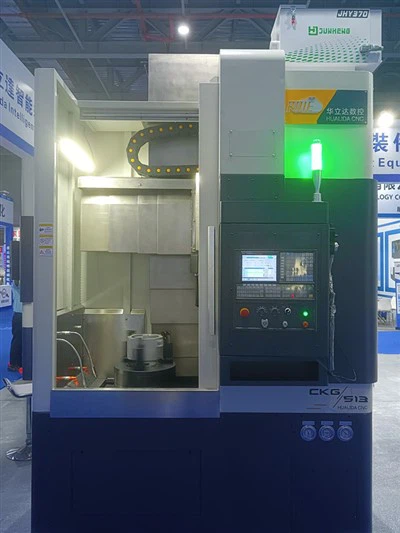
As a supplier of vertical lathe machines, I've had countless discussions with clients about the different types of lathes available in the market. One of the most common questions I get is about the difference between CNC (Computer Numerical Control) and manual vertical lathe machines. In this blog post, I'll break down the key differences between these two types of machines, highlighting their respective advantages and disadvantages.
Working Principle
The fundamental difference between a CNC and a manual vertical lathe machine lies in their working principles. A manual vertical lathe is operated entirely by hand. The operator controls the movement of the cutting tool, the rotation speed of the workpiece, and other aspects of the machining process. This requires a high level of skill and experience, as the operator must make precise adjustments based on the requirements of each job.
On the other hand, a CNC vertical lathe is automated. It uses a computer program to control the movement of the cutting tool and the rotation of the workpiece. The program is created using CAD (Computer-Aided Design) and CAM (Computer-Aided Manufacturing) software, which allows for highly accurate and complex machining operations. Once the program is loaded into the machine, it can run automatically, with the operator only needing to monitor the process and make any necessary adjustments.
Precision and Accuracy
When it comes to precision and accuracy, CNC vertical lathe machines have a clear advantage. The computer control system allows for extremely precise movements, with tolerances as low as a few micrometers. This makes CNC lathes ideal for producing parts with complex geometries and tight tolerances, such as aerospace components and medical devices.
Manual vertical lathes, while capable of achieving high levels of accuracy, are more dependent on the skill of the operator. Even the most experienced operators may have some degree of variability in their work, which can lead to slightly less precise parts. However, for simpler machining tasks with less demanding tolerances, a manual lathe can still produce parts of acceptable quality.
Productivity
In terms of productivity, CNC vertical lathe machines are generally much faster than manual lathes. Once the program is set up, the machine can run continuously, with minimal downtime for tool changes or adjustments. This allows for high-volume production runs, making CNC lathes a popular choice for mass manufacturing.
Manual vertical lathes, on the other hand, are slower and more labor-intensive. Each operation must be performed manually, which takes more time and requires more operator attention. However, for small batch production or custom jobs, a manual lathe can be a more cost-effective option, as it doesn't require the time and expense of programming a CNC machine.
Flexibility
Manual vertical lathes offer greater flexibility in terms of the types of operations that can be performed. Since the operator has direct control over the machine, they can easily make adjustments on the fly and adapt to changes in the workpiece or the machining requirements. This makes manual lathes a good choice for prototype work or jobs that require a high degree of customization.
CNC vertical lathes, while highly automated, are more limited in their flexibility. Once a program is set up, it can be difficult and time-consuming to make changes. However, modern CNC machines often come with features such as tool changers and multi-axis capabilities, which can increase their flexibility and allow them to perform a wider range of operations.
Cost
The cost of a vertical lathe machine is an important consideration for any buyer. Generally speaking, CNC vertical lathe machines are more expensive than manual lathes. This is due to the higher level of technology and automation involved in their construction. In addition to the initial purchase price, there are also costs associated with programming and maintaining the CNC system.
Manual vertical lathes, on the other hand, are typically less expensive to purchase and operate. They require less specialized training for the operator, and there are no programming costs. However, for high-volume production runs, the increased productivity of a CNC lathe may offset the higher initial cost.
Ease of Use
Manual vertical lathes require a high level of skill and experience to operate effectively. The operator must have a good understanding of machining principles, as well as the ability to read and interpret technical drawings. Training for manual lathe operation can take several months or even years.
CNC vertical lathes, while more complex in terms of technology, are generally easier to use for operators with some basic computer skills. The computer control system takes care of most of the complex calculations and movements, allowing operators to focus on monitoring the process and making any necessary adjustments. However, programming a CNC machine does require specialized training, which can take several weeks or months to complete.
Applications
Both CNC and manual vertical lathe machines have a wide range of applications in various industries. CNC vertical lathes are commonly used in industries such as aerospace, automotive, and medical, where precision and high-volume production are required. They are also used for producing parts with complex geometries, such as turbine blades and gears.
Manual vertical lathes are often used in smaller shops and for custom machining work. They are suitable for producing parts with simpler geometries, such as shafts and bushings. Manual lathes are also a popular choice for hobbyists and small-scale manufacturers who may not have the budget or need for a CNC machine.
Our Product Range
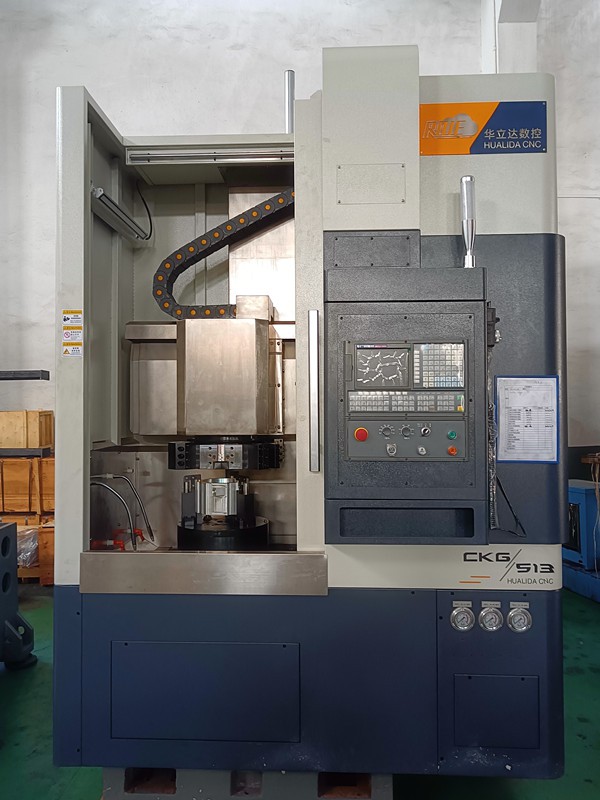
As a supplier of vertical lathe machines, we offer a wide range of both CNC and manual vertical lathes to meet the needs of our customers. Our Hard Rail Vertical Lathe is a high-performance CNC machine that offers excellent precision and stability. It is suitable for a variety of machining applications, including heavy cutting and high-volume production.
For those in need of a more heavy-duty machine, our Heavy Vertical Lathe is the perfect choice. With its robust construction and powerful spindle, it can handle large and heavy workpieces with ease.
If you're looking for a machine specifically designed for heavy cutting, our Heavy Cutting Vertical Lathe is the ideal solution. It features a high-torque spindle and a rigid structure, allowing for efficient and precise machining of tough materials.

Conclusion
In conclusion, the choice between a CNC and a manual vertical lathe machine depends on a variety of factors, including the specific machining requirements, the level of precision and accuracy needed, the volume of production, and the budget. CNC vertical lathes offer higher precision, greater productivity, and more flexibility for complex operations, but they are also more expensive and require specialized programming skills. Manual vertical lathes, on the other hand, are more affordable, easier to operate, and offer greater flexibility for custom work, but they are slower and less precise.
If you're interested in learning more about our vertical lathe machines or have any questions about which type of machine is right for your needs, please don't hesitate to contact us. We'd be happy to discuss your requirements and help you find the perfect solution for your business.
References
- "CNC Machining Handbook" by Oberg, Jones, and Horton
- "Manual Machining Techniques" by Smith, Brown, and Johnson
- Industry reports and white papers on vertical lathe technology