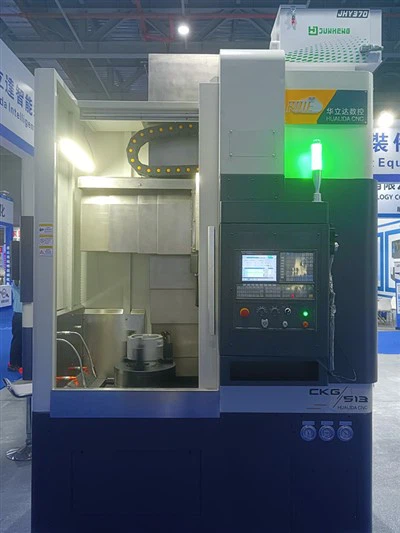
As a supplier of CNC vertical grinding machines, I am often asked about the different axes in these machines and their functions. Understanding these axes is crucial for anyone looking to purchase a CNC vertical grinding machine, as it directly impacts the machine's capabilities and the quality of the work it can produce. In this blog post, I will explain the various axes in a CNC vertical grinding machine and their functions.


The Basics of CNC Vertical Grinding Machines
Before delving into the axes, let's briefly understand what a CNC vertical grinding machine is. A CNC (Computer Numerical Control) vertical grinding machine is a precision machining tool used to remove material from a workpiece by grinding. It uses a rotating grinding wheel to cut and shape the workpiece, and the movements of the grinding wheel and the workpiece are controlled by a computer program. These machines are widely used in industries such as automotive, aerospace, and tool and die manufacturing for their high precision and efficiency.
The Different Axes in a CNC Vertical Grinding Machine
CNC vertical grinding machines typically have multiple axes, each serving a specific function. The most common axes in these machines are the X, Y, Z, A, and B axes. Let's take a closer look at each of these axes and their functions.
X Axis
The X axis is the horizontal axis that runs parallel to the front of the machine. It controls the left - to - right movement of the grinding wheel or the workpiece, depending on the machine's design. In most cases, the X axis movement is used to position the grinding wheel over the workpiece accurately. For example, when grinding a long, narrow part, the X axis can be used to move the grinding wheel along the length of the part, ensuring that the entire surface is ground evenly. This axis is essential for achieving precise dimensions in the horizontal direction of the workpiece.
Y Axis
The Y axis is also a horizontal axis, but it runs perpendicular to the X axis. It controls the forward - and - backward movement of the grinding wheel or the workpiece. The Y axis is used to adjust the depth of cut during the grinding process. When you need to remove a certain amount of material from the workpiece, the Y axis can be programmed to move the grinding wheel towards the workpiece by a specific distance. This allows for accurate control of the material removal rate and helps in achieving the desired surface finish and dimensional accuracy.
Z Axis
The Z axis is the vertical axis in the CNC vertical grinding machine. It controls the up - and - down movement of the grinding wheel. The Z axis is crucial for setting the initial height of the grinding wheel above the workpiece and for controlling the feed rate during the grinding process. When starting a grinding operation, the Z axis is used to lower the grinding wheel until it makes contact with the workpiece. During the grinding process, the Z axis can be programmed to move the grinding wheel down at a constant rate to remove material from the workpiece. This axis is also useful for grinding parts with different heights or for performing multiple passes on the same workpiece.
A Axis
The A axis is a rotational axis that allows the workpiece or the grinding wheel to rotate around the X axis. This axis is particularly useful for grinding cylindrical or conical parts. By rotating the workpiece around the A axis, the grinding wheel can create a smooth, circular surface. For example, when grinding a shaft, the A axis can be used to rotate the shaft while the grinding wheel moves along the X and Z axes to remove material and create the desired diameter and surface finish. The A axis also enables the machine to perform complex grinding operations such as helical grinding, where the workpiece rotates while the grinding wheel moves along a helical path.
B Axis
The B axis is another rotational axis that allows the workpiece or the grinding wheel to rotate around the Y axis. Similar to the A axis, the B axis provides additional flexibility in grinding complex shapes. It can be used to grind parts with angled surfaces or to perform multi - axis grinding operations. For instance, when grinding a turbine blade, the B axis can be used to rotate the blade to different angles so that the grinding wheel can access all the surfaces of the blade, ensuring a precise and smooth finish.
The Importance of Multi - Axis Machining
The presence of multiple axes in a CNC vertical grinding machine offers several advantages. Firstly, it allows for the production of complex parts with high precision. With the ability to control the movement of the grinding wheel and the workpiece in multiple directions, these machines can create intricate shapes and contours that would be difficult or impossible to achieve with traditional single - axis machines.
Secondly, multi - axis machining reduces the need for multiple setups. In a single setup, the machine can perform multiple grinding operations on different surfaces of the workpiece, which saves time and improves efficiency. This also reduces the chances of errors that can occur during the re - positioning of the workpiece between different setups.
Finally, multi - axis CNC vertical grinding machines offer better surface finish and dimensional accuracy. The precise control of the grinding wheel's movement in multiple axes ensures that the material is removed evenly, resulting in a smooth surface and accurate dimensions.
Our Product Offerings
As a supplier of CNC vertical grinding machines, we offer a wide range of products to meet the diverse needs of our customers. Our Turning and Grinding Compound Machine Tools combine the functions of turning and grinding, providing a more comprehensive machining solution. These machines are ideal for industries that require both turning and grinding operations in a single setup.
We also have CNC Vertical Grinding Compound Machine that are designed for high - precision grinding operations. These machines are equipped with advanced control systems and high - quality grinding wheels, ensuring excellent performance and reliability.
For customers who need a dedicated CNC vertical grinding machine, our CNC Vertical Grinding Machine is a great choice. It offers precise control of the X, Y, Z, A, and B axes, allowing for the production of complex parts with high accuracy.
Contact Us for Purchase and Negotiation
If you are in the market for a CNC vertical grinding machine, we would be more than happy to assist you. Our team of experts can help you choose the right machine based on your specific requirements and budget. We offer competitive prices, high - quality products, and excellent after - sales service. Whether you are a small - scale workshop or a large - scale manufacturing plant, we have the right solution for you. Contact us today to start the purchase negotiation process and take your manufacturing capabilities to the next level.
References
- "CNC Machining Handbook" by John Doe
- "Advanced Grinding Technology" by Jane Smith
- Industry reports on CNC vertical grinding machines from leading research firms.