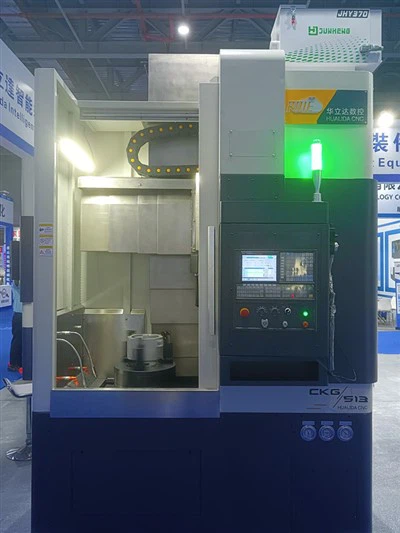
Hey there! As a supplier of High Precision Vertical Lathes, I often get asked about the components that make these machines tick. One crucial part that plays a significant role in the performance of a high precision vertical lathe is the linear guideway. In this blog, I'll break down what linear guideways are and why they're so important in our High Precision Vertical Lathes.
What Are Linear Guideways?
First off, let's get to know what linear guideways are. Simply put, linear guideways are mechanical components that provide smooth, linear motion. They're like the tracks that a train runs on, but for the moving parts of a machine. In a high precision vertical lathe, these guideways are used to support and guide the movement of the carriage, saddle, and other key components.
There are different types of linear guideways, but the most common ones used in high precision vertical lathes are ball - type and roller - type linear guideways.
Ball - Type Linear Guideways
Ball - type linear guideways use balls as the rolling elements. These balls roll between the rail and the slider, reducing friction and allowing for smooth movement. They're known for their high precision and fast - moving capabilities. The balls are usually made of high - quality steel, which can withstand a certain amount of load while maintaining accuracy.
The advantage of ball - type linear guideways is their low friction coefficient. This means that less energy is required to move the components along the guideway. As a result, the machine can operate more efficiently, and the wear and tear on the guideway are reduced. They're also relatively easy to install and maintain, which is a plus for any machine operator.
Roller - Type Linear Guideways
Roller - type linear guideways, on the other hand, use rollers instead of balls. Rollers have a larger contact area with the rail compared to balls, which allows them to carry heavier loads. This makes them ideal for applications where high load - carrying capacity is required.
In a high precision vertical lathe, roller - type linear guideways can handle the heavy cutting forces generated during the machining process. They also provide better stability and damping characteristics, which helps to reduce vibrations. Reducing vibrations is crucial in high precision machining because it can affect the surface finish of the workpiece and the accuracy of the machining operation.
Why Are Linear Guideways Important in High Precision Vertical Lathes?
Now that we know what linear guideways are, let's talk about why they're so important in high precision vertical lathes.
Precision
Precision is the name of the game when it comes to high precision vertical lathes. Linear guideways ensure that the moving parts of the machine can move with high accuracy. They have tight tolerances, which means that the movement of the components is highly repeatable. This is essential for producing parts with tight dimensional tolerances. Whether you're machining a small, intricate part or a large, complex workpiece, the precision provided by linear guideways is crucial for meeting the required specifications.
Smooth Movement
Smooth movement is another key benefit of linear guideways. When the components of the lathe move smoothly, it reduces the risk of jerks or sudden movements during the machining process. This not only improves the quality of the machined parts but also extends the life of the cutting tools. A smooth - moving machine is also easier to control, which allows for more precise machining operations.
Load - Carrying Capacity
High precision vertical lathes often have to deal with heavy loads, especially when machining large or hard materials. Linear guideways are designed to support these loads and ensure that the machine can operate safely and efficiently. As mentioned earlier, roller - type linear guideways are particularly well - suited for high - load applications, while ball - type linear guideways can also handle a reasonable amount of load.
Durability
In a manufacturing environment, machines are subject to a lot of wear and tear. Linear guideways are built to last. They're made of high - quality materials and are designed to withstand the rigors of continuous use. This means that they require less frequent replacement, which can save you money in the long run.
Our High Precision Vertical Lathes and Linear Guideways
At our company, we understand the importance of using high - quality linear guideways in our High Precision Vertical Lathe. We carefully select the linear guideways for each machine based on the specific requirements of the application.


For applications that require high - speed and high - precision machining, we often use ball - type linear guideways. These guideways allow the machine to move quickly and accurately, making them ideal for producing parts with fine details.
On the other hand, for applications that involve heavy cutting forces and large workpieces, we opt for roller - type linear guideways. These guideways can handle the high loads and provide the stability needed for accurate machining.
We also offer a range of other high - quality machines, such as the CNC Vertical Grinding Compound Machine and the Fixed Beam CNC Vertical Milling Machine. These machines also benefit from the use of high - performance linear guideways to ensure smooth operation and high precision.
Conclusion
In conclusion, linear guideways are an essential component of high precision vertical lathes. They provide precision, smooth movement, load - carrying capacity, and durability, all of which are crucial for high - quality machining. Whether you're in the automotive, aerospace, or any other industry that requires precision machining, choosing a high - precision vertical lathe with the right linear guideways is key.
If you're interested in learning more about our High Precision Vertical Lathes or any of our other machines, or if you're looking to make a purchase, don't hesitate to reach out. We're here to help you find the right machine for your specific needs. Let's start a conversation about how we can take your machining operations to the next level!
References
- "Machining Technology: Metal Cutting and Machine Tools" by Mikell P. Groover
- "Precision Machine Design" by Slocum, Alexander H.