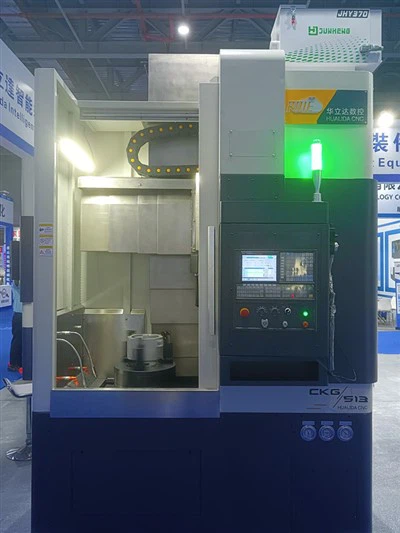
In the realm of modern manufacturing, the debate between the productivity of CNC turning and milling machines and traditional machines is a topic of significant interest. As a supplier of CNC Turning and Milling machines, I have witnessed firsthand the transformative impact these advanced machines have on production processes. This blog post aims to delve into the key aspects of productivity and compare CNC turning and milling machines with their traditional counterparts.
Understanding CNC Turning and Milling Machines
CNC (Computer Numerical Control) turning and milling machines are automated manufacturing tools that use computer programs to control the movement and operation of cutting tools. These machines can perform a wide range of machining operations, including turning, milling, drilling, and threading, with high precision and repeatability. CNC Turning and Milling Machine Tools are designed to handle complex geometries and produce parts with tight tolerances, making them ideal for industries such as aerospace, automotive, and medical.
Productivity Factors in CNC Turning and Milling Machines
Precision and Accuracy
One of the primary advantages of CNC turning and milling machines is their ability to achieve high levels of precision and accuracy. Traditional machines often rely on manual operation, which can introduce human error and variability in the machining process. In contrast, CNC machines use computer-controlled movements to ensure consistent and precise cuts, resulting in parts that meet or exceed design specifications. This high level of precision reduces the need for secondary operations and rework, saving time and increasing overall productivity.
Automation and Efficiency
CNC turning and milling machines are highly automated, which allows for continuous and uninterrupted production. Once a program is loaded into the machine, it can run unattended for extended periods, reducing labor costs and increasing throughput. Additionally, CNC machines can perform multiple operations in a single setup, eliminating the need for manual intervention between different machining steps. This reduces setup time and improves overall efficiency, especially for large production runs.
Flexibility and Versatility
CNC turning and milling machines offer greater flexibility and versatility compared to traditional machines. They can be easily reprogrammed to produce different parts or change machining operations, allowing manufacturers to quickly adapt to changing market demands. This flexibility is particularly valuable in industries where product design and specifications are constantly evolving. In addition, CNC machines can work with a wide range of materials, including metals, plastics, and composites, making them suitable for a variety of applications.
High-Speed Machining
CNC turning and milling machines are capable of high-speed machining, which significantly reduces cycle times and increases productivity. They can operate at much higher spindle speeds and feed rates compared to traditional machines, allowing for faster material removal and shorter machining times. High-speed machining also reduces the heat generated during the cutting process, which can improve tool life and surface finish.


Productivity Factors in Traditional Machines
Simplicity and Ease of Use
Traditional machines are generally simpler in design and easier to operate compared to CNC machines. They often require less training and technical expertise, making them accessible to a wider range of operators. This simplicity can be an advantage for small businesses or workshops with limited resources or technical knowledge.
Low Initial Investment
Traditional machines typically have a lower initial investment cost compared to CNC machines. This makes them a more affordable option for small and medium-sized enterprises (SMEs) or businesses with limited capital. However, it's important to consider the long-term costs of traditional machines, including maintenance, labor, and production efficiency.
Manual Control and Customization
Traditional machines offer a greater degree of manual control, which can be beneficial for certain applications. Operators can make real-time adjustments to the machining process based on their experience and judgment, allowing for greater customization and flexibility. This manual control can be particularly useful for producing unique or one-off parts that require a high level of craftsmanship.
Comparing Productivity: CNC vs. Traditional Machines
Production Volume
For high-volume production runs, CNC turning and milling machines clearly have an edge in terms of productivity. Their automation, precision, and high-speed machining capabilities allow for faster production times and lower costs per part. Traditional machines may struggle to keep up with the demand for large quantities of parts, as they often require more manual labor and longer setup times.
Complexity of Parts
CNC turning and milling machines are better suited for producing complex parts with intricate geometries. Their ability to perform multiple operations in a single setup and achieve high levels of precision makes them ideal for parts that require tight tolerances and complex features. Traditional machines may be limited in their ability to produce such parts, especially those with 3D shapes or curved surfaces.
Cost-Effectiveness
While CNC machines have a higher initial investment cost, they can be more cost-effective in the long run, especially for large production volumes. Their higher productivity, lower labor costs, and reduced rework and scrap rates result in lower per-part costs over time. Traditional machines may be more cost-effective for small production runs or applications where the complexity of the parts is relatively low.
Case Studies
To illustrate the productivity differences between CNC turning and milling machines and traditional machines, let's consider a few case studies.
Case Study 1: Aerospace Component Manufacturing
A leading aerospace manufacturer was producing a critical component using a traditional milling machine. The manual operation of the machine required a skilled operator and multiple setups, resulting in a long production cycle and high labor costs. After switching to a CNC Lathe and Milling Machine, the company was able to reduce the production time by 50% and improve the part quality significantly. The CNC machine's automation and precision allowed for continuous production and consistent results, eliminating the need for rework and reducing overall costs.
Case Study 2: Automotive Part Production
An automotive parts manufacturer was using traditional turning machines to produce engine components. The manual nature of the operation led to variations in part dimensions and surface finish, resulting in a high rejection rate. By implementing CNC turning machines, the company was able to achieve greater consistency and precision in the machining process, reducing the rejection rate to almost zero. This improvement in quality not only increased customer satisfaction but also reduced production costs by eliminating the need for rework and scrap.
Conclusion
In conclusion, CNC turning and milling machines offer significant productivity advantages over traditional machines in terms of precision, automation, flexibility, and high-speed machining. While traditional machines may have some advantages in terms of simplicity and low initial investment, they are generally less productive and less suitable for high-volume production or complex part geometries. As a supplier of CNC turning and milling machines, I strongly believe that investing in these advanced technologies can help manufacturers improve their competitiveness and profitability in today's global market.
If you are interested in learning more about how CNC turning and milling machines can enhance your productivity and manufacturing capabilities, please feel free to contact us for a consultation. We can provide you with detailed information about our products, as well as customized solutions to meet your specific needs.
References
- "CNC Machining Handbook," by John R. Walker
- "Manufacturing Engineering and Technology," by Serope Kalpakjian and Steven R. Schmid
- "Advanced Manufacturing Technology," by David A. Dornfeld